


| And perhaps the great day will come when a people, distinguished by wars and victories and by the highest development of a military order and intelligence, and accustomed to make the heaviest sacrifices for these things, will exclaim of its own free will, “We break the sword,” and will smash its entire military establishment down to its lowest foundations. Rendering oneself unarmed when one has been the best-armed, out of a height of feeling – that is the means to real peace .... Rather perish than hate and fear, and twice rather perish than make oneself hated and feared – this must some day become the highest maxim for every single commonwealth .... (The Wanderer and His Shadow 284) | It is part of the concept of the living that it must grow – that it must extend its power and consequently incorporate alien forces. ... A society that definitely and instinctively gives up war and conquest is in decline; it is ripe for democracy and the rule of shopkeepers. (The Will to Power 728) |
Every art, every philosophy may be viewed as a remedy and an aid in the service of growing and struggling life; they always presuppose suffering and sufferers. But there are two kinds of sufferers: first, those who suffer from the over-fullness of life – they want a Dionysian art and likewise a tragic view of life, a tragic insight – and then those who suffer from the impoverishment of life and seek rest, stillness, calm seas, redemption from themselves through art and knowledge, or intoxication, convulsions, anaesthesia, and madness. ...
Regarding all aesthetic values I now avail myself of this main distinction: I ask in every instance, “is it hunger or superabundance that has here become creative?” ... The desire for destruction, change, and becoming can be an expression of an overflowing energy that is pregnant with future (my term for this is, as known, ‘Dionysian’); but it can also be the hatred of the ill-constituted, disinherited, and underprivileged, who destroy, must destroy, because what exists, indeed all existence, all being, outrages and provokes them. (The Gay Science sec. 370; pp. 329-30 in the Kaufmann translation):
If a painter should wish to unite a horse’s neck to a human head, and spread a variety of plumage over limbs of different animals taken from every part of nature, so that what is a beautiful woman in the upper part terminates unsightly in an ugly fish below; could you, my friends, refrain from laughter, were you admitted to such a sight?
From the future of the worker. — Workers should learn to feel like soldiers. An honorarium, an income, but no pay!
No relation between payment and achievement! But the individual, each according to his kind, should be so placed that he can achieve the highest that lies in his power. ...
The workers shall live one day as the bourgeois do now— but above them, distinguished by their freedom from wants, the higher caste: that is to say, poorer and simpler, but in possession of power. (Will to Power 763-764)
It was never true that there was only one kind of strife [= Eris]. There have always
been two on earth. There is one you could like when you understand her.
The other is hateful. The two Strifes have separate natures.
There is one Strife who builds up evil war, and slaughter.
She is harsh; no man loves her ....
But the other one was born the elder daughter of black Night. ...
she is far kinder.
She pushes the shiftless man to work, for all his laziness.
A man looks at his neighbor, who is rich: then he too
wants work .... Such Strife is a good friend to mortals.
Then potter is potter’s enemy, and craftsman is craftsman’s
rival; tramp is jealous of tramp, and singer of singer.
(Hesiod, Works and Days 11-26; Lattimore translation)

|  |
| Pierre-Joseph Proudhon | Mikhail Bakunin |
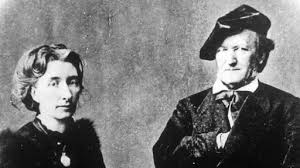
 Siegmund and Sieglinde Aarenhold, the incestuous Jewish twins in Mann’s story, are named after Siegmund and Sieglinde Wälsung, the likewise incestuous but decidedly non-Jewish twins (and parents of Siegfried) in Wagner’s opera Die Walküre, a performance of which the Aarenhold twins attend. An odd choice by their parents, to name their twins after a famously incestuous couple. But the really odd choice is arguably Mann’s, since he based his fictional twins on his own wife and her brother.

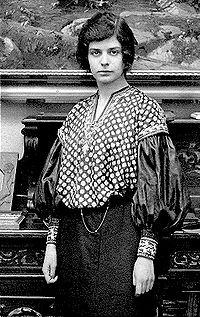






All the details of the story, beginning with the man at the cemetery, are taken from experience ... In the dining-room, on the very first day, we saw the Polish family, which looked exactly the way my husband described them: the girls were dressed rather stiffly and severely, and the very charming, beautiful boy of about 13 was wearing a sailor suit with an open collar and very pretty lacings. He caught my husband’s attention immediately. This boy was tremendously attractive, and my husband was always watching him with his companions on the beach. He didn’t pursue him through all of Venice – that he didn’t do – but the boy did fascinate him, and he thought of him often .... (Unwritten Memories, pp. 60-62)




Three young drummers were coming back from war;
the youngest carried a rose in his mouth.
The daughter of the King was at her window:
“Handsome drummer, give me your rose.”
“I’ll give it to you, but you must be my sweetheart.”
“Handsome drummer, ask my father.”
“Sire the King, give me your daughter.”
“Handsome drummer, you’re not rich enough.”
“Sire the King, I am the son of the King of England;
I have three vessels upon the beautiful sea:
one loaded with gold, the other with silver,
and the third one to escort my sweetheart around.”
“Handsome drummer, in that case you shall have my daughter.”
“Sire the King, I thank you for her:
but in my country there are prettier girls.”
I cannot tell why this imagined
despair has fallen on me;
the ghost of an ancient legend
that will not let me be:
the air is cool, and twilight
flows down the quiet Rhine;
a mountain alone in the high light
still holds the faltering shine.
The last peak rosily gleaming
reveals, enthroned in air,
a maiden, lost in dreaming,
who combs her golden hair.
Combing her hair with a golden
comb in her rocky bower,
she sings the tune of an olden
song that has magical power.
The boatman has heard; it has bound him
in throes of a strange, wild love;
blind to the reefs that surround him,
he sees but the vision above.
And lo, hungry waters are springing –
boat and boatman are gone ...
then silence. And this, with her singing,
the Lorelei has done.
