Audiovisual Companion
to my Spring 2021 seminar on
Nietzsche and Modern Literature

Roderick T. Long


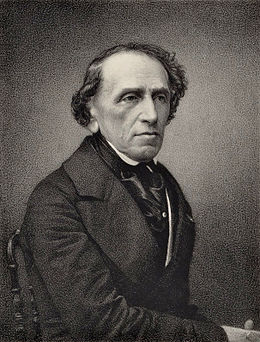
Nietzsche (center); Mann (upper left); Gide (upper right); Lawrence (lower left); Rand (lower right)


WEEK TWO:

Nietzsche: Birth of Tragedy (pp. 87-144)

pp. 87-93: Nietzsche’s critique of Euripides, here and in the preceding section (pp. 76-87), owes a great deal to Aristophanes’ comedy Frogs.

As for the critique of Socrates, it’s worth bearing in mind a remark from one of Nietzsche’s notebooks: “Socrates, to confess it frankly, is so close to me that almost always I fight a fight against him..”

p. 111: The last paragraph on this page revives some of the themes from “The Greek State.”

p. 123: Nietzsche refers to Albrecht Dürer’s 1513 engraving “Knight, Death, and Devil”:


p. 131: Nietzsche quotes (a version of) the final Liebestod (“love-death”) aria from Wagner’s Tristan und Isolde, which the dying heroine sings over the body of her deceased lover. Here’s a version with English subtitles:

[Addendum: The version I embedded here a few days ago has already disappeared from YouTube! Well, here’s what I believe is the same performance, without subtitles:


And here’s a different version that does have English subtitles (if you click the CC button):


Addendum ends.]

These lyrics could also apply to Aschenbach, dying with his face toward the “wide waters” and “limitless haze” of the sea. (In his later writings, Nietzsche will look with rather less enthusiasm at calls to escape the world of phenomena and plunge into nirvana. Indeed, when he wrote this passage he’d already written Philosophy in the Tragic Age of the Greeks, which celebrates what he sees as the Heraclitean insight that the world of phenomena is all there is and that we should embrace it. Here Nietzsche seems to have one foot in Heraclitus and the other still back in Schopenhauer.)

p. 138: Kaufmann’s editorial note informs the reader that “Graeculus” is a contemptuous term for a Greek, but neglects to mention that it is a diminutive of “Graecus.” So “Graeculus” means something like “Greekie” or “Greeklet.”


Nietzsche: “Attempt at Self-Criticism” and Ecce Homo: The Birth of Tragedy

Here we have two pieces from the 1880s in which Nietzsche looks back, mostly (though not entirely) unfavourably, at what he’d written in his 1872 Birth of Tragedy.

Nietzsche’s philosophical career is often divided into three phases. Phase I (approximately 1868-1876) is sometimes called the Wagner-Schopenhauer phase, after the two main influences on his work at that time; though it could also be called the Greek phase, as this is the period in which Nietzsche was most obsessed with the ancient Greeks as providing a possible model for the cure of what he saw as the crisis of contemporary German culture. Not coincidentally, this Greek phase largely coincides with his career as a professor of classical philology. Major works from this period include The Birth of Tragedy and the Untimely Meditations.

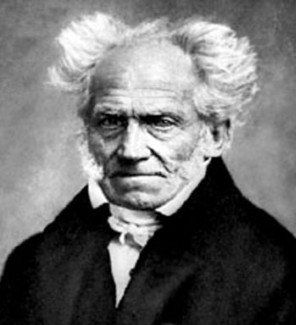
Arthur SchopenhauerRichard Wagner


Phase II (1876-1882) is sometimes called, perhaps not too helpfully, Nietzsche’s “positivist” phase. It’s marked by a break from Wagner and Schopenhauer, his previous idols; it’s also marked by a newfound enthusiasm for scientific rationality and the values of the Enlightenment. We also see a shift from a concern for fixing a crisis in German culture to a concern with fixing a crisis in European culture more generally. Major works from this period include Human, All Too Human (which, to the anti-French Wagner’s horror, he dedicated to the memory of Voltaire) and Daybreak (also known as The Dawn). The Gay Science, published in 1882, is a transitional work, described sometimes as the last contribution to Phase II and sometimes as the first contribution to Phase III.

Phase III (1882-1888), or Nietzsche’s “mature” phase, resists easy summary. His opposition to Wagner and Schopenhauer remains, and does his orientation toward European as opposed to narrowly German culture, but his attitude toward science and Enlightenment values grows more skeptical. To this period belong most of the works for which Nietzsche is best known, including Thus Spoke Zarathustra, Beyond Good and Evil, Genealogy of Morals, Twilight of the Idols, The Antichrist, and Ecce Homo, as well as the final section of The Gay Science. (The Will to Power was assembled later, by Nietzsche’s sister, from his unpublished notes, and so is not really a unified work by Nietzsche; but the material it contains also dates from this period.)

(There’s no Phase IV, because Nietzsche went insane in January 1889, and after dashing off a few bizarre postcards, never wrote (or spoke) again until his death in 1900 – unless you think My Sister and I, Nietzsche’s purported confession of incestuous relations with his sister (as well as of an affair with Wagner’s wife), supposedly written in the asylum, is genuine; but most scholars think it’s a forgery. Walter Kaufmann, in his book on Nietzsche (p. 503), even claims to have received a personal confession from the forger.)

Needless to say, there’s plenty of controversy as to the degree of continuity or discontinuity between one phase and the next.

In any case, these two pieces represent a look back at Phase I through the lens of Phase III.

p. 19: In Philosophy and the Tragic Age of the Greeks, Nietzsche had treated philosophy as something that quite properly leaps ahead of proof. (See PTAG, pp. 39-41.) But here, Nietzsche treats as a flaw in his earlier work the fact that it was “disdainful of proof, mistrustful even of the propriety of proof.” (If you think that means that his later work is going to have lots of clear proofs in it, you may be in for a disappointment.)

p. 25: Kaufmann’s footnote makes a nice point.

p. 729: There’s dispute as to how exactly Aristotle understood tragic catharsis.


Nietzsche: On the Future of Our Educational Institutions

Title page: “Anti-Education” is the translator’s (or editor’s, or publisher’s) bizarre choice of a title (probably inspired by Nietzsche’s later Antichrist); Nietzsche’s actual chosen title they’ve relegated to a subtitle.

p. 38: Here Nietzsche throws in Germany’s military victory in the recent Franco-Prussian war along with the Reformation, German music, and German philosophy as manifestations of German culture. But in his next work, David Strauss, the Confessor and Writer (the first “Untimely Meditation”), Nietzsche will deny that Germany’s military victory belongs on such a list: “Our culture played no part even in our success at arms. Stern discipline, natural bravery and endurance, superior generalship, unity and obedience in the ranks, in short, elements that have nothing to do with culture, procured for us the victory ....” (pp. 3-4)


Mann: Doktor Faustus, chs. 1-27: There’s a Doktor Faustus movie. Here’s a clip (sorry, again no English subtitles). The actor playing Dr. Schleppfuss is perfect. Ihr ganz ergebener Diener!


Thomas Mann did not originate the idea of linking the Faust legend with the rise of Nazism. His own son Klaus had already done the same thing a decade earlier in his novel Mephisto (the basis of an excellent movie starring Klaus Maria Brandauer). The novel focuses on an actor (transparently based on Klaus’s own brother-in-law Gustaf Gründgens) who collaborates with the Nazis and becomes a protégé of Göring’s; the actor is famous for playing Mephistopheles on the stage, but in real life has found himself cast in the role of Faust. (Mephisto in turn drew inspiration from Heinrich Mann’s novel Der Untertan (“The Subject,” also translated as “Man of Straw”) a psychological study of a loyal subject of the Kaiser.) Thomas Mann never mentions his son’s novel as an influence on his own Faustus.

Doktor Faustus is less directly autobiographical than the last few works we’ve read of Mann’s, but there are still many parallels. The two main characters, Serenus Zeitblom and Adrian Leverkühn, both seem based on Mann in certain ways. Adrian’s parents are based on Mann’s, while Serenus starts writing his narrative on the same day (23 May 1943) that Mann started the manuscript in real life. The description of Kaisersaschern is largely lifted from one of Mann’s earlier descriptions of his own hometown of Lübeck. Perhaps Serenus and Adrian represent the Apollonian and Dionysian sides of Mann’s character (though oddly it’s Serenus rather than Adrian who gets tempted by German nationalism). The other basis for Adrian is of course Nietzsche; see below.

Epigraph: My Italian’s not good enough to translate the epigraph, so here’s Longfellow’s version:

Day was departing, and the embrowned air
   Released the animals that are on earth
   From their fatigues; and I the only one

Made myself ready to sustain the war,
   Both of the way and likewise of the woe,
   Which memory that errs not shall retrace.

O Muses, O high genius, now assist me!
   O memory, that didst write down what I saw,
   Here thy nobility shall be manifest!


ch. 1: Serenus mentions that one of Adrian’s early works was an operatic adaptation of Shakespeare’s play Love’s Labour’s Lost; this references the fact that one of Wagner’s earliest operas, Das Liebesverbot, was based on Shakespeare’s Measure for Measure.

Ch. 8: One of the most famous passages in Faustus is Kretschmar’s description of Beethoven’s last piano sonata, opus 111. Here’s the sonata:


Mann also discusses the Credo from Beethoven’s Missa Solemnis. Here’s that:


ch. 12: Dr. Kumpf’s style and manner are a parody of Martin Luther. His Latin nickname for the Devil, “Dicis et non facis,” means “You say but fail to do”; in other words, the Devil is a maker of false promises. (But are his promises to Faust/Adrian false?) “Si diabolus non esset mendax et homicida” means “If the Devil were not a liar and a murderer.”

ch. 13: This chapter introduces Adrian’s perhaps most important mentor, Dr. Schleppfuss. His name means “dragging foot,” though Serenus is not quite sure whether he actually walked with a limp or not. The name might be a reference to the Devil’s cloven hoof, or perhaps to Goebbels, who had a deformed foot.

ch. 16: The crucial scene in the brothel with the piano is based on an incident in Nietzsche’s life. Nietzsche’s friend Paul Deussen, the Schopenhauerian Indologist, reports:

One day in February, 1865, Nietzsche was traveling alone to Cologne. He had allowed himself to be led by a porter to sights that were worth seeing and eventually asked him the way to a restaurant. But, instead, he was brought to a house of ill repute. “I saw myself,” Nietzsche told me later, “suddenly surrounded by a half dozen apparitions in spangle and gauze, who looked at me expectantly. I stood speechless for a while. Then I instinctively went to a piano, which was the only being with a soul in the gathering, and struck a chord. It loosened my stiffness, and I won my freedom.” From this and other things that I know about Nietzsche, I believe that the words that Steinhart said in a Latin biography of Plato can be applied to him: He never touched a woman.


Deussen is not the only person to have speculated that Nietzsche died a virgin (Deussen doesn’t seem to have been suggesting that Nietzsche was homosexual); though against this is the fact that Nietzsche was being treated for syphilis two years later (though what condition you’re being treated for and what condition you actually have need not always coincide, especially in 19th-century medicine). It’s generally assumed that the likeliest way for Nietzsche to have contracted syphilis is through a prostitute, and this is the interpretation Mann follows with Leverkühn. For what it’s worth, here’s an authoritative-sounding argument that Nietzsche’s eventual madness was definitely the result of syphilis; on the other hand, here’s an equally authoritative-sounding argument that Nietzsche’s madness was definitely the result of brain cancer, not syphilis. We report, you decide.

The French line from Delacroix toward the end of Adrian’s letter means “I hope to see you this evening, but the present moment is capable of causing me to go insane.” And here’s the Chopin Nocturne (Opus 27, no. 1) that Adrian mentions:


ch. 17: Rüdiger Schildknapp is based on the writer Hans Reisiger. Here’s Reisiger with Mann looming behind him:


ch. 22: The 12-tone method of composition that Adrian develops here is based on the real-life technique pioneered by Arnold Schönberg. Indeed Schönberg strongly objected to not being given credit in the book; hence the afterword that Mann was obliged to add in all later editions. Schönberg doesn’t look so angry here, though:


And here’s an explanation of the twelve-tone technique:


To get an idea of Schönberg’s development, here’s one of his early works, Verklärte Nacht – clearly “experimental” (the Vienna Musikverein rejected it because it used “nonexistent” chords), but still tonal (i.e. it’s in a key, D minor, if only barely):


Next, here’s a bit from Pierrot Lunaire, from Schönberg’s “free atonality” period, in which he’d given up tonality but hadn’t yet adopted a new structure. (Incidentally, as a child I once had a serious fever that left me delirious and hallucinating. I was never able to describe what the sensation felt like – until I heard Pierrot Lunaire.)


And finally, here’s one of Schönberg’s twelve-tone pieces, Variations for Orchestra:


Adrian’s adoption of the twelve-tone technique is part of a general move toward greater formalism and disciplined restraint – which might seem a move away from the Dionysian rather than toward it. If Aschenbach moved from the closed fist to the open palm, Adrian seems to be moving in the opposite direction; his flight into icy abstraction seems to have more in common with Gerald Crich’s trajectory (in D. H. Lawrence’s Women in Love, coming up) than with Aschenbach’s – though on the other hand, what looks like more formal constraint at the level of input can certainly sound more chaotic at the level of output; and in any case, unnatural cerebrality is from Nietzsche’s point of view more an expression of the Socratic than of the Apollonian principle.

Moreover, if we think of romanticism as Dionysian and neoclassicism as Apollonian, we have to deal with the fact that the later Nietzsche strongly approved of Goethe’s gradual shift from romanticism to neoclassicism, yet without Nietzsche’s seeming to think that there was anything un-Dionysian in this preference. In any case, Nietzsche makes clear in The Gay Science that romanticism is not always Dionysian.

Of course the Dionysian has to have a somewhat different meaning for Nietzsche in Phase III from the meaning it had in Phase I. In Phase I, the Dionysian was associated with a Schopenhauerian insight into the primal reality underlying the world of appearance, while in Phase III Nietzsche denies that there is any such primal reality underlying appearance. Also, in Phase I the Dionysian derives much of its meaning from its contrast (and yet entanglement) with the Apollonian; but in Phase III Apollo seems to have shuffled off the stage.

ch. 23: A possible candidate for the “oil painting from 1850 ... picturing the Golden Horn with a view of Galata [in Constantinople]” is this one (though it’s from 1845) by the Armenian painter Ivan Aivazovsky:


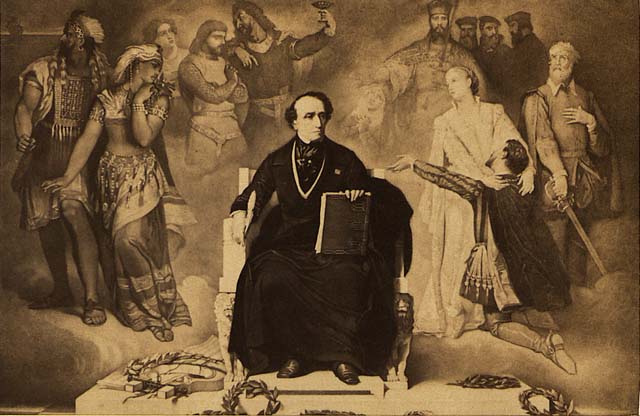
The portrait of Giacomo Meyerbeer is appropriate, since his best-known work, Robert le Diable, is an opera about selling one’s soul to the devil.


Here’s the chorus of demons (starting at 1:14) from Robert le Diable:


(Richard Wagner passionately hated Meyerbeer, whom he accused of trying to sabotage his opera career during the time that both were in Paris. There’s no evidence that Meyerbeer was doing anything of the kind; but he was Jewish, which was evidence enough for Wagner.)

The following engraving isn’t the one Mann describes (there’s no piano) but it’s similar in that Meyerbeer’s surrounded by characters from his operas:


Mann mentions a reproduction of the 2nd-century BCE “Winged Victory” statue. Here’s the original:


Mrs. Rohde is based on Thomas Mann’s mother Julia. Her daughters Inez and Clarissa are based, respectively, on his sisters Julia and Carla:

Julia Mann (the mother)Julia Mann (the daughter)Carla Mann


Rudi Schwerdtfeger is based on Mann’s friend Paul Ehrenberg, a painter and musician with whom Mann fell in (apparently unrequited) love. Here they are:

left to right: Mann, Mann’s bicycle,
Ehrenberg’s bicycle, Ehrenberg


It’s been speculated that the “artist fellow from Munich” who painted “mournful ... gray on gray landscapes” and who was Frau Schweigestill’s previous tenant before Adrian might be intended as a reference to Hitler. (He’s mentioned again in ch. 32.)

ch. 24: Mann says in Story of a Novel (p. 103) that the music described in this chapter was inspired by the Prelude to Act 3 of Wagner’s Meistersinger, which is this:


ch. 25: In Adrian’s vision, the Devil manifests in three personas. The first is a red-haired actor or pimp, who seems like a cousin of the death figures in Death in Venice; the second is a bespectacled musicologist; and the third is Adrian’s old teacher Schleppfuss. The second persona is modeled, in both appearance and opinions, on Theodor Adorno; indeed much of the musical theory in Doktor Faustus is based on Adorno’s views, both in published work and in conversations with Mann. Here’s Adorno, though in a more advanced state of baldness than Mann describes:


Much of the first persona’s dialogue is modeled on Adrian’s other old teacher, Kumpf, including the Latin quotations from ch. 12. When the Devil cites Kumpf’s nickname for him, “Dicis et non facis” (“You say, but fail to do”), Adrian responds with “Dicis et non es” (“You say, but fail to exist”).

The Devil’s telling Adrian he must renounce love in order to achieve his highest musical talent is reminiscent of Alberich in Wagner’s Ring, who must likewise renounce love in order to win the Rhinegold from which he will forge the ring of power.

The suggestion that the Devil forever carries with him an aura of cold, which is how he survives the fires of hell, is reminiscent of the claim in Marlowe’s Faustus that the Devil carries hell with him wherever he goes. When asked “How comes it then that thou art out of hell?” Mephistophilis replies:

Why this is hell, nor am I out of it.
Think’st thou that I who saw the face of God,
And tasted the eternal joys of Heaven,
Am not tormented with ten thousand hells,
In being depriv’d of everlasting bliss?


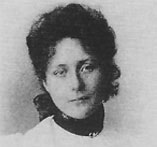
ch. 26: Jeanette Scheurl is based on the writer and antiwar activist Annette Kolb, a friend of the Mann family (as well as of André Gide, another of our authors)


Nietzsche: Untimely Meditation 1: David Strauss, the Confessor and Writer

The title Untimely Meditations has also been translated as Unfashionable Observations and Thoughts Out of Season. Nietzsche originally planned thirteen of them, but the series was interrupted by a) illness, forcing Nietzsche to quit his teaching job (with which he’d been growing increasingly dissatisfied anyway), and b) his gradual evolution away from Wagner and Schopenhauer, who’d been in effect the patron saints of the series. The Untimely Meditations are the last major products of Nietzsche’s Phase I.

David Strauss (1808-1874) was a liberal Protestant theologian who shocked conservative Christians by denying the divinity of Jesus. Of course Nietzsche’s attack comes from the other direction.


Nietzsche’s interest in Strauss does not run deep; he barely refers to Strauss in later writings (by contrast with Wagner, whom he can never stop talking about). Strauss really seems to serve Nietzsche merely as an example of what he calls “cultural philistinism.” He also serves as an example of those who, in Nietzsche’s later terms, have killed God but don’t recognise that he is dead – i.e., those who pay lip service to secularism and science but continue to be imprisoned by traditional Christian assumptions. Nietzsche’s complaint has something in common with G. K. Chesterton’s in “Song of the Strange Ascetic”:


If I had been a Heathen,
   I’d have praised the purple vine,
My slaves should dig the vineyards,
   And I would drink the wine;
But Higgins is a Heathen,
   And his slaves grow lean and grey,
That he may drink some tepid milk
   Exactly twice a day.

If I had been a Heathen,
   I’d have crowned Neaera’s curls,
And filled my life with love affairs,
   My house with dancing girls;
But Higgins is a Heathen,
   And to lecture rooms is forced,
Where his aunts, who are not married,
   Demand to be divorced.

If I had been a Heathen,
   I’d have sent my armies forth,
And dragged behind my chariots
   The Chieftains of the North.
But Higgins is a Heathen,
   And he drives the dreary quill,
To lend the poor that funny cash
   That makes them poorer still.

If I had been a Heathen,
   I’d have piled my pyre on high,
And in a great red whirlwind
   Gone roaring to the sky;
But Higgins is a Heathen,
   And a richer man than I;
And they put him in an oven,
   Just as if he were a pie.

Now who that runs can read it,
   The riddle that I write,
Of why this poor old sinner,
   Should sin without delight –?
But I, I cannot read it
    (Although I run and run),
Of them that do not have the faith,
   And will not have the fun.


Higgins’ going into the oven like a pie reminds me of Praisegod Piepsam’s going into the ambulance like a loaf of bread.


Magee: “Wagner’s Misleading Reputation”

As an example of the kind of view that Magee is concerned to combat, here’s Thomas Mann’s son Klaus:

Whoever yields, without reservation, to the brutal hypnosis of Wagner’s gestures and rhythms, has thus yielded to German imperialism. The genius of Lohengrin and Walkyrie is the genius of aggressiveness, reckless and gripping, ingeniously clever, for all its emotional exuberance. Nietzsche’s fight against Wagner anticipates and symbolizes the inexorable hate with which he would have persecuted Nazism. (Klaus Mann, André Gide and the Crisis of Modern Thought, p. 176)


Of course there’s a complex subtext here: a) Klaus’s father Thomas, as we’ve seen, was a Wagner fanatic; b) Klaus’s relationship with his father was difficult; c) Klaus always thought his father, even during his officially anti-nationalist and anti-racist period, was a little too close to nationalist and racist views. So Wagner may not be his real target here. (Attacking family members without naming them was after all a family tradition; remember Thomas vs. Heinrich.)

p. 68: Magee says that in Wagner’s day, those who wanted national unification were on the left, while those who favoured decentralisation were on the right. Maybe so, but there were plenty of exceptions, including Proudhon, a left-wing radical, who opposed the unification of Italy, favouring a loose-knit federation instead, and Goethe, a classical liberal, who favoured economic and cultural ties, but no political union, among the various states that made up pre-unification Germany. Bakunin, another left-wing radical, also favoured decentralisation. Since Wagner revered Proudhon, Bakunin, and Goethe, it doesn’t seem a foregone conclusion that he must inevitably have favoured nationalism; he did that on his own.

pp. 70-71: The claim that prior to World War I, patriotic pro-English chauvinism was “not deemed in the least offensive by anyone English” is a tad overstated. See, for example, Herbert Spencer in 1902. (And then there’s D. H. Lawrence ....)

p. 78: The interpretation of Shakespeare’s Henry V as expressing “the crudest drum-banging jingoism” is controversial, to say the least. For example, the play opens (after the prologue) with the Archbishop of Canterbury telling one of his followers that he has just more or less struck a deal with the king to support the proposed English war effort against France if the King agrees in turn to oppose an anti-clerical bill currently being debated in parliament. (Below, 3:40-5:00.) In the next scene, the King publicly asks the Archbishop to explain the legal basis for the English claim to French territory, and even warns him to be cautious about giving arguments that might justify war, as if he’s not yet decided whether to invade, although we know from the first scene that he almost certainly has. The Archbishop then responds with a long-winded legal and historical argument that no one present can manage to follow, the supposed upshot of which is that the English claim is valid – though since we know from the first scene that the Archbishop has a financial interest in supporting the King’s desired course of action, there’s no reason to trust the objectivity of his argument. (Below, 5:00-10:00) This is not how you begin a play if you want to stress the righteousness of the English cause; in particular, if Shakespeare had intended the play as patriotic propaganda, he would never have included the first scene with the Archbishop discussing his offer to the King.


Oh, watch the next scene too. It’s so good. Branagh’s version of Henry V (not Olivier’s) is my favourite Shakespeare movie:


Incidentally, the recent movie The King is a clever, sustained riff on Shakespeare’s play (more than on actual history, apart from Henry’s royal haircut).


p. 81: Magee refers to “the assumption, commonly expressed, that Wagner was much influenced by Nietzsche.” I don’t think I’ve ever heard or read anyone claim that Wagner was much influenced by Nietzsche.


Nietzschean Tune of the Week

Another Nietzschean composition – his “Mazurka”:


Back to the main page