Week 1
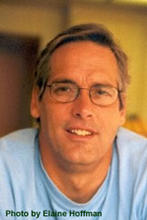
Descartes & Hoffman
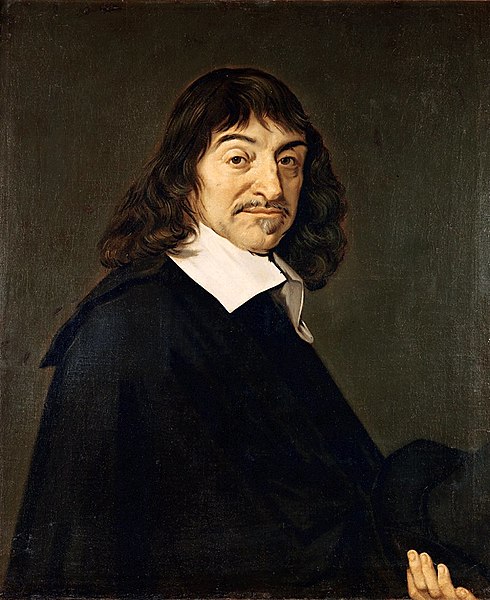
For a long time, the popular image of Descartes was from this portrait, attributed to Frans Hals:
Week 2
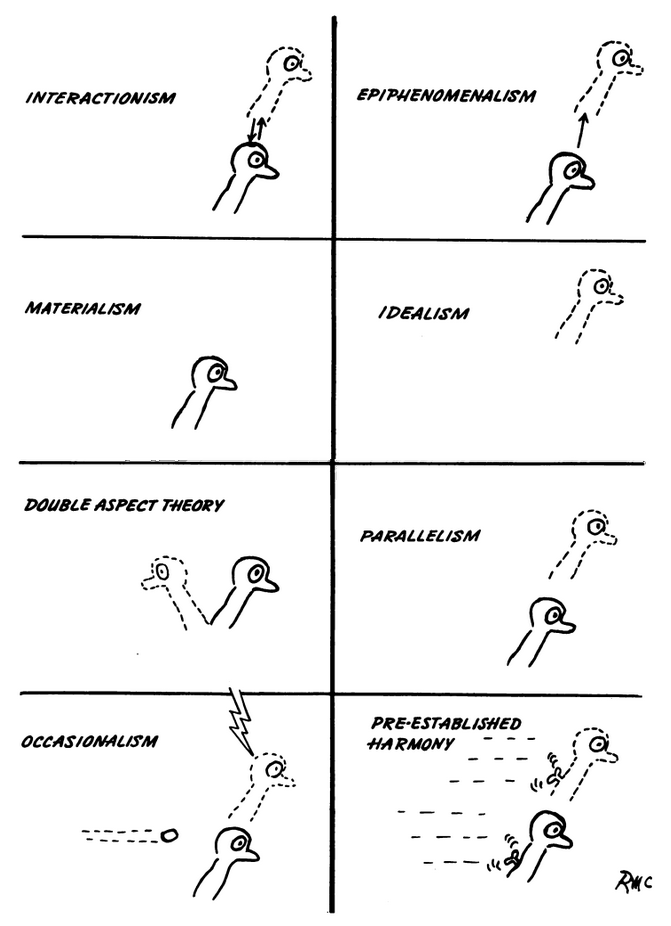
A Secret Chart to Get You to the Heart of This or Any Other Matter
This chart is from Richard Taylor’s Metaphysics:
I find him much more astute in moral philosophy than in metaphysics or physics. Not that I could approve in any way his principles or his maxims. They are extremely bad and quite dangerous ....
– Descartes on Hobbes (1643 letter, in Cottingham, vol. 3, pp. 230-231)
Had he kept himself to geometry he had been the best geometer in the world, but ... his head did not lie for philosophy. ... [I cannot] pardon him for his writing in defence of transubstantiation, which he knew was absolutely against his opinion, and done merely to put a compliment on the Jesuits.
– Hobbes on Descartes (quoted in Aubrey, Brief Lives of Contemporaries)
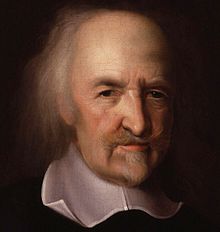 Thomas Hobbes (1588-1679), English, best remembered as a political philosopher, especially for his Leviathan, but also made contributions in other areas of philosophy, as well as in geometry and physics. His metaphysics was materialistic; while he asserted the existence of God, and indeed the Christian God, he regarded even God as ultimately material, a fact that led him (and would likewise lead Spinoza) to be denounced as atheistic. He was legally forbidden to publish in England, so he published many of his works in the Netherlands, a country whose relatively liberal laws on speech and press would make it a haven for Descartes, Arnauld, and Locke as well. During his European travels, Hobbes visited Galileo while the latter was under house arrest. (Descartes had decided not to publish his The World or Treatise on Light after he heard the news about Galileo’s trial and conviction.)
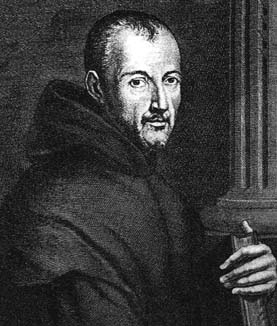 Marin Mersenne (1588-1648), French, a Catholic priest, made contributions in philosophy, theology, optics, music theory (where he is still remembered for “Mersenne’s Laws”), and mathematics (where he is still remembered for “Mersenne prime numbers”), but is best remembered for making connections and facilitating conversations among the major thinkers of the day, a role which win him the nickname “the postbox of Europe.” (Nowadays we might call him “the human Internet.”) In addition to Descartes, Hobbes, and Arnauld, his correspondents included Galileo, Huygens, Campanella, Gassendi, and Pascal. He frequently championed Descartes’s works against accusations of heresy.
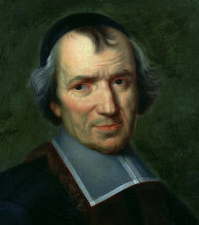 Antoine Arnauld (1612-1694), French theologian, mathematician, logician, and religious reformer. He had strong leanings toward Jansenism, a religious movement that – to oversimplify somewhat – looked too Protestant to please the Catholics but too Catholic to please the Protestants, and so he had to hide out in, where else, the Netherlands. In philosophy he was a strong, though not uncritical, supporter of Descartes, and developed an influential approach to teaching logic that recast traditional Aristotelean logic in somewhat Cartesian terms. It was Arnauld who first stated the problem of the “Cartesian Circle.” Like Mersenne, he was a frequent correspondent with many of the leading thinkers of the day.
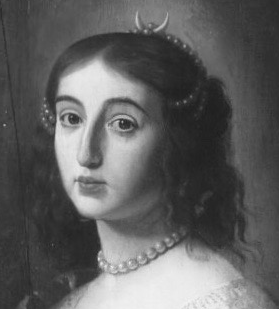 Princess Elisabeth of Bohemia (1618-1680) was the daughter of the deposed King Fridrich V of Bohemia (today the western portion of the Czech Republic) and, on her mother’s side, granddaughter of King James VI of Scotland and I of England; after the Austrian conquest of Bohemia, her family had found asylum in, where else, the Netherlands. Her skill in ancient Greek was so great that she was nicknamed “the Greek” by her family; she was also a skilled mathematician. She eventually became abbess of a Lutheran convent (though she herself was Calvinist, not Lutheran).
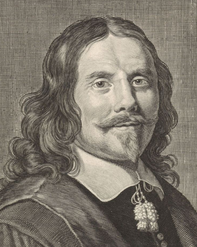 Henricus Regius or Hendrik de Roy (1598-1679), Dutch philosopher and physician, started out as an enthusiastic Cartesian but gradually began developing some aspects of Cartesian philosophy in increasingly controversial directions where Descartes was unwilling to follow, while downplaying or eventually discarding others. Regius could not accept Descartes’s idea that soul and body could simultaneously be really distinct and yet form an essential unity; for Regius, the only live options were a) the pure interactionist position, with soul and body being distinct and separable substances constituting a purely accidental unity, or else b) the idea that mind is merely an (inseparable) aspect of matter, so that soul and body would be modally but not really distinct. He also came to doubt the Cartesian theory of innate ideas. His public defenses of these views worried Descartes, who feared – correctly, in the event – that the heresies of Regius, the student, would likewise be attributed to Descartes, the teacher. Regius discovered the limits to Dutch toleration when he was forbidden to teach philosophy any further, and was instructed to stick to medicine – although this prohibition was local to the city of Utrecht (both the University and the town government) and not universal throughout the Netherlands. (In any case, Regius defied this ruling by slipping philosophical and theological arguments into his discourses on physiology.)
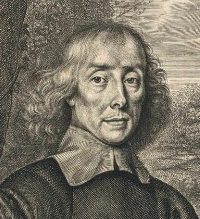 Henry More (1614-1687), English philosopher and theologian who saw Descartes’s philosophy as a problematic intermingling of Platonic ideas and materialistic/mechanistic ones, and who (again, to oversimplify somewhat) sought to liberate and further the Platonic strand in Cartesianism while discarding the materialistic/mechanistic one. He defended the notion of space as infinite and absolute; he also held that spirits occupy space as much as material bodies do – that, indeed, nothing can exist without occupying space – though he took spirits to be indivisible and bodies to be divisible.
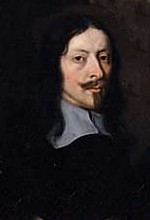 William Cavendish, Marquess of Newcastle (1593-1676), English royalist aristocrat, playwright, expert horsebreeder, and patron of the arts. During the Commonwealth period he took refuge in ... wait for it ... the Netherlands.
 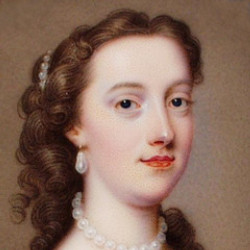 Newcastle’s wife Margaret Cavendish (1623-1673) is more interesting for our purposes – scientist, philosopher, poet, and playwright, whose novel The Blazing World is an early example of science fiction. She didn’t correspond with Descartes, but you can read her thoughts about him in MP pp. 143-153.
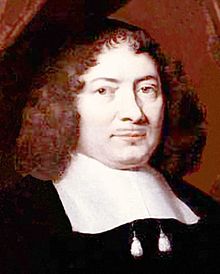 Frans Burman (1628-1679) was a Dutch theologian who conducted a famous interview with Descartes.
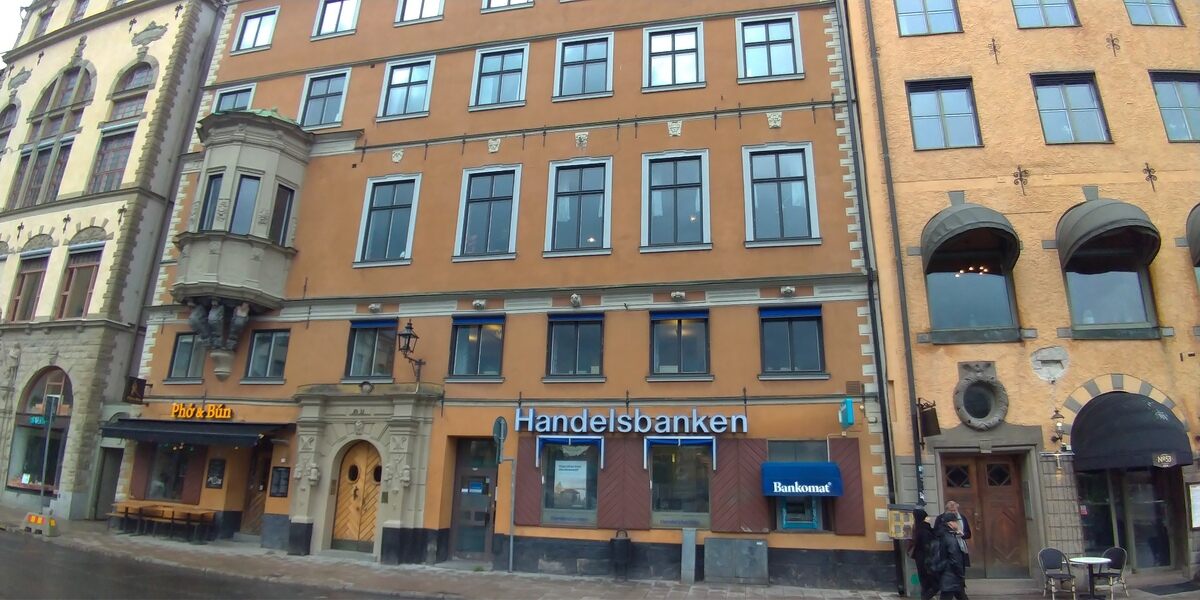
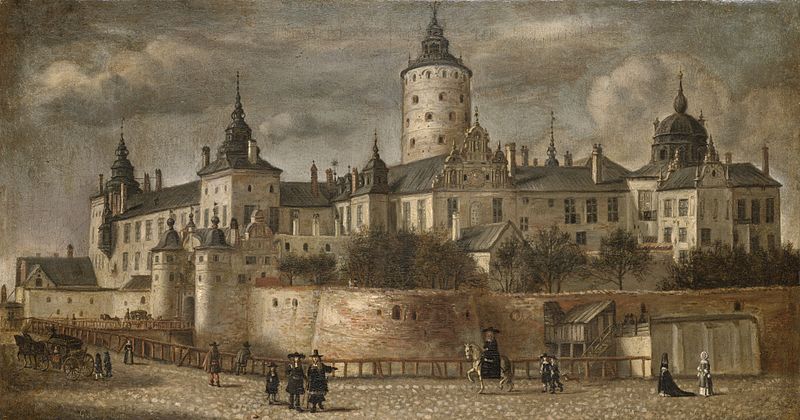
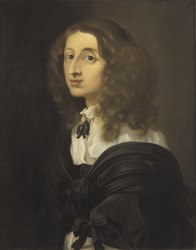 Well, sort of. Indirectly. Probably. Chanut arranged a post for Descartes as tutor to Queen Christina of Sweden and director of a proposed scientific academy – a position that Descartes was happy to accept as the political situation was getting a bit perilous for him not only in France but even in the Netherlands. But Christina wanted Descartes to tutor her at 5:00 a.m. in a freezing-cold, drafty library amid the icy Swedish winter; Descartes was a habitual late-riser, seldom willingly getting out of bed before 11:00 a.m., and he liked his environment to be as hot as possible (recall all the references in his writings to sitting in front of an oven, writing before the fire, etc.), and these chilly pre-dawn sessions wore out his health. In his letters Descartes complained that “in the winter men’s thoughts freeze here, like the water,” and that he was “out of [his] element.” He soon contracted pneumonia – which he may have caught from Chanut himself, in whose house he was living (which would give Chanut a double role in his death) – and refused to submit to bleeding (which was taken as an irrational death-wish by those around him, although Descartes was in fact a long-time skeptic about the medical value of bleeding, and from today’s perspective he was right). In any case, Descartes’s soul-body union soon dissolved.
Week 3
The Shadow of the Cathedral
While Descartes makes a big deal of inaugurating a radical departure from the mediæval/Scholastic past – a claim that is often taken at face value by later scholars – quite a few of his ideas were anticipated by mediæval thinkers. It’s not clear whether he was aware of them (although, given his Jesuit education, it seems likely that he would have been familiar with most of them) or whether he was independently reinventing the wheel, but in either case his work, while certainly novel in many important respects, does not represent the kind of radical break with Scholatic thought that it’s often taken to be.
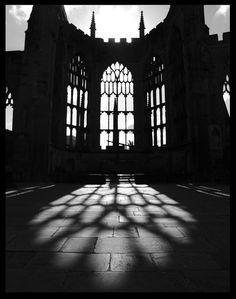 We’ve already seen the evidence assembled by Hoffman for his thesis that Descartes’s theory about the relation of soul and body owes more to the modified hylomorphism of his Christian Aristotelean predecessors than is usually recognised. But other examples of pre-Cartesian “blasts from the pasts” include:

What a thing is, is always determined by its function: a thing really is itself when it can perform its function; an eye, for instance, when it can see. When a thing cannot do so it is that thing only in name, like a dead eye or one made of stone, just as a wooden saw is no more a saw than one in a picture. The same, then, is true of flesh .... [A] dead man is a man only in name. And so the hand of a dead man, too, will in the same way be a hand in name only, just as stone flutes might still be called flutes .... (Aristotle, Meteorology IV. 12)
HAMLET: Whose grave’s this, sir?
GRAVEDIGGER: Mine, sir. ...
HAMLET: I think it be thine indeed, for thou liest in’t. ... What man dost thou dig it for?
GRAVEDIGGER: For no man, sir.
HAMLET: What woman then?
GRAVEDIGGER: For none neither.
HAMLET: Who is to be buried in’t?
GRAVEDIGGER: One that was a woman, sir; but, rest her soul, she’s dead.
HAMLET: How absolute the knave is! We must speak by the card, or equivocation will undo us. ...
HAMLET: To what base uses we may return, Horatio! Why may not imagination trace the noble dust of Alexander till he find it stopping a bung-hole?
HORATIO: ’Twere to consider too curiously to consider so.
HAMLET: No, faith, not a jot. But to follow him thither with modesty enough, and likelihood to lead it; as thus. Alexander died, Alexander was buried, Alexander returneth into dust; the dust is earth; of earth we make loam; and why of that loam whereto he was converted might they not stop a beer-barrel?
Imperious Caesar, dead and turn’d to clay,
might stop a hole to keep the wind away. ...
(Hamlet, Act V, scene1)
PERCY HOTSPUR: O, I could prophesy,
but that the earthy and cold hand of death
lies on my tongue: no, Percy, thou art dust,
and food for —
PRINCE HENRY: For worms, brave Percy: fare thee well, great heart!
Ill-weaved ambition, how much art thou shrunk!
When that this body did contain a spirit,
a kingdom for it was too small a bound;
but now two paces of the vilest earth
is room enough. ...
PRINCE HENRY: What, old acquaintance? could not all this flesh
keep in a little life? Poor Jack, farewell! ...
Embowell’d will I see thee by-and-by:
till then in blood by noble Percy lie.
FALSTAFF: Embowell’d! if thou embowel me to-day, I’ll give you leave to powder me and eat me too to-morrow. ’Sblood, ’twas time to counterfeit, or that hot termagant Scot had paid me scot and lot too. Counterfeit! I lie; I am no counterfeit: to die, is to be a counterfeit; for he is but the counterfeit of a man who hath not the life of a man: but to counterfeit dying, when a man thereby liveth, is to be no counterfeit, but the true and perfect image of life indeed.
(Henry IV, Part I, Act V, scene 4)
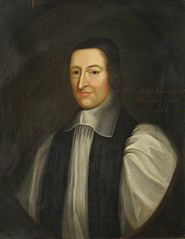 I’ve already shown you Hobbes, but here’s John Bramhall (rhymes with “camel”; 1594-1663). Bramhall was an Anglican clergyman and, like Hobbes, a royalist who beat a prudent retreat from England during the English Civil War and Commonwealth.
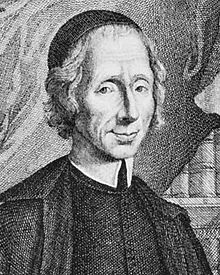 Nicolas Malebranche (1638-1715) was French and a Catholic priest. His “occasionalist” theory of causation (where what we ordinarily take to be causes are merely occasions for the one true cause, God, to exercise his power) may have been influenced by the Ash‘arite theory of causality, which he would have known about through the debate between al-Ghazali (Algazel; 1058-1111) and Ibn Rushd (Averroës; 1126-1198).
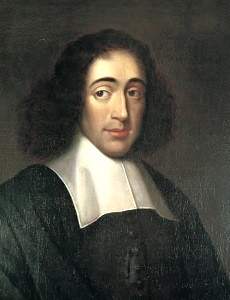 Baruch (or Benedict) Spinoza (1632-1677) was born in Amsterdam to a family of Jewish refugees, first from the Spanish Reconquista, subsequently from the forced-conversion policies of the Portuguese Inquisition, and finally from France – so they naturally ended up in the Netherlands. But he was too radical for the Jewish community in Amsterdam and was excommunicated (he was also the victim of an assassination attempt). In addition to philosophy, he was an early pioneer of Biblical textual criticism; he also designed lenses for microscopes and telescopes that were praised by e.g. Huygens. His political philosophy resembled that of Hobbes, except much less authoritarian, with an un-Hobbesian concern for toleration and religious and intellectual freedom.
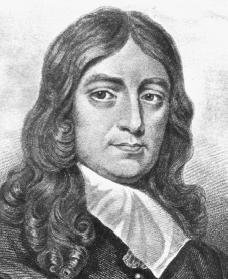 John Milton (1608-1674) is best known today as a poet (above all for Paradise Lost), and second-best as a political philosopher (where his writings anticipate Locke). But he also made contributions in theology, with De Doctrina Christiana being the major one.
 Week 4
Deeper Than Did Ever Plummet Sound
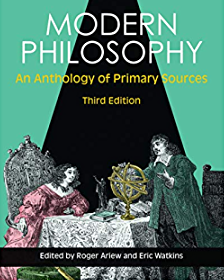 The editors of our main textbook note (p. x) that they have modernised the English-language texts. Now I have no quarrel with their modernising things like spelling and punctuation, but they also note:
We have replaced archaic words and expressions with their modern equivalents: surface for superficies, up to now or previously for hitherto, admit for own gladly or inclined to for fain, endow for endue, etc. – not to mention what we have done to whereunto, therein, hark, hath and doth.
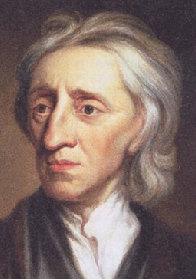
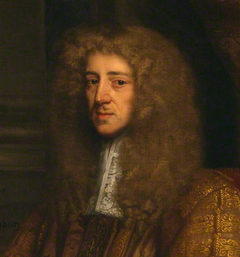 John Locke (1632-1704). English philosopher, theologian, economist, and physician. (See pic on left.) After graduating from Oxford, Locke became secretary and personal physician to Lord Shaftesbury (a.k.a. Anthony Ashley Cooper; 1621-1683). (See pic on right.)
Week 5
Trotter-Cockburn and Clarke
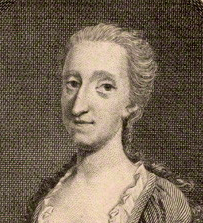 Catharine Trotter-Cockburn (née Trotter; 1679-1749; “Cockburn” is pronounced “Coburn”) was an English novelist and playwright in addition to being a philosopher. Her writings frequently defend Locke against religiously-motivated charges.
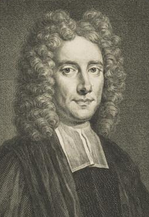 Samuel Clarke (1675-1729), English philosopher, theologian, and cleric, was a friend of Isaac Newton and a champion of his ideas.
Week 6
Leibniz and Molina
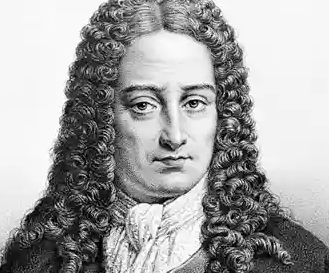 Gottfried Wilhelm Leibniz (1646-1716), German philosopher, logician, mathematician, historian, theologian, legist, scientist, engineer, and diplomat, spent much of his life as courtier to the House of Brunswick in Hannover. Beyond philosophy, his accomplishments include developing calculus (independently of Newton, though he was mistakenly accused of having plagiarised Newton); developing a binary number system and designing an early calculating machine (two of the foundation stones of modern computer science); and creating one of the first systematic library cataloguing systems. He was also one of the first European philosophers to take an interest in Chinese philosophy. Actually you should just read his whole Wikipedia entry, it’s amazng.
Leibniz’s thesis that this is the “best of all possible worlds” was famously satirised in Voltaire’s Candide as absurd optimism, though the thesis could also be read as rather pessimistic (“sorry, this is as good as things can get”).
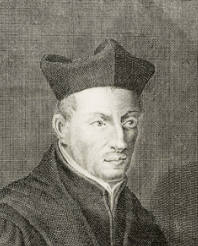 Leibniz’s approach to free will and possibility was heavily influenced by the ideas of the Spanish Scholastic Luis de Molina (1535-1600), so it’s worth saying a bit about what Molina’s ideas were, even though Leibniz’s views, as we’ll see, were not the same.
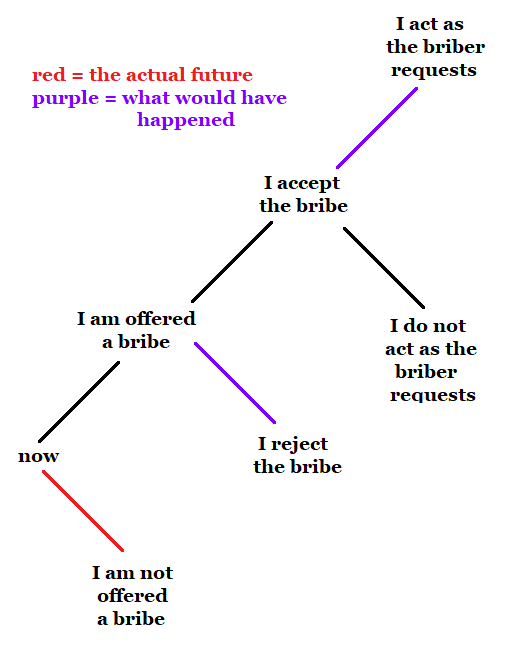
Molina sought to reconcile free will with divine providence (the idea that everything that happens is part of God’s plan) by developing
the idea of middle knowledge:
1. There are facts not only about what you will freely do in the actual future, but what you would freely do in every possible future.
2. If (1) is true, then God, being omniscient, knows, prior to creating us, what we would freely do in every possible circumstance.
3. If (3) is true, then God could create just those people who would freely do X in circumstances Y, and place them in circumstances Y, and thus guarantee that they will act according to the divine plan, without interfering with their free choices.
4. Therefore: God’s providence does not interfere with our free will.
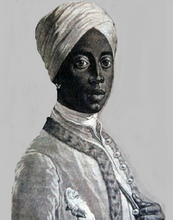 Anton Wilhelm Amo (c. 1703-1759) is a rare example of a black African philosopher active in 18th-century Europe. Born in Ghana, Amo was brought to Germany, probably as as a slave, at around age four by the Dutch West India Company as a “gift” for the Duke of Wölfenbüttel in Germany, who raised him as free and gave him an education comparable to that of other children of the Wölfenbüttel family. He graduated with a degree in law from the University of Halle in 1727, writing his dissertation (unfortunately now lost) on the rights of blacks in Europe; in 1734 he graduated from the University of Wittenberg with a degree in law (his dissertation on the “apathy” [in the sense of lack of sensation] of the human mind has been interpreted both as materialist and as Neoplatonic). He taught philosophy at the universities of Halle and Jena, but an increasingly racist atmosphere may be what led him to return to Ghana, where his final fate is unclear. My former professor Kwame Anthony Appiah tells more about his story here.
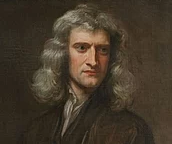 Isaac Newton (1643-1727), English physicist, mathematician, and theologian, was the preeminent scientist of his day, and on the short list of greatest scientists of all time. For our purposes, his chief relevance to this course is his views on space and time, championed by Clarke against Leibniz.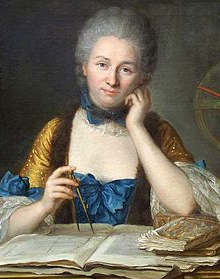
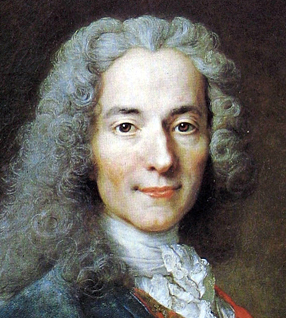 Émilie du Châtelet (a.k.a. Gabrielle Émilie Le Tonnelier de Breteuil, Marquise du Châtelet, 1706-1749) (pic on left) was a French scientist, philosopher, and mathematician. By contrast with Locke, Châtelet insisted on the necessity of a priori knowledge, arguing that without it mathematics would be deprived of its character of necessity. She had a romantic relationship with the (rather more Lockean) Voltaire (pic on right), and they pursued scientific investigations together in her home laboratory at her cozy cottage in Haute-Marne (see below):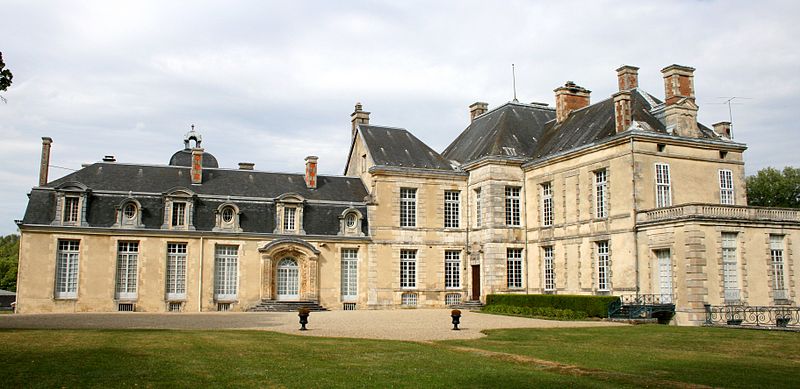
Week 7
Collins, Berkeley, and Shepherd
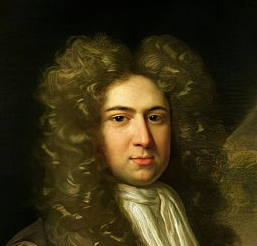 Arthur Collins (1676-1729) was an English philosopher, and a friend and semi-disciple of Locke, though he took Locke’s ideas in a direction much more at odds with traditional religion (namely, toward a deistic materialism) than did, say Trotter-Cockburn.
Most of what Collins says about the views of previous philosophers in this book is wrong. Ditto for what the editor says.
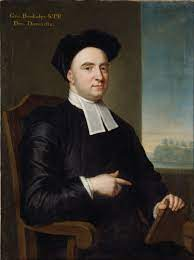 George Berkeley (1685-1753), a Bishop of the Church of Ireland, made contributions in philosophy, optics, and psychology. (It’s kind of a relief to see one of these guys not wearing an absurd wig.) The characters’ names in his dialogue, Hylas and Philonous, mean “material” and “lover of mind,” respectively.
There’s a famous pair of limericks – the first by Ronald Knox, the second anonymous:
There once was a man who said “God
must think it exceedingly odd
if he finds that this tree
continues to be
when there’s no one about in the Quad."
Dear Sir,
Your astonishment’s odd.
I am always about in the Quad.
And that’s why the tree
will continue to be
since observed by
Yours faithfully,
God
If objects depend on our seeing
so that trees, unobserved, would cease tree-ing,
then my question is: Who
is the one who sees you
and assures your persistence in being?
Dear Sir,
You reason most oddly.
To be’s to be seen for the bod’ly
but for spirits like me,
to be is to see.
Sincerely,
The one who is Godly.

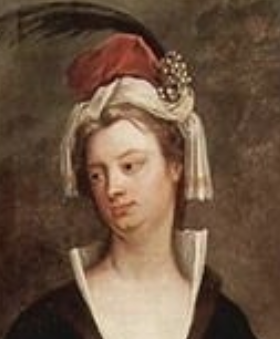
Week 8
Hume and the Dialogues
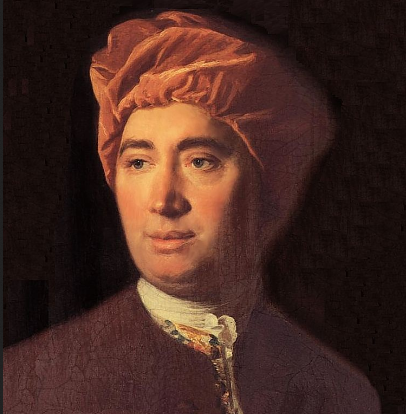 David Hume (1711-1776), Scottish philosopher, historian, and economist.
In Hume’s Dialogues, Cleanthes, defender of the Argument from Design, is named after the Cleanthes of Assos, who was the second head of the Stoa, and who wrote the Hymn to Zeus that St. Paul quotes at Acts 17:28. The name is presumably chosen because the Stoics were proponents of a version of the Argument from Design. Philo, the skeptical character, is named after Philo of Larissa, who was head of the Platonic Academy during its skeptical phase, and who worked to steer its orientation from radical skepticism to moderate skepticism; he was the teacher of Cicero (on whose dialogue On the Nature of the Gods the present dialogue is to some degree modeled). Demea represents the views of Samuel Clarke; the name “Demea” may be a reference to demos, the “populace,” signifying that Demea’s views are of the crowd or aimed at the crowd and are less philosophically respectable than those of Philo and Cleanthes; certainly Hume seems to respect Demea the least among the three. Pamphilus, the dialogue’s narrator, has a name meaning “lover of all” – perhaps in reference to his difficulty in deciding among the views of the three main interlocutors.
David Hume (1711-1776), Scottish philosopher, historian, and economist.
In Hume’s Dialogues, Cleanthes, defender of the Argument from Design, is named after the Cleanthes of Assos, who was the second head of the Stoa, and who wrote the Hymn to Zeus that St. Paul quotes at Acts 17:28. The name is presumably chosen because the Stoics were proponents of a version of the Argument from Design. Philo, the skeptical character, is named after Philo of Larissa, who was head of the Platonic Academy during its skeptical phase, and who worked to steer its orientation from radical skepticism to moderate skepticism; he was the teacher of Cicero (on whose dialogue On the Nature of the Gods the present dialogue is to some degree modeled). Demea represents the views of Samuel Clarke; the name “Demea” may be a reference to demos, the “populace,” signifying that Demea’s views are of the crowd or aimed at the crowd and are less philosophically respectable than those of Philo and Cleanthes; certainly Hume seems to respect Demea the least among the three. Pamphilus, the dialogue’s narrator, has a name meaning “lover of all” – perhaps in reference to his difficulty in deciding among the views of the three main interlocutors.
The theory of natural selection that Philo develops in the Dialogues is based on (but improves on) the evolutionary theories of Empedocles and Epicurus. While anticipating Darwin’s theory, it falls short by treating fitness for survival as all-or-nothing rather than a mater of degree, which is why Philo is unable to answer Cleanthes’ objection about the eye (a point at which Hume seems to sincerely be conceding a point from Philo to Cleanthes). If Hume had discussed the matter with his friend Adam Smith, and had introduced the notion of competition for scarce resources into his model, he might have seen that fitness for survival is a matter of degree, which would have enabled him to anticipate Darwin’s response to Cleanthes.
Hume’s writings on religion prompted the Church of Scotland to attempt to excommunicate him. This plan ran into a snag when they discovered that he was already not a member of the Church of Scotland.
Week 9
Hume on His Deathbed
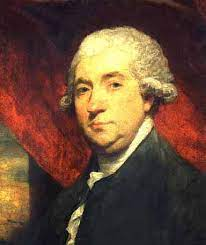 On the question of whether Hume’s frequent protestations of Christian belief were sincere or not, it’s relevant to consider the interview that James Boswell (pictured right), the biographer of Samuel Johnson, conducted with him when Hume was on his deathbed:
I know not how I contrived to get the subject of immortality introduced. He said he never had entertained any belief in religion since he began to read Locke and Clarke. ... He then said flatly that the morality of every religion was bad, and, I really thought, was not jocular when he said that when he heard a man was religious, he concluded he was a rascal, though he had known some instances of very good men being religious. ...
I had a strong curiosity to be satisfied if he persisted in disbelieving a future state even when he had death before his eyes. I was persuaded from what he now said, and from his manner of saying it, that he did persist. ... I asked him if the thought of annihilation never gave him any uneasiness. He said not the least; no more than the thought that he had not been, as Lucretius observes.
 In a private note, Smith wrote: “Poor David Hume is dying very fast, but with great cheerfulness and good humour, and with more real resignation to the necessary course of things than any whining Christian ever died with pretended resignation to the will of God.”
Week 10
Campbell on Testimony
“Extraordinary claims require extraordinary evidence.”
— Carl Sagan
“The open, obvious, democratic thing is to believe an old apple-woman
when she bears testimony to a miracle, just as you believe an old
apple-woman when she bears testimony to a murder.”
— G. K. Chesterton
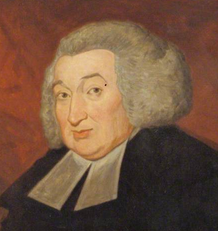 George Campbell (1719-1796), Scottish philosopher, rhetorician, and minister. In his critique of Hume’s chapter on miracles, Campbell holds (like Reid, as we’ll see) that reliance on testimony runs too deep to be reducible to perception and inference – which makes his position rather like that of the Nyaya critique of Buddhist epistemology in Indian philosophy. (See also my discussion of the “alien explorer” model here.)
Week 11
Reid
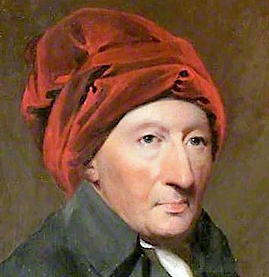 Thomas Reid (1710-1796), Scottish philosopher and psychologist, began as an enthusiastic follower of Berkeley, but soon broke ranks and became a relentless critic of the “ideal system” (by which he means the system of “ideas”) held not only by Berkeley but also by Descartes, Locke, Hume, and nearly everyone else we’ve read in this class. (Reid also takes Aristotle to have been an advocate of the ideal system, though I think he is wrong about that.) However, Reid’s interest in the geometry of the visual field demonstrates Berkeley’s ongoing influence.
Reid is often described as holding a direct realist theory of perception, but it’s debatable whether he really does. Sometimes he uses the language of direct perception; but at other times he talks about passing so quickly from our sensations to their objects that we don’t even notice the former, a way of speaking that suggests what our own Michael Watkins calls “ninja inferences,” i.e., inferences that are so fast and invisible that we are unaware of them (see, e.g., pp. 77, 186, 196) and have to posit them theoretically. If one compares Reid with later defenders of common-sense realism like J. L. Austin (in Sense and Sensibilia) or James J. Gibson (in The Senses Considered as Perceptual Systems), one may be struck more by Reid’s similarities to his predecessors rather than his differences.
p. 7: The “Bishop of Cloyne” is Berkeley; the “author of the Treatise of Human Nature” is of course Hume. Reid refers to him this way because Hume had published the Treatise anonymously (although Reid probably knew who he was).
p. 19: Reid says that no one before Hume had ever thought of questioning the principle of causality. In fact many had; two that come to mind are Sextus Empiricus (c. 160-c. 210) and Nicholas of Autrecourt (c. 1299-1369).
Reid complains (p. 69) that Locke gives the name of “colour” to the effect in our minds when he should have given it to the cause in the external object. But, as we’ve seen, Locke does give it to the cause in the external object. He’s not Galileo or Descartes.
p. 82: What Reid says here is very similar to Michael Polanti’s later distinction, in The Tacit Dimension, between attending-from and attending-to; and likewise to Heidegger’s distinction, in Being and Time, between ready-to-hand and present-at-hand.
p. 108: Reid says that for Plato, matter can exist without forms but forms cannot exist without matter. I assume the matter-without-forms is a reference to the account of matter in the Timæus; but what Reid means by no-forms-without-matter is a bit of a mystery.
Week 12
My Name is Reid, I Love to Read!
Week 13
Winding Up Reid
p. 276: Reid writes as though Descartes had never considered the problem of the so-called “Cartesian circle,” when in fact he addressed it explicitly.
p. 332: Reid’s view that powers exist only in those circumstances where they can be exercised (what Aristotle calls the “Megarian” view of powers, which he pokes fun at) is a case where Reid seems to be departing from his intention of defending common sense.
I Kant Help It
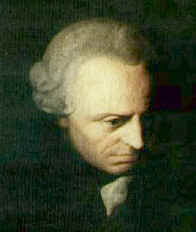 Immanuel Kant (1724-1804) spent his entire life in and around the Prussian city of Königsberg (today Kaliningrad, in a little sliver of Russia separated from the rest of Russia by the Baltic states of Lithuania and Latvia). While he’s best known as a philosopher, he also made a crucial contribution to astronomy by developing the nebular hypothesis of the origin of the solar system, which turned out to be essentially right.
Here’s a video explaining (sort of) Kant’s theory of incongruent counterparts. I have some quarrels with this guy’s presentation, but anyway:
Week 14
Musical Finale
 My roommate and I wrote this song about Kant in college: