

Archives: February 2004



Epicurus: Egoist Anarchist?
 Concerning my post on Egoism and Anarchy, Peter Saint-Andre writes:
Roderick Long argues that classical eudaimonism provides a key to reconciling the egoistic and natural-rights justifications for a voluntary society, since eudaimonism holds that justice is part of human flourishing. Long adduces Socrates as the originator, and Plato, Aristotle, and the Stoics as early developers, of the eudaimonist tradition; he also notes that eudaimonist views on the content of justice are quite foreign to the theories of justice inherent in individualist anarchism. It�s interesting to me that he left Epicurus off the list of eudaimonist thinkers, because certain Epicurean positions seem to present an approach to justice that is much closer to individualist anarchism.Saint-Andre goes on to quote several libertarian-leaning quotes from Epicurus. (See his full post here.)
Posted February 29th, 2004 |
Sinners in the Hands of an Angry Jesus?
Thanks to everyone who wrote me concerning my column God So Loved the World that He Did What?. Several readers expressed surprise at my claim that the doctrine I was criticising is �nowhere to be found in the Bible.� Some pointed to John 3:16: �For God so loved the world, that he gave his only begotten Son, that whosoever believeth in him should not perish, but have everlasting life.�
 The doctrine I was criticising assumes, first, that Jesus is God, and second, that the point of Jesus� crucifixion was to rescue people from being sent to hell by God. Neither of these claims occurs in John 3:16.
I�ve argued below that nowhere in the Gospels is Jesus proclaimed to be God. As for hell, I see no good reason to suppose that the eternal salvation that Jesus offers is life in an otherworldly future or escape from a literal hell. Remember that Jesus is constantly speaking metaphorically and being interpreted literally: when he speaks of being �born again,� he is asked �How can a man be born when he is old? can he enter the second time into his mother�s womb, and be born?� (John 3:3-4); and when Jesus says �I have meat to eat that ye know not of,� his literal-minded disciples wonder, �Hath any man brought him aught to eat?� and he has to explain �My meat is to do the will of him that sent me.� (John 4:32-34) There�s every reason to take his talk of a future judgment metaphorically also; for he also makes clear that divine Sonship, the status he offers to all, is not a future event to be awaited but an immediately available atemporal reality: �Before Abraham was, I am.� (John 8:58) (Incidentally, this passage can hardly be taken as claiming that Jesus is God, since a mere four lines earlier he says �If I honour myself, my honour is nothing: it is my Father that honoureth me.�)
Jesus clearly tries to avert a literalist interpretation of salvation when he reminds his disciples: �Neither shall they say, Lo here! or, lo there! for, behold, the kingdom of God is within you.� (Luke 17:21) Or likewise, from the non-canonical (but not necessarily inauthentic) Gospels:
�If your leaders say to you, Lo, the kingdom is in the sky, then the birds of the sky will precede you; if they say to you, It is in the sea, then the fish will precede you. Rather, the kingdom is within you and around you.� (Thomas 3)Friedrich Nietzsche seems to have understood Jesus better than most Christians when he wrote in The Antichrist:
�There is no sin, but it is you who make sin when you do the things that are like the nature of adultery, which is called sin. That is why the Good came into your midst, to the essence of every nature, in order to restore it to its root.� (Mary 4:26-27)
�What you are looking forward to has come, but you do not know it.� (Thomas 51)
�The kingdom of the Father is spread out upon the earth, and men do not see it.� (Thomas 113)
�What are the �glad tidings�? True life, eternal life, has been found � it is not promised, it is here, it is in you: as a living in love, in love without subtraction and exclusion, without regard for station. Everyone is the child of God � Jesus definitely presumes nothing for himself alone � and as a child of God everyone is equal to everyone. ... If I understand anything about this great symbolist, it is that he accepted only inner realities as realities, as �truths� � that he understood the rest, everything natural, temporal, spatial, historical, only as signs, as occasions for parables. The concept of �the son of man� is not a concrete person who belongs in history, something individual and unique, but an �eternal� factuality, a psychological symbol redeemed from the concept of time. ... The �kingdom of God� is nothing that one expects; it has no yesterday and no day after tomorrow, it will not come in �a thousand years� � it is an experience of the heart; it is everywhere, it is nowhere.�(Though I wouldn�t agree with Nietzsche in interpreting Jesus� words purely psychologically; here Nietzsche is blinded by his own naturalism. But that�s another story.)
Posted February 28th, 2004 |
Why Jesus Is Not God
Was Jesus God incarnate? There�s a popular argument floating around the web these days that purports to prove that he must have been � an argument that unfortunately seems to have originated with C. S. Lewis, a theologian for whose philosophical abilities I ordinarily have a great deal of respect.
There are different versions of the argument, but they all run more or less as follows:
1. Jesus claimed to be God.Let�s consider this argument premise by premise.
2. Anyone who claims to be God is either a liar, a lunatic, or God.
3. Jesus was neither a liar nor a lunatic.
4. Therefore, Jesus is God.
 Again, in the garden of Gethsemane Jesus is reported (though by whom is not clear, as all the disciples are said to have been asleep) as praying, �O my Father, if it be possible, let this cup pass from me: nevertheless not as I will, but as thou wilt.� (Matthew 26:39) Would God pray to himself or ask favours from himself? Or even if we read trinitarianism into the Gospels, does it make sense for one person of the Godhead to pray to another person of the Godhead, or to suggest that the wills of these persons could differ?
�But as many as received him, to them gave he power to become the sons of God, even to them that believe on his name: Which were born, not of blood, nor of the will of the flesh, nor of the will of man, but of God.� (John 1:12-13)As the New Testament authors understand Jesus� message, being the �Son of God� is evidently not a status that Jesus claims for himself alone, but one that is open to all Christians; a fortiori it is not a way of being identical with God. Jesus puts himself forward, not as God, but as the first man to have succeeding in manifesting the divine nature that is open to all; anyone who follows his example, who �believes� in him � �trusts� or �accepts� would be a better translation � will himself become a �Logos made flesh.� Hence those who receive the Logos are even described as �gods.� (John 10:35)
�For as many as are led by the Spirit of God, they are the sons of God. ... And if children, then heirs; heirs of God, and joint-heirs with Christ.� (Romans 8:14-17)
�Beloved, now are we the sons of God, and it doth not yet appear what we shall be: but we know that, when he shall appear, we shall be like him.� (1 John 3:2)
 Must anyone who claims to be God be either a liar, a lunatic, or God? This is much less obvious to me than it is to Lewis and his epigoni. Consider the case of Tenzin Gyatso, the current Dalai Lama, who considers himself to be the 14th incarnation of the Bodhisattva Avalokiteshvara. This claim is accepted by no one outside the Buddhist community (I assume), and by few within it (I suspect). Yet the Dalai Lama�s sincerity and sanity are seldom questioned; on the contrary, he is one of the world�s most respected religious figures, and clearly (I infer from his writings) an intelligent and thoughtful man. And indeed, given the Dalai Lama�s upbringing and cultural milieu, I see nothing terribly surprising in his coming to believe what he believes, though I am not in the least inclined to follow him in this belief. Is believing oneself to be Jehovah incarnate that much more fantastic than believing oneself to be Avalokiteshvara incarnate?
Posted February 28th, 2004 |
Egoism and Anarchy
During the late 1880s, a fierce debate broke out in the pages of the libertarian periodical Liberty over egoistic versus natural-rights approaches to anarchism. (The various contributions to this debate will eventually be available in the Molinari Institute�s online library; in the meantime, for details see Frank H. Brooks� The Individualist Anarchists: An Anthology of Liberty (1881-1908) or Wendy McElroy�s The Debates of Liberty: An Overview of Individualist Anarchism, 1881-1908.)
The egoists argued that there could be no rational grounds for any person to recognise any authority above her own reason or to place any goal before her own happiness. Hence they rejected �morality� as metaphysical mumbo-jumbo, concluding that no one has any reason to accept any principles of conduct,  anarchist or otherwise, except insofar as accepting those principles is strategically effective in promoting one�s own interests. The consistent anarchist, they insisted, should accept no unchosen constraints, moral or political, on her own sovereign will.
The natural-rights proponents argued that respect for the inviolability of other people�s rights is a sine qua non of anarchism. Even if the egoist respects anarchist boundaries in practice � something of which the natural-rightsers felt none too confident � she must nonetheless reserve in principle an entitlement to impose her will on others should she judge doing so to be in her own interest. Hence the egoist must regard others� freedom as a revocable gift from herself to them, rather than an inherent right; but this is to take the attitude of a ruler to her subjects, not of an anarchist to her peers. The consistent anarchist, the natural-rightsers argued, must reject egoism in favour of a universal and binding moral law.
I�ve long held that Greek philosophy and modern libertarianism are natural allies, tailor-made for each other � not because they are similar but because through their very differences each can supply the deficiencies of the other. This debate in Liberty is another example. Both sides of this debate shared a common assumption: that respect for others� rights is not itself a component of our self-interest. From this assumption it follows that one must choose between putting one�s own interests first and regarding other people�s rights as having intrinsic weight. But this is precisely what is challenged by Classical Eudaimonism, the moral theory pioneered by Socrates, developed in different ways by Plato, Aristotle, and the Stoics, and accepted by nearly every major moral philosopher before the Renaissance, including Cicero and Thomas Aquinas.
According to Classical Eudaimonism, self-interest is indeed the ultimate criterion of right action, but our true self-interest is to live a life of objective human flourishing. Acting in accordance with the virtue of justice is not a mere external means to such flourishing, it is part of that flourishing; hence self-interest properly understood requires that we place value � and not merely strategic value either � on behaving justly toward others. Hence the Classical Eudaimonist can happily embrace both the egoist�s insistence of the paramount supremacy of self-concern and the natural-rightser�s insistence on the sacred authority of justice.
I may be asked: �Well, it�s nice that Classical Eudaimonism can reconcile the two sides of this debate, but why should we believe that Classical Eudaimonism is true?� My answer is that the fact that Classical Eudaimonism can reconcile the two sides of the Liberty debate is itself an extremely good reason for thinking it�s true. (In saying this I�m relying on a Greek-style coherentist moral epistemology that I won�t spend time defending here; but see my article The Basis of Natural Law, my book Reason and Value: Aristotle versus Rand, and my review of Leland Yeager�s Ethics As Social Science.)
Of course, the Classical Eudaimonists� views on the content of justice generally bore little resemblance to individualist anarchism. But that�s why the ideas of the Greek philosophers require as much correction from libertarian ideas as libertarian ideas require correction from the Greeks. Symbiosis, man.
Posted February 26th, 2004 |
God So Loved the World that He Did What?
 Suppose I confront you, with a gun in one hand and a hammer in the other. I point the gun at you, and I tell you sadly, �I have to shoot you unless I bang myself on the head with this hammer. It�s the rule.�
�Whose rule is this?� you ask as you edge toward the exit.
�It�s my rule,� I explain. �I made this rule all by myself. But don�t worry; I�m not going to shoot you, because I love you.�
And then I bang myself on the head, really hard, with the hammer.
You start to run away, but I tackle you. �Look at me!� I yell. �I�m bleeding! My skull is cracked!! Look at the suffering I�ve put myself through for your sake!!! You really owe me now. You�ll be an ungrateful wretch unless you start doing exactly what I say.�
Such a demand would obviously make no sense. But how is the predominant Christian interpretation of the crucifixion of Jesus any different?
Mainstream Christians hold that Jesus sacrificed himself on the cross to save us from hell. But they also maintain that Jesus is God incarnate. So who made the rule that we would all be damned to hell unless God got himself nailed to a cross? God did.
If this were true, wouldn�t it make Jesus� �sacrifice� meaningless?
This bizarre doctrine, which casts God in the role of a sado-masochistic psycho, is believed by millions of people, and is the central theme of that movie everyone�s talking about. Yet it�s nowhere to be found in the Bible. (Not that the doctrine would be worthy of belief if it were � but anyway it�s not.)
Strange planet, eh?
Posted February 25th, 2004 |
Shades of Green
Several libertarian readers have written to me expressing incredulity and horror at my kind words for environmentalism in my February 13th post. Environmentalists, I was told, are enemies of civilisation itself, and the environmental movement is nothing more than a plot to impose statist tyranny on us all.
I certainly agree that most environmentalists favour oppressive statist solutions to the problems they address; but so what? Most people of any sort favour oppressive statist solution to the problems that concern them; that�s what it means to say that libertarianism is a minority viewpoint. One needn�t endorse environmentalists� favourite solutions to agree that many of the problems they cite are genuine. (I said many, not all.)
It�s also true that the environmentalist movement includes a number of people who are quite properly classified as enemies of civilisation. But they hardly constitute the majority of environmentalists.
In any case, there are quite a few libertarian-friendly environmentalists. Historically, Thoreau is an obvious example. Today I would name the folks at PERC, specialising in the economic aspects, and Gus diZerega, specialising in the spiritual aspects. (For some of the commonalties between environmentalism and the Hayekian view of markets see diZerega here.) I don�t always agree with everything they say, but they are obviously on the side of the good guys.
I may be told that these people can�t be real environmentalists, because they�re not anti-liberty. I note that the argument is circular.
Posted February 25th, 2004 |
Wolf Fight
 My latest exchange on Liberty & Power concerns this story by Naomi Wolf. The links follow:
Gene Healy: Wolf and Wolf Roderick Long: Wolf Redux Gene Healy: Iron-Jawed Angel or Shrinking Violet? Roderick Long: Angel Redux Gene Healy: Yet More Wolf Roderick Long: Even More Wolf Gus diZerega: Wolf�s Article
Posted February 25th, 2004 |
Constant on Blowback
[cross-posted on Liberty & Power]
 Nearly two centuries before the September 11th attacks, French liberal author Benjamin Constant issued the following prophetic warning:
The force that a people needs to keep all others in subjection is today, more than ever, a privilege that cannot last. The nation that aimed at such an empire would place itself in a more dangerous position than the weakest of tribes. It would become the object of universal horror. Every opinion, every desire, every hatred, would threaten it, and sooner or later those hatreds, those opinions, and those desires would explode and engulf it.
There would certainly be something unjust in turning such fury against an entire people. An entire country is never guilty of the excesses that its leader makes it commit. ... But the nations that are the victims of its deplorable obedience, will not be prepared to acknowledge its secret feelings, feelings that its conduct belies. They will reproach the instruments for the crimes of the hand that directs them.
� The Spirit of Conquest and Usurpation (1813)
Posted February 25th, 2004 |
To Vote Or Not To Vote
 Should libertarians vote? If so, for whom? I recently participated in an exchange on this topic on Liberty & Power. Check out the links below:
David Beito: John Edwards Makes Even Kerry Look Good on Iraq, Long on Russo Pat Lynch: The Vote Question Roderick Long: A Vote Answer David Beito: Voting as Self-Defense: The Case of Black Disfranchisement Roderick Long: Vote Note Pat Lynch: Voting ReDeux
Posted February 23rd, 2004 |
The Fell Clutch Tightens
The following letter appeared in this morning�s Opelika-Auburn News.
To the Editor:
Perhaps I shouldn�t bother complaining that Rudy Tidwell insults the author of the heroic and inspiring poem �Invictus� by calling it an expression of �the essence of sin.�
After all, Mr. Tidwell�s entire column today was a sustained series of insults against everyone who disagrees with his religious views. When someone is willing to describe his living neighbours � be they Jews, Muslims, Buddhists, or atheists � as being �in a worse condition than an imbecile,� simply because they follow a different faith or no faith, one can hardly expect courtesy toward the dead.
I will point out, however, that Mr. Tidwell commits a factual error in attributing the poem�s authorship to someone named �Bruce Hamilton.�
While the poem was dedicated to Hamilton Bruce (not Bruce Hamilton), it was written by William Ernest Henley (1849-1903) � a man who demonstrated enormous personal courage in the face of incredible suffering, and who deserves our admiration, not our mockery.
Roderick T. Long
Posted February 22nd, 2004 |
En Passant
 Back in 1999 Samuel Goldwyn Films was listing Ayn Rand�s unproduced screenplay Red Pawn as a film �in the works.� Nothing has been heard since; but today I came across a tiny tidbit of information: a profile of Russian director Sergei Bodrov notes that in 1997 � two years before anyone in the Objectivist community seems to have heard about this � Bodrov was working for Goldwyn �as a writer� on Red Pawn. (In other words, Rand�s script was being rewritten.)
Okay, I didn�t promise it was big exciting news.
Posted February 20th, 2004 |
The Way It Wasn�t
 I don�t know how far Mel Gibson�s Passion of the Christ film �is as it was,� but I�ve already noticed a couple of dubious details in the TV ad.
First: When Pilate displays Jesus to the crowd, he cries, �ecce homo!� (Latin for �behold the man!�). But he pronounces the word �ecce� not as an ancient Roman would, �eck-ay,� but as a medieval Catholic would, �etch-ay.� (I know Gibson, who opposes the Vatican II reforms, is a big fan of ecclesiastical Latin; but shouldn�t an imperial Roman official speak classical Latin?)
Second: When Jesus is being crucified, we see a hand (supposedly Gibson�s own) preparing to hammer a nail into Jesus� palm. In real life the Romans crucified their victims by driving nails through the wrists � not through the palms, which could not adequately support the body�s weight.
Neither of these lapses is a big deal in its own right; but in the context of a movie that has been trumpeted for its historical and linguistic accuracy, they don�t inspire confidence.
Posted February 18th, 2004 |
Missing Mars Rover Surfaces in Loch Ness!
Another random assemblage of trivia:

To the Editor:
I fear I must correct my colleague Gerald Johnson on the meaning and origin of the phrase �Hobson�s choice� (not �Hobbesian choice�). A Hobson�s choice is a situation in which one is forced to choose between having a certain thing and having nothing at all, and derives from the proprietor, named Hobson, of a hansom cab company in 19th century London who told his customers they could have either the cab nearest the door or nothing. While the 17th century philosopher Thomas Hobbes did believe the only stable political options were absolute monarchy on the one hand and social chaos on the other, there is no such phrase as �Hobbesian choice.�
Roderick T. Long
Posted February 18th, 2004 |
The Man Who Would Be President
[cross-posted at Liberty & Power]
 Aaron Russo, the current frontrunner for U.S. Libertarian Party presidential candidate nominee, spoke at Auburn University tonight. I went to listen.
Since 1972 the LP has run seven candidates for president, of whom I�ve met four. If Russo wins the nomination, he�ll be the fifth. Here are some first impressions:
Russo�s campaign, should he be nominated, will be very different from that of Harry Browne, the LP�s candidate for the last two presidential elections. Where Browne focused on the economic case for liberty, Russo focuses on the moral case. (My ideal candidate would focus equally on both, but she�s not running.) Browne�s delivery was always polished, professional, and dignified � presidential, in fact � while Russo is more rough-hewn, with a rambling, inflammatory, and self-dramatising style that I initially found off-putting, though I warmed to him considerably by the time the session was over. I was particularly pleased that he seemed like someone that left-wingers and right-wingers could equally relate to.
Judging on presentational style alone, however, I think the press would find Russo easier than Browne to justify not taking seriously; and given his rights-focused approach, I also wasn�t able to judge how well prepared Russo is to handle the hard questions about economic policy. On the other hand, Russo�s colourful personal style, along with his status as a nationally prominent Hollywood producer, could work to his advantage with the press. Russo also said that he plans to draw on his own considerable financial assets to raise the profile of his campaign, though he declined to offer a ballpark figure.
Where does Russo stand on issues that divide libertarians? Some answers that emerged:
Posted February 17th, 2004 |
An Audience of Myriads
In a Blog�s Stead has now well surpassed 20,000 page views since its inception! This is based on 13,117 page views for praxeology.net/unblog.htm, 5824 page views for www.praxeology.net/unblog.htm, 483 page views for this month�s permalinked version, and 921 page views for last month�s.
Posted February 16th, 2004 |
Anarchism as Constitutionalism, Part 3
| Bidinotto-Long Debate on Anarchism: Previous Installments |
|---|
| Bidinotto: The Contradiction in Anarchism Long: Anarchism as Constitutionalism, Part 1 Bidinotto: Contra Anarchism, Part I Long: Anarchism as Constitutionalism, Part 2 Bidinotto: Contra Anarchism, Part II Bidinotto: Contra Anarchism, Part III Bidinotto: The Goal of Law: Justice or �Utility�? |
If you read closely Professor Roderick Long�s new response to my previous blog entry, �Contra Anarchism,� you�ll find that he concedes my central claim about anarchism�s rejection, on principle, of any �final arbiter� of disputes.Mr. Bidinotto expresses incredulity at my claim that a �final arbiter� is by definition lawless, but he never responds directly to my argument. It was he who maintained, in his original article, that �force always must be subject to outside constraint,� and that the alternative is lawlessness. Yet by his own admission his �final arbiter� is entitled to use force without being subject to outside constraint; that�s what makes it a final arbiter. How, then, can he � without contradiction � avoid admitting that his final arbiter is lawless?
Long defines a �final arbiter� as �an agency that refuses to submit its use of force to external adjudication,� and which thus �is by definition lawless...� In effect, this means that anarchism equates legal finality with coercive monopoly. Thus, in rejecting the latter, anarchists must reject the former.
There�s a tacit contradiction within Long�s definition, however. �External adjudication� implies some judgment, and some standard for rendering it. So, just who is to supply such �external adjudication� to the actions of anarchism�s many �competing market agencies� � and make that judgment stick � if not some �final arbiter� holding coercive legal power?
Or are we instead to have an infinite regress of competing arbiters and market-driven legal codes, never to reach any final, enforceable resolution? Apparently so. In this respect, anarchism seems to be an invention not so much of noted anti-state theorists, such as Gustave de Molinari or Murray Rothbard, but rather of the ancient philosopher Zeno, who specialized in concocting theoretical paradoxes and infinite regresses that defied all common sense.
Standing at the precipice of this bottomless regress, Long hastily tries to step back. My analysis, he claims, �rests on a misunderstanding of Market Anarchism. [Bidinotto] apparently believes that, under Market Anarchism, no one may be subjected to any legal procedure to which she has not consented. I agree that this would probably be an absurd and unworkable system.� Long insists that �...under anarchy there is no �unlimited right to secede� from just legal arrangements; one has instead a limited right to secede, i.e., a right to secede so long as he refrains from behaving in rights-violating ways.� [emphasis in original]
But this, of course, begs the central question that I had raised against his position: Under anarchism, who would have the final authority to decide what is a violation of rights?
This question-begging becomes even clearer in this passage: �A Market Anarchist can certainly think that some rights-claims are correct and others are mistaken, and that agencies acting on correct views have the moral right to defend their clients, by force if necessary, against agencies acting on mistaken views. In that sense, Market Anarchists have no objection to the idea that actions based on correct views of justice have a right to a monopoly against actions based on a mistaken view of justice." [emphasis in original]
Consider what this means. Long is postulating competing agencies of force � all operating under different legal codes that codify often-clashing value-systems, and each claiming �the moral right to defend their clients, by force if necessary, against agencies acting on mistaken views.� Yet their combat is to occur in the absence of any �final arbiter� which, according to him, �is by definition lawless.� (!)
Long acknowledges this thorny little dilemma. �Of course, as Mr. Bidinotto will be quick to point out, in any society there will inevitably be disagreements as to what counts as a �rights-violating way.��
Yes, Mr. Bidinotto is indeed quick to point this out. But Long tries simply to evade his dilemma in this way: �The administrators of the legal system, whether that system is anarchic or minarchic (sic), will periodically disagree as to what rights people have.�
But is this parallel truly valid? Note that he speaks of �the legal system.� What �legal system�? My whole point was that under anarchism, there would not be �the legal system�: there would be a plethora of competing systems, and legal interpreters, and enforcement mechanisms and agents, none having any right to have the final say.
Consider this essential difference. Under a constitutionally limited government, a codified legal arrangement exists to resolve disputes and to enforce their final resolutions, even against dissenters. But under anarchism, no agency�s verdict could ever be rendered with finality, or be enforced, because to anarchists, such an agency would constitute a �coercive monopoly� that �forcibly excludes competitors.�
Dr. Long says that he knows of no Market Anarchist who advocates such a view as I have described. Yet one of the intellectual godfathers of modern anarchism, the late Roy Childs, used this very line of argument in his seminal writings in rejecting such �coercive� state powers as arrest and subpoena.
Unlike Childs, who had the good sense to later recant, contemporary anarchists refuse to acknowledge this logical dilemma. Long, for example, quickly tries to change the subject to the �practical� argument. �The question is: under which social arrangement, anarchy or minarchy (sic), will these disputes be most likely to be resolved peacefully and in a manner favourable to individual liberty?�
With clashing interest groups (religious, political, familial, social, etc.) all having a desire to contract with a �protection agency� that codifies their own values � and with no single agency having the enforceable authority to say, �Your legal appeals are exhausted; this is the final verdict, and this case is now closed� � how could anyone rationally reply to Long�s question with the answer: �Anarchy�?
If Dr. Long and his anarcho-colleagues truly believe that a ��final arbiter�... is by definition lawless,� then I wish them luck in convincing the world that a free, peaceful, and productive society can exist in the absence of one.
If, on the other hand, they truly �have no objection to the idea that actions based on correct views of justice have a right to a monopoly against actions based on a mistaken view of justice,� then what he�s describing and endorsing is not anarchism, but government � that is, a legal agency with the final authority to enforce laws.
But in logic, they simply cannot have it both ways.
As for anarchism � which I believe may now be safely defined as �that social condition arising in the absence of a final legal arbiter of disputes� � let me appropriate Dr. Long�s words: �I agree that this would probably be an absurd and unworkable system.�
 Mr. Bidinotto charges that we anarchists equate legal finality with coercive monopoly. I reply that on the contrary it is Mr. Bidinotto who is making this equation, since he thinks there cannot be legal finality without a final arbiter. This us precisely the assumption we reject.
In light of comments received (and criticisms posted elsewhere) following my previous posts on anarchism, I've concluded that getting most anarchists to actually confront my arguments is as easy as handcuffing oatmeal.Let�s consider Mr. Bidinotto�s three points in order.
I found it particularly fascinating when, in response to my challenge concerning the inherent moral contradiction within their theory, some anarchists suddenly switched their argument to: �Oh, but government is far worse!� (Writes one: �What I find striking is almost every criticism minarchists hurl against anarchy, applies also to minarchy.� Writes another: �Can you seriously believe that private initiation of force would be worse the government initiation of force?�)
Let me give this one more try. I'll use little words and short sentences, focusing on only the central moral issue, and numbering my points � just so that there will be even less excuse for misunderstanding.
The fundamental moral rationale for anarchism is that government inherently entails aggression (the initiation of force), while anarchism does not. On this contention, the anarchists� entire theoretical case against government hinges.
Specifically, their moral claims are that (1) government must compel involuntary taxation to sustain its activities, (2) government initiates force and coercion to outlaw �competing� protection agencies and legal systems, and (3) anarcho-capitalism avoids both moral problems.
Here, very briefly, are my summary replies:
(1) There is no inherent reason why a government that�s limited only to bare-bones justice functions will require taxation to exist. The necessary services of a proper government � police, laws, courts, even defense � could be funded voluntarily, generally on a fee-for-service basis, along with (but not limited to) such supplemental non-coercive mechanisms as lotteries, special fund-raisers, and employment of volunteers.
(2) Governments do not need to outlaw �private protection agencies� � and in actuality, they don�t. We already have an abundance of private detectives, bounty hunters, security police, mediators, arbitrators, bodyguards, private prisons, etc., all operating legally and in parallel to the governmental system.
However, government does require that all such individuals and agencies conform to, and operate within, a single, overarching framework of law. Why? Because you can�t allow �market competition� over the very definitions and meanings of such basic legal principles as �justice,� �rights,� �aggression,� �self-defense,� etc.
You can�t have a viable, peaceful society with each competing individual, demographic group, street gang, religious faction, et al., deciding, unilaterally and subjectively, who is a �victim� and who a �criminal� � then claiming the �sovereign right� to ignore the contrary legal claims, rules, definitions, principles, and verdicts of everyone else.
And that brings us to...
(3) Contrary to its supporters, anarcho-capitalism embodies an inherent moral and logical contradiction.
Most of the saner anarchist theorists contend that a �just� agency (or even an innocent victim) has the right to forcibly respond to an �aggressor.� But in the marketplace, which is governed solely by profit incentives, who will define who is the �aggressor� and who the �victim�? Which �private defense agency� has the final authority to enforce its definitions against those used by other competing agencies � or against individual �hold outs� who disagree � or against all those who proclaim a �sovereign right� to �secede� from that agency�s determination?
When push comes to shove � as it often will, anarcho-fantasies to the contrary notwithstanding � the �private defense agency� faces a basic choice. Either (a) it uses coercion to enforce its verdict upon the �hold out� (or upon �competing agencies�), or (b) it fails to enforce its verdicts.
If (a), then the �private defense agency� is coercively �eliminating the competition� � that is, it's behaving as a �legal monopoly on force,� in exactly the same way that anarchists find morally intolerable when a government is doing it. In that case, the argument for the moral superiority (let alone moral purity) of anarchism�s �private defense agency� collapses.
If (b), however, then the agency�s pronouncements are toothless and impotent. In that case, all that anyone need do to evade the private agency�s criminal laws, verdicts, and sentences, is simply to ignore them.
Since many anarchists have tried gamely to ignore this key point, let me make it harder for them by repeating it.
Folks, it�s really either/or. Either �private defense agencies� enforce their laws, or they don�t.
If they do enforce their laws, then (by anarcho-definitions) they're �coercively� imposing their private legal systems on their competitors. And there goes their claim to morality.
But if they don't enforce their laws, then criminals will remain free to prey with impunity upon innocent individuals. And there goes the neighborhood.
Anarchists simply cannot tap dance around this dilemma by such subterfuges and dodges as claiming, �Oh, but governments would be far worse than private agencies� � or �Historically, limited governments never remain �limited�.�
Again, the moral case for anarchism is not that it is less bad than government, or that governments historically have not acted properly. The core anarchist claim is that anarchism is inherently non-aggressive, while government is inherently aggressive.
But both aspects of this claim are utterly and completely false.
There is nothing �immoral� or �aggressive� about an institution having the final authority to render and enforce just verdicts, according to objective procedures and rules of evidence. The fact that verdicts � by their very nature as final legal decisions � must be enforced against �outlaws,� is not aggression, but defense: the organized social defense of the rights of innocent individuals against their victimizers. And the fact that final enforcement of legally rendered verdicts necessarily precludes further �competition,� or �secession� by dissenters, is not aggression, either: it�s simply recognition of reality. After all, an unenforced rule is not a law, but merely a suggestion.
Experience tells us that criminals do not respond to mere suggestions.
And experience also tells us (at least those of us not mired in rationalistic theorizing) that to protect individual rights, society needs a single agency that retains the ultimate, final power to enforce justice for all.
 Bidinotto�s second point is that, anarchist critics to the contrary notwithstanding, a minarchic government does allow competing protection agencies to operate; all it does by way of legal restriction is to �require that all such individuals and agencies conform to, and operate within, a single, overarching framework of law.�
Why are there no triangular credit cards? The reason is not government regulation, but rather that � given our current system that relies on rectangular cards � no one would accept it (unless the government made them accept it, thus preventing the market drive toward uniformity). Similar reasons explain why the market no longer carries both VHS and Betamax video cartridges, but only VHS; the market creates uniformity when customers need it, and diversity when they need that instead. It�s a good thing that video cassettes come with lots of different kinds of movies, and so the market ensures this; it would be a bad thing if video cassettes came in fifty different shapes and sizes, and so the market prevents this.Neither a moral case nor a practical case has been made for coercively imposing a single legal specificiation on all protection agencies. Where uniformity is needed, the market will provide it, and coercive imposition is superfluous; where uniformity is not needed, coercive imposition is sheer thuggery.
The core purposes of government are well expressed in the Preamble to the U. S. Constitution: to �establish justice� and to �insure domestic tranquility.�Mr. Bidinotto here treats his objections to utilitarian and restitution-based versions of Market Anarchism as though they were objections to Market Anarchism as such � ignoring the many Market Anarchist theorists who accept both retribution and natural rights, such as Murray Rothbard, Walter Block, and Roy Halliday. (Since anarchists are, in statistical fact, no more likely to be utilitarians than to be natural-rightsers, Mr. Bidinotto�s ad hominem suggestion that anarchists are driven toward utilitarianism by their realisation that markets will not support a justice-oriented legal system is groundless.) He also treats his objections to Bruce Benson�s specific version of utilitarian restitution-based Market Anarchism as though they were objections to of utilitarian and restitution-based Market Anarchism as such. Hence, for example, he describes a perceived flaw in one of Benson�s arguments as a problem with �the anarchist system.� This is to commit the fallacy Ayn Rand described as �to substitute for an abstraction one of the concrete applications of that abstraction, and at the same time make that concrete contradict and invalidate the abstraction.� (Journals, p. 640.)
But there's a hierarchy of importance here. By seeking justice, you will necessarily promote domestic tranquility. However, if you seek domestic tranquility alone you won't necessarily promote justice.
How, then, to address crime? Liberals emphasize prevention and rehabilitation. Conservatives, and many free marketers, emphasize deterrence and incapacitation (jail). But all share a utilitarian objective: to advance future public safety by altering the future behavior of the criminal. The problem is that utilitarian objectives can be sought without concern for justice.
For decades, liberals have run our legal system. Renouncing punishment as a proper response to an offender�s past crimes, their prevention-and-rehabilitation approach has tried instead to alter his future conduct, for the eventual betterment of society as a whole.
This anti-punitive strategy has obliterated personal responsibility. The felon endures few negative consequences for the damage he does to others. This has led to dual outrages: the unjust neglect of victims, and excessive leniency toward their victimizers.
But under utilitarianism, leniency is not the only option. If public safety is the sole objective, why not try to suppress crime rates by executing � or jailing forever-- every criminal we catch, from jaywalkers to serial killers? Instead of inordinate leniency, why not try unbridled punitivity?
Many conservatives and some free marketers prefer this alternative. Their deterrence-and-incapacitation approach represents the flip side of the same utilitarian coin. It, too, aims solely to alter an offender�s future conduct, for the eventual betterment of society as a whole. It, too, severs any clear causal connection between the degree of injury suffered by the innocent, and the degree of punishment imposed on the perpetrator.
Utilitarianism thus has led both the Left and Right to injustice: to disproportionate punishment in relation to the transgression. After all, once illegal acts are de-coupled from a proportionate legal response, the only remaining argument is whether that response should be anemic or draconian.
Utilitarianism also leads both sides to collectivism. What counts to utilitarians, Left or Right, is not justice for individuals, but only lower crime rates for society in general. No longer gauged by the harm inflicted upon individual victims, punishments are instead based on arbitrary predictions of the criminal�s future dangerousness to �society.� In utilitarian social calculations, there is no place for the anguished human face of an individual crime victim. He or she sinks into a sea of faceless, collective crime statistics.
Do not misunderstand: prevention, rehabilitation, deterrence, and incapacitation are worthwhile ancillary objectives of the criminal law. But they are not primary objectives. They address only general social conditions, so that anonymous citizens of tomorrow may not turn to crime. None of them, though, need be grounded in the principle of making punishments fit past crimes. None of them need be rooted in justice.
The alternative to utilitarianism? A legal system that aims primarily at exacting retribution.
Retribution means administering punishment to a criminal in proportion to how much he has hurt others. I use �retribution� to mean �reflection.� The crook�s basic aim is to gain by force something at the expense of someone else. His actions impose damages upon an innocent person. The fundamental goal of a strategy of moral retribution, then, is to reflect those damages back onto the criminal himself.
This policy is both moral and practical. Moral, because it upholds innocent human life, and the just social framework upon which individual survival and well-being depend. Practical, because a policy of reflecting proportionate losses back upon the culprit frustrates and negates his desire, which is to profit at someone else's expense. Retribution means he won�t get away with it.
A retributive system would, in fact, incorporate many of the worthy crime-reduction ambitions of the utilitarian. For example, long terms of confinement under harsh conditions, with inmates forced to work and pay restitution to victims and taxpayers, would surely deter more criminals than does our current toothless system. Being locked up would also prevent them from causing ordinary citizens more trouble, and � who knows? � possibly encourage the occasional inmate to rehabilitate himself.
But since we cannot predict a person�s future dangerousness, a retributive system would abandon such utilitarian fads as �treatment programs� and �selective incapacitation.� A term of confinement would be tied to the seriousness of a convict's offenses � period.
Because retribution entails punishment, it is often criticized as being motivated by a crude thirst for revenge. In fact, a retributive legal system is the antithesis of private revenge, and the basis for the rule of law.
My dictionary says �revenge� is �the carrying out of a bitter desire to injure another for a wrong done to oneself or to those who seem a part of oneself.� Of course, revenge-based punishment need not be just: the injured party may retaliate disproportionately to the harm done. By contrast, �retribution� is �just or deserved punishment, often without personal motives, for some evil done.�
If we are to have a just and peaceful society, the use of after-the-fact, retaliatory force cannot be left to the arbitrary whims of private victims, each employing subjective criteria of personal injury.
This, incidentally, is a central fallacy of anarchism (aka �anarcho-capitalism,� aka �market anarchism�), which theory assumes that individuals retain a �right� to exercise retaliatory force on their own behalf � or to hire some market-driven �private protection agency� to do so.
But market competition, so appropriate for producing widgets, is not an appropriate mechanism for exercising coercion. Precisely to minimize and avoid vengeance, vindictiveness, and vendettas, and the disproportionate punishments to which they lead, a justice system must be based upon retribution, not revenge. And to enforce such distinctions, government is necessary: a constitutionally limited legal arbiter, operating under clear, objective laws, with the ultimate power to distinguish victims from victimizers, aggression from self-defense � and to enforce its verdicts against wrongdoers.
Retribution constitutes the premise that the level of punishment must fit the severity of the crime. This does not mean we need to punish in kind: the law need not literally demand �an eye for an eye,� sinking to the specific tactics of the wrongdoer. But it does mean that society should punish in proportion: the law ought to recognize gradations of evil and injury, and respond accordingly.
This brings us to the issue of �restitution� � the idea of compelling a criminal to �restore� his victim through financial compensation. At first glance, the principle of making the criminal pay his victim seems clearly linked to the idea of justice. And obviously, restitution could and should be incorporated within a retribution-based justice system, as part of the range of consequences to be imposed upon the criminal.
But some theorists � notably libertarian �market anarchists,� led by economist Bruce Benson � would substitute restitution for retribution. Benson explicitly rejects my call for a legal system based on the principle of proportionate, retributive justice. He argues that a privately-enforced system of restitution would be a superior alternative to any governmental system that endeavors to impose proportionate punishments on criminals.
It is easy to see why such a theory would appeal to anarchists, and why they continue to invest so much effort promoting it. Crime control and national defense constitute the two core rationales for the existence of government. So if anarchists can demonstrate that these two activities can be effectively �privatized,� the case for government collapses.
Thus they argue that we should do away with our current criminal justice apparatus, and end the �waste� caused by its �punitive focus.� By employing criminals in privately supplied jobs, and attaching their earnings in order to pay back their victims, we could shut down many costly, unnecessary prisons. Criminals themselves would, through their labors, finance their own upkeep, as well as meet their restitution obligations. This arrangement would also spare taxpayers the injustice of having to support both the government's expensive incarceration apparatus, and the care and feeding of millions of social predators.
On its face, this notion appeals seductively to our sense of frugality and justice. But it is an illusion. In fact, from an economic standpoint, �market anarchists� are prepared simply to write off most of the social costs of crime � and forego most of the expense of apprehending, trying, and extracting restitution from criminals. And from the moral standpoint, they are equally prepared to write off the quest for justice itself.
The reason is obvious. �Market anarchists� wish to privatize all governmental functions, including crime control. In effect, they wish to erase the boundaries between law and economics. However, they know that the pursuit of proportionate justice cannot be done economically. Retribution is not an economic good � there is no profit in it � and to pursue it would require an agency that is not limited by the need to seek or show a profit. In other words, a government.
A single �thought experiment� will illustrate why.
Not long ago � after a murder spree in the Pacific Northwest that lasted decades, and involved the deaths of at least four dozen women � the so-called �Green River Killer� was finally captured, prosecuted, and incarcerated. This episode was incalculably costly: for the victims, for their families and friends, for taxpayers, and for all those millions of women who lived in fear for years and had to take expensive self-protective measures. The manhunt and prosecution alone tied up the time and resources of hundreds of law enforcement officials for many years; the lifetime incarceration of the convicted killer will cost taxpayers even more.
Most of the victims of this sociopath were prostitutes. Because of their social stigma, prostitutes are favorite targets of serial killers: few people care enough to pay attention to the fate of hookers. The same is true of homeless people, eccentric loners, and runaways. People lacking social ties are easier to target and abuse without public outcry. And when murdered, they lack family and friends who might bother to seek justice for them (or �restitution� for themselves). Such forgotten, marginalized individuals also typically lack the means to afford the kind of �private protections� enjoyed by those in better financial circumstances.
So to �market anarchists� � who wish to end all governmental involvement in crime control, and to rely instead solely on private financial restitution � a few questions:
1. What economic incentive or profit would there be for any �private protection agency� to invest vast amounts of time, money, manpower, and other resources in order to investigate, capture, and convict someone like the Green River Killer?
2. Given the social and economic status of his victims, what economic incentive or profit would there be for any �private protection agency� to try to protect them?
3. And even if captured by some private agency, how could the killer ever �pay back� his gargantuan �debts� � and to whom � and in what amounts?
In fact, solely on economic grounds, the relentless and enormously expensive pursuit of this mass murderer made no sense. But on moral grounds, to allow his killing spree to continue was intolerable.
So what happens to society under a �legal system� in which all moral considerations are reduced to the bottom line on a quarterly balance sheet?
(Ironically, these libertarians ignore the views of one of libertarianism�s greatest theorists, economist Ludwig von Mises. In his book Bureaucracy, Mises clearly explains the differences between governmental and economic functions � and why the two cannot be conflated. Yet some, who have appropriated Mises� own name to vicariously lend stature to their activities, appear to selectively ignore those of his teachings which do not comport with their anarchist ravings.)
Benson pretends to endorse the concept of �justice� in his restitution scheme, which would allow the victim to decide when he has been adequately �restored.� �Full restoration arises when the victim is satisfied, not when his measurable costs have been paid,� he argues. [His emphasis]
Just how would this work in practice? �In essence, potential victims are expected to trade for (a) the right to fair (perhaps proportional) restitution and (b) support in the pursuit of justice, in exchange for promises to: (a) forgo proportional punishment if fair restitution is paid, and (b) provide similar support for others.[�] [Emphasis added]
But what, exactly, does he mean by �the pursuit of justice� if a victim is to �forgo proportional punishment�? What conceivable meaning can terms such as �fair� and �justice� have, apart from consequences to the criminal that are proportionate to the harm he does his victim? Put another way: How can a disproportionate response to crime � whether overly lenient, or overly punitive � be either fair or just?
Clearly, Benson�s use of such terms is a moral smokescreen to cover his overriding premise: utilitarianism. An economist, he is interested in creating a system not primarily for the crime victim, but �in which the interests of...others in minimizing the costs of violence comes into play.� For him, then, the quest for justice is to be subordinated to cost control.
On this point, Benson approvingly cites the ideas of anarchist economist Murray Rothbard, who saw �restitution as the price paid by the offender to persuade the victim not to exact some other form of punishment. Clearly then, the payment must be enough to satisfy the victim�s desire for retribution.� [His emphasis]
But what is �enough�? That brings us back to two glaring problems with the anarchist system: (1) the subjectivity of allowing individual victims to decide, personally and arbitrarily, the scale of criminal punishments, and (2) the sheer impossibility of meaningfully �restoring� victims of particularly harmful crimes.
In both respects, the Green River case is a perfect example of the pitiful inadequacy of the �market anarchist� approach. The prospect of meaningfully �restoring� the countless victims in this case (and in many other heinous crimes) is ludicrous. (In terms of proportionality, the only just punishment for a murderer is his own death. No, this would not �restore� anyone, since that is an impossibility. But it would reflect the consequences of murder back upon the murderer � and tell all would-be killers that the price they must pay for taking lives is the forfeiture of their own.)
One other point to be made against Benson�s proposal is its hypocrisy. Though �market anarchists� like him reject any governmental �final arbiter� of disputes as �coercive,� and for �violating rights� of unwilling participants, they display an arrogant eagerness to impose on crime victims their �private systems of conflict resolution� in exactly the same coercive way � all the while pretending that it is an entirely voluntary arrangement.
Recall that he wrote, �Full restoration arises when the victim is satisfied, not when his measurable costs have been paid.� However, Benson admits that this �creates incentives for victims to claim more damage than what was actually done,� which would encourage �hold outs� � individuals who decide that they had not been sufficiently �restored� by their victimizer. So how would his �voluntary, private restitution system� deal with such recalcitrants?
�...[I]n medieval Iceland, medieval Ireland, Anglo-Saxon England, and elsewhere, a third-party dispute resolution system has always evolved to mediate or arbitrate the victim�s claim,� he writes. �[S]tandardized rules evolved...regarding appropriate or �fair� damages for specified offenses in virtually all such arrangements, and...the victim is obliged to accept what the arbitrator/mediator and/or the commonly perceived rules determine to be �fair� payments for an offense. In other words, in actual restitution-based systems, institutions evolve to prevent victim hold-outs.� [Emphasis added]
But what if those ornery �victim hold-outs� defy their �voluntary, private restitution system,� and persist in seeking proportional punishment against their victimizers?
What Benson is evading is that, ultimately, those �private institutions� forced unwilling crime victims to accept whatever had been deemed to be �fair� compensation � by employing same kind of coercion for which �market anarchists� damn governments. It is no accident that the anarchists� favorite examples of restitution-based systems are drawn from times and places collectively known by the descriptive term �feudalism.�
But unlike those governments that they self-righteously denounce as immoral, �market anarchists� � by their own admission � would make no special efforts to impose consequences on criminals proportionate to the harm they do. Again, their priority is utilitarian �cost control� � not justice.
To repeat: Wherever possible, restitution certainly should be considered as one of many mechanisms by which the law might seek justice for the victim. But restitution is but one means to achieve fairness and justice; and restitution that is not proportionate to the harm done the victim, is neither fair nor just.
As a basis for criminal law, moral retribution is the only premise fully consistent with justice and individualism. With justice � because it implements proportionality in criminal sentencing, fitting the punishment to the crime. With individualism � because it bases punishments on actual harm done to actual individuals. For retribution does not look ahead in time, attempting to reform �society� in the future: it looks backward in time, trying to set right a past injustice against an individual.
America�s Founders made it clear that they saw no clash between the moral end of justice, and the practical ends of insuring domestic tranquility. A valid conception of retribution, of �just deserts,� can incorporate and advance many of the practical purposes advanced by utilitarians.
But it can also provide those purposes the crucial moral grounding and justification that they have never had.
Dear Mr. Long,I agree with this reader that there are many cases in which two different views of justice are equally correct, or near enough; these are the �different specifications� I discussed above. In such cases, imposing one view by force is not justified. But unless we are to reject the right of self-defense against aggression, there must be general principles of justice that can legitimately be imposed on the nonconsenting. (This is no departure from anarchism, for reasons I explained above in my responses to Mr. Bidinotto.) In some cases, one specification that has no inherent superiority over another may acquire such superiority from context; for example, there are different, equally legitimate, �default� construal of unstated terms in a contract, but the fact that a certain construal has become common practice and was known to be so by the contracting parties can be legitimate grounds for imposing that construal when enforcing a contract.
I read your debate with Robert Bidinotto with interest. I thought you thoroughly demolished his argument in your first piece. Your insights into the true nature of a constitution are no less than brilliant and I truly appreciated your piece.
You got off base in the second one, though, and he quite rightly took you to task for it. To quote him, �if ... they truly have no objection to the idea that actions based on correct views of justice have a right to a monopoly against actions based on a mistaken view of justice, then what he�s describing and endorsing is not anarchism, but government � that is, a legal agency with the final authority to enforce laws.� And he is right.
As an anarchist, I do object to this idea. Actions based on correct views of justice do not have a right to a monopoly against actions based on a mistaken view of justice. Over time, correct views of justice will supplant incorrect views. This is healthy and demonstrates the superiority of anarchism, but it is due to the nature of the market and of human beings as acting entities, not due to any inherent right of one system of justice over another.
Until such time as the market resolves this question, both views of justice are completely equal in weight and neither has any right over the other. It is quite possible, in fact, that both views are correct. The market does not recognise the existence of a �best car� and there is no such thing as a best legal system either.
It is not important whether one legal system is superior to another, but rather which one has jurisdiction over a particular case. If a Californian and a Texan have a business dispute, the question is whether California or Texas law applies, not which body of law is superior.
Bidinotto is quite wrong. There is no need for a final arbitrator. What�s more, there isn�t even one under statism. The legal system with jurisdiction is the arbitrator, and it sets the rules as to when a judicial decision is final.
There is, however, a need for a mechanism to resolve jurisdictional disputes. Until 1982, almost the entire purpose of the Canadian Supreme Court was to resolve these questions � to decide whether the provinces or the feds had the right to legislate in a particular area.
Under anarchy, the question of jurisdiction is quite simple to resolve. If you and I have accepted a body of law to govern our interactions and a judge to decide how it applies, then that is the answer. This particular judge has jurisdiction. If we have no such agreement, then we have no business having any dealings with each other. If we interact despite the lack of an agreement, then one or both of us must obviously be a trespasser. In that case, the law and judge that govern the property on which we meet are applicable.
All cases are covered. There is a judge for every possible interaction. Unless the legal system recognises a right to appeal, he is the final arbitrator. Historically, market-based legal systems have not recognised such a right. Presumably it�s not worth it, since market-based legal systems tend to produce competent judges.
All that remains is for other courts to recognise the jurisdiction and the consequence validity of the verdict. No different than under the State.
The final question is that of how to enforce the decision. Market-based legal systems have universally come up with the same answer: those who refuse to accept the decision of a court of law are outlaws. A outlaw is not a criminal, which is someone who the State has decided is culpable of something it defines as a �crime.� Rather, an outlaw is someone who is literally outside the law because he refuses to be bound by it. As such, his property and his very life are forfeit.
Most people choose to accept. Either that or head for the hills.
There is no fundamental difference between statist and anarchist legal systems. There can�t be because there is no magic in the state; it cannot do anything that the market cannot. Both systems have legislative, judicial and executive branches. Both systems require mechanisms to resolve jurisdictional disputes. And both systems react to someone who refuses to accept the verdict of a judge in exactly the same way.
The difference, of course, is how the law and the judge are chosen.

Posted February 16th, 2004 |
Thinking Like a State
[cross-posted at Liberty & Power]
Suppose you owned a mostly vacant lot that happened to contain a famous historical landmark, one that attracted visitors from all over the world. What would you do?
Would you put a fence around the site and start charging admission?
Or would you plunk a 300-pound concrete slab down on top of the site �to prevent it from becoming a tourist attraction�?
Guess which option the U.S. Army chose in connection with Saddam Hussein�s �spider hole�?
Such is the difference between governmental incentives and the incentives of private enterprise.
(Of course it�s debatable who owns the hole; but that�s another issue ....)
Posted February 16th, 2004 |
High Sierra
[cross-posted at Liberty & Power]
As a longtime believer in greater cooperation between libertarians and the Left, I was pleased to hear that the Libertarian Party has invited Carl Pope, the executive director of the Sierra Club, to speak at the LP�s upcoming national convention. (See the story here.)
I�ve long been puzzled by the hostility between libertarians and environmentalists. Environmentalists warn against the unintended consequences of ignorant intervention into self-ordering ecological systems, but have no similar qualms about intervening in self-ordering economic systems; libertarians have precisely the inverse set of concerns. These are two groups that really need to sit down and talk with each other.
Having read a number of Pope�s articles, I fear I�m rather skeptical of LP National Chair Geoffrey Neale�s insistence that Pope is already quite market-friendly. But as Neale says, �you can�t learn how to talk to the Left unless you�re willing to occasionally listen to the Left as well.� And Pope certainly deserves credit for fighting to resist the looming takeover of the Sierra Club by eco-terrorist and anti-immigrant activist Paul Watson.
Posted February 13th, 2004 |
Operation Perpetual Failure
[cross-posted on Liberty & Power]
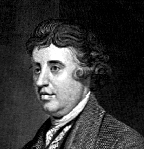 I have mixed feelings about Edmund Burke, who penned both some of the most pro-libertarian and some of the most anti-libertarian passages in English literature � often within a few lines of one another. But his warning to Parliament in his 1775 speech On Conciliation With the American Colonies is equally good advice concerning the U.S. occupation of Iraq today:
The use of force alone is but temporary. It may subdue for a moment, but it does not remove the necessity of subduing again; and a nation is not governed which is perpetually to be conquered.And for all those who, like Claude Rains in Casablanca, are �shocked! shocked!� to find there are no WMDs in Iraq after all, I recommend Charles Johnson�s recent posts here and here.
Posted February 11th, 2004 |
Tertium Non Datur
Today�s Frank & Ernest comic should appeal to Aristoteleans and Randians everywhere:

Posted February 11th, 2004 |
Sects, Lies, and Transcendence
Point taken in regards to Santa, but surely you don't believe that it is always wrong to lie to kids, do you? If your 5 year old brings home some hideous creation from his art class, isn�t it OK to tell him that you like it? (Just like you might tell your Aunt Minnie that you �adore� the god-awful sweater she knit you for Christmas, when in fact it will be going to Goodwill on Dec. 26.)Re Santa: no, I don�t think lying is always wrong, and the art-class example seems like a case where it isn�t wrong. But the kind of systematic deception involved in the Santa Claus case does strike me as unjustifiably manipulative. Plus it�s pointless � growing up I had just as much fun as any kid playing make-believe about Santa Claus without having to believe he was literally real.
I like Chris Sciabarra and Art Silber as well, but as you know they have both been �excommunicated� from the �official� Objectivist movement for �heresy.�

Howdy � by coincidence, I read your piece mentioning Anne Rice just a few days after reposting this �oldy but goody� I wrote in my early net.years:The link goes to an article drawing some extremely interesting comparisons between Anne Rice and Ayn Rand. Check it out!http://demona.org/blog/blosxom.cgi/2004/Jan/25#randriceLaissez Ferret!
Posted February 9th, 2004 |
Armey of Darkness
[cross-posted on Liberty & Power]
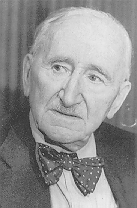 I just finished watching, on C-Span, an extremely frustrating Cato Institute panel on Hayek. The panelists were Hayek biographers Bruce Caldwell and Alan Ebenstein � and, for no reason I could discern, Senator Dick Armey. Caldwell and Ebenstein could barely get a word in edgewise, as Armey monopolised the event, rambling on about faith and humility, and generally making liberty sound about as much fun as a hair shirt.
It was Hayek, Armey said, that had made possible Ronald Reagan, Jack Kemp, and all the Republican �heroes of liberty� currently occupying Congress. (A rather harsh thing to say about Hayek, I thought.) When asked a question about the income tax, Armey opined that �even the most extreme libertarian� recognises the need for government and the income tax. (I recognised several anarchists in the room, no doubt grinding their teeth. And anyway, didn�t the United States do without an income tax for over a century?) Armey was asked to relate his response on the income tax to the legacy of Hayek, but failed to do so � perhaps mercifully.
The effrontery of this self-satisfied politico calling himself a Hayekian was truly grating.
(Another moment of annoyance, albeit minor by comparison, came when an audience member asked whether there might be a tension between the Wittgensteinian and Misesian aspects of Hayek�s thought. This was a question of some interest to me, since I�m just finishing a book manuscript on connections between Wittgenstein and Austrian economics. But Caldwell and Ebenstein both inexplicably interpreted the question as being about Wittgenstein�s influence on Hayek, even after the questioner explicitly clarified that he wasn�t asking about influence.)
Posted February 9th, 2004 |
Aristocracy for Everybody
George Woodcock�s book Anarchism offers an interesting observation:
In reality the ideal of anarchism, far from being democracy carried to its logical end, is much nearer to aristocracy universalized and purified.
 A similar idea is expressed by Ernest Lesigne, in a series of comparisons between state socialism and individualist anarchism quoted by Benjamin Tucker in 1886:
One wishes the governed class to become the governing class; the other wishes the disappearance of classes. ...The idea of individualist anarchism being the universalisation of aristocracy is also the central theme of Oscar Wilde�s 1891 Soul of Man Under Socialism � an economically illiterate but culturally insightful manifesto.
One wishes that there should be none but proletaires.
The other wishes that there should be no more proletaires. ...
The one wishes to expropriate everybody.
The other wishes everybody to be a proprietor. ...
Both desire equality.
One by lowering heads that are too high.
The other by raising heads that are too low.
The dark dreary industrial world that I�d gone to sleep on had burnt itself out finally, and the old bourgeois prudery and conformity had lost their hold on the American mind.While Lestat�s vision is admittedly selective, this passage does, I think, identify a genuine trend of universalising aristocracy in the modern world. Since I agree with the (very un-paleo) idea of a strong affinity between universalising aristocracy (as Rice describes it) and individualist anarchism, it�s tempting to infer that the trend of the modern world is also toward individualist anarchism.
People were adventurous and erotic again they way they were in the old days, before the great middle-class revolutions of the late 1700s. They even looked the way they had in those times.
The men didn�t wear the Sam Spade uniform of shirt, tie, gray suit, and gray hat any longer. Once again, they costumed themselves in velvet and silk and brilliant colors if they felt like it. They did not have to clip their hair like Roman soldiers anymore; they wore it any length they desired.
And the women � ah, the women were glorious, naked in the spring warmth as they�d been under the Egyptian pharaohs, in skimpy short skirts and tuniclike dresses, or wearing men�s pants and shirts skintight over their curvaceous bodies if they pleased. They painted, and decked themselves out in gold and silver, even to walk to the grocery store. Or they went fresh scrubbed and without ornament � it didn�t matter. They curled their hair like Marie Antoinette or cut it off or let it blow free.
For the first time in history, perhaps, they were as strong and as interesting as men.
And these were the common people of America. Not just the rich who�ve always achieved a certain androgyny, a certain joie de vivre that the middle-class revolutionaries called decadence in the past.
The old aristocratic sensuality now belonged to everybody. It was wed to the promises of the middle-class revolution, and all people had a right to love and to luxury and to graceful things.
Department stores had become palaces of near-oriental loveliness � merchandise displayed among soft, tinted carpeting, eerie music, amber light. In the all-night drugstores, bottles of violet and green shampoo sparkled like gems on the sparkling glass shelves. Waitresses drove sleek leather-lined automobiles to work. Dock laborers went home at night to swim in their heated backyard pools. Charwomen and plumbers changed at the end of the day into exquisitely cut manufactured clothes. ...
In giant fluorescent-lighted emporiums you could buy tapes of medieval madrigals and play them on your car stereo as you drove ninety miles an hour down the highway. In the bookstores Renaissance poetry sold side by side with the novels of Dickens or Ernest Hemingway. Sex manuals lay on the same tables with the Egyptian Book of the Dead. ... Through shop windows I gazed stupefied at computers and telephones as pure in form and color as nature�s most exotic shells. ... Glittering office towers pierced the night sky like Egyptian obelisks ....
And no small part of this unpredicted miracle was the curious innocence of these people in the very midst of their freedom and their wealth. The Christian god was as dead as he had been in the 1700s. ... As for sexuality, it was no longer a matter of superstition and fear. The last religious overtones were being stripped from it.
Posted February 9th, 2004 |
Santa Claus, Woodrow Wilson, and Other Dangerous Things
A miscellaneous collection of items:
Dear Abby,
In your answer to �Pam in Florida,� it was unkind of you to refer to cousin Jason as a �weasel� for telling Pam�s son that there is no Santa Claus. Children should be praised, not insulted, for telling the truth.
Roderick T. Long
To the Editor:
In the version of �Yes, Virginia, there is a Santa Claus� you printed on Christmas Day, the original line �They do not believe except they see� has been mistakenly �corrected� to �They do not believe except what they see.� The original, without �what,� is somewhat old-fashioned English, since it is deliberately echoing the King James Bible (see John 20:25, �Except I shall see in his hands the print of the nails ... I will not believe�), but it is not ungrammatical; �except� in this context means �unless.�
Roderick T. Long
To the Editor:
I was startled to see Martin Luther King�s �I Have a Dream� speech described as �infamous� on the front page of the Opelika-Auburn News (Jan. 19). The word �infamous� means disgraceful, dishonorable, scandalous, or of ill repute (as in �a day that will live in infamy�). Perhaps the News should invest in dictionaries for its reporters.
Roderick T. Long
Do you honestly believe that telling children that Santa Claus really exists harms them? I remember enjoying this charade when I was a kid. I was a bit disappointed to learn it was a trick, of course, but I don�t really think it harmed me in any way. Unfortunately however, my parents continue to insist that such frauds as gods and angels are real. Belief in that sort of nonsense DID harm me. Santa, bless his soul, just gave bad kids lumps of coal, not threats of eternal damnation. :-)I don�t think lying to children about Santa Claus harms them, exactly. But the wrongness of lying to one�s children surely doesn�t turn on whether or not it harms them. And �lie� is the operative term here; whatever parents tell their children about God, whether pro or con, is generally something they believe. (As for religious teachings, we all know who the one true deity is.)
BTW, interesting discussion on anarchism. I give any objectivist who wishes to debate this issue some credit. Rand only gave anarchism a superficial critique, if she even bothered discussing it.Well, it depends who the �leading lights� of the Randian movement are. For my money they�re antiwar Randians Chris Matthew Sciabarra and Arthur Silber.
And it is absolutely true that objectivists do not know how to market their product, and there remains a creepy cult-like devotion to Miss Rand. Of course, I�m [not] sure how valuable their product is, now that most of the leading �lights� in the movement have jumped on the pro-war bandwagon. It may belong in the bargain bin at this point.
Vancouver is Longitude -123.12
San Francisco is Longitude -122.37
This puts Vancouver about .75 degrees further west. At those latitudes this is about 40 NM or 45 SM.
I figured your latest post was more light-hearted than serious, but since you asked how your proposal differs from zoning regulations, I think the pro-zoning side (of which I am not a member) would say that zoning is done to raise land value (and thus score political points), while forcing people to undergo plastic surgery would only make people pretty.I suspect what they�d probably say is that people have natural rights over their bodies but only conventional rights over their external property. The proper counter-response is that one�s external property is the externalisation of one�s own self.
... Actually, that's only what they would put forth if they were feeling unusually honest. I guess I�m not sure what they�d actually say. Nevermind all that, then.
On the idea of forced cosmetic surgery, you wrote:�Absurd? And how exactly does my proposal differ from zoning regulations and other state-imposed mandates designed to �beautify� neighborhoods at the expense of owners� rights?�But of course they do differ; whereas forced cosmetic surgery is a violation of innate rights and human dignity, zoning laws are a violation of innate rights and human dignity that also has the unintended (or quasi-intended) consequences of creating urban sprawl, damaging the environment, tossing a huge de facto subsidy to the mega-corporations like Wal*Mart that can effectively lobby their way around the regulations wherever they want to locate (often on property seized through eminent domain!), and punishing any low-income person who wants to start a small- or no-overhead business out of their own home or apartment.
Zoning regulations: why settle for intrinsic evils when you can have instrumental evils too?
Thanks for not giving Woodrow Wilson the honor of the Nobel Peace Treaty. You must obviously not like the Liberal ideas conceived by this scholar and leader. Liberalism or Liberal Institutionalism is surely not what it should be today, but it would not have risen to its status quo without Wilson. You might think that intervention in a war like �the great war" wasn�t legitimate but peace was secured and Wilson surely tried his best (better than most people in world history) to prevent future conflicts! The failure of the Versaille treaty was a French+German disaster which later was prevented with the creation of the EU � a Union which wouldn�t have been able to exist without the ideas of momentum carried forward by Wilson. I mean � is there a better symbol of world peace than the UN, despite its actual [in?]efficiencies. This wouldn�t have happened without Wilson.I cannot agree with Mr. Petersen in seeing Wilson as a force for peace. Wilson arguably prolonged the war by bringing the United States in; he certainly prolonged it once in, by rejecting all offers of a negotiated peace, insisting instead on a policy of utter annihilation of the regimes that opposed him. His arrogant insistence on redrawing the map of Europe after the war laid the groundwork for the rise of Hitler and World War II, while his messianic, crusading style set the precedent for the present-day United States� open-ended campaign to �rid the world of evil.� Domestically, he oversaw a fascist reorganisation of the American economy; he was also perhaps the greatest civil liberties violator of any 20th century American president. To apply the term �liberal� to a president who turned his back on everything liberalism had traditionally stood for strikes me as a grotesque abuse of language.
Posted February 8th, 2004 |
Fist of the Beholder
 There are a lot of funny-lookin� people around. It wearies me to look at them. I think they should be required to undergo plastic surgery to improve their appearance and thus contribute to my aesthetic enjoyment.
Absurd? And how exactly does my proposal differ from zoning regulations and other state-imposed mandates designed to �beautify� neighborhoods at the expense of owners� rights?
ANARCHY � Because other people are not your property.
Posted February 4th, 2004 |
Tales from the Dark Side

 Perhaps in honour of my 40th birthday, Joe Lieberman has dropped out of the presidential race. He�s the Democratic candidate who combined the pro-war, pro-censorship politics of the Right with the economic royalism of the Left. Plus he looks like Palpatine. Good riddance.
Now if we could only rid of that pro-war, pro-censorship, economic royalist Republican candidate who looks like Captain Archer �.
Posted February 4th, 2004 |
The End of Civilisation, or Something
What is the WORST THING THAT COULD POSSIBLY HAPPEN?
You got it: it�s that someone under the age of eighteen might catch a glimpse of Janet Jackson�s accidentally-on-purpose not-quite-exposed breast.
 The roars of outrage surrounding the Superbowl incident make me wonder what century I�m living in. Writing in 1890, Voltairine de Cleyre observed:
Obscenity ... has lowered the dignity of the human body, below the level of all other animals. Who thinks a dog is impure or obscene because its body is not covered with suffocating and annoying clothes? ... And yet, gentlemen, you expect your wives, the creatures you say you respect and love, to wear the longest skirts and the highest necked clothing, in order to conceal the obscene human body.But this is 2004, not 1890 � isn�t it?
Posted February 2nd, 2004 |
Brother From Another Planet
 In honour of Black History Month, Praxeology.net this month celebrates the life and career of Alexandre Dumas (1802-1870). Dumas is well-known as the author of such novels as The Three Musketeers and The Count of Monte Cristo, but even today he is seldom recognised or celebrated as a black author � perhaps because his books are not the sort that a �black author� is �supposed� to write. But Dumas was the grandson of Marie-C�ssette Dumas (or perhaps Louise Cosette Dumas), a freed Haitian slave, and her husband, the Marquis Antoine-Alexandre Davy de la Pailleterie; his father Thomas-Alexandre, though legitimate, used his mother�s surname to avoid embarrassing his father.
19th-century France, though hardly free from racism, was a paradise of racial tolerance by comparison with the United States, and Dumas was its most commercially successful author. While he is best known today as a novelist, his principal fame came from his plays, which joined Victor Hugo�s in championing the cause of literary romanticism. His novel Georges is his personal response to the issues of slavery and racial prejudice. A liberal nationalist, Dumas also participated in the 1830 revolution in France, and later in the 1860 Risorgimento in Italy. In 2002 Dumas� body was removed to the Panth�on, where he lies with Voltaire and Hugo.
His son, Alexandre Dumas fils (1824-1895), also became a successful author; his most famous work, La Dame aux Cam�lias, is the basis of the Verdi opera La Traviata and the Garbo film Camille.
Posted February 2nd, 2004 |
The Big Wolowski
[cross-posted at Liberty & Power]
Murray Rothbard in several of his works refers favourably to an article on property rights by the 19th-century French economists Louis Wolowski and �mile Levasseur. (Rothbard sometimes refers to Wolowski as L�on Wolowski, perhaps confusing him with the L�on Faucher who wrote a rather similar article on property for Charles Coquelin�s 1852-53 Dictionnaire de l��conomie politique.) I thought the article deserved to be placed online, so I decided to track it down.
Rothbard usually cites the article from Lalor�s Cyclopedia of Political Science.
I had trouble tracking the volume down until I tried the alternate spelling Cyclop�dia, and started treating �Lalor� as the editor�s name rather than as part of the title. Then it turned out that my own university library possessed a copy. Joseph Lalor�s Cyclop�dia turns out to be a massive work � three volumes of about 1000 pages each, in tiny print � of mostly classical liberal opinion on a variety of subjects. Many of the entries are by prominent French libertarians of the day, including Fr�d�ric Bastiat, Charles Dunoyer, and Gustave de Molinari. These entries, an introduction informs us, are mainly excerpted from various French reference works, most of which are not named; the translators are usually not credited either. (Lalor seems to have been a bit cavalier with sources.) Rothbard seems to have assumed that the Wolowski-Levasseur piece was written expressly for the Cyclop�dia, but I began to suspect that this was not the case.
Two of the French reference works the introduction does deign to mention as sources are Coquelin�s above-mentioned Dictionnaire and Maurice Block�s Dictionnaire g�n�ral de la politique (1st edition 1863-4, 2nd edition 1884). I already knew the piece wasn�t in the Coquelin Dictionnaire, but wondered whether it might be in the Block. Happily, the Biblioth�que Nationale website turns out to carry an online PDF version of the second volume (only) of the second edition (only), and I was able to confirm that this did indeed contain the Wolowski-Levasseur article �Propri�t�.� Since Wolowski (1810-1876) would have been deceased by 1884, I surmise that the article first appeared in the original 1863-64 edition, though I have not confirmed this.
On examining the original French version I discovered that the English translation, the version Rothbard knew, was greatly compressed by comparison with the French version, which contained, for example, an interesting critique of intellectual property absent from Lalor�s English version, as well as a note from Wolowski providing important information about the article�s authorship:
�At the moment when we began the drafting of this article, a serious indisposition prevented us from devoting to all the necessary time to it. Our friend, M. Levasseur, kindly agreed to come to our aid with his invaluable assistance; the form given to the expression of thoughts common to both of us belongs to him.� [Translation mine � RTL]The Lalor version of the article is now available in the Molinari Institute online library, at: http://praxeology.net/LW-EL-PLV.htm. We plan in the future to post the complete version, both in the original French and in a new English translation; but until then, at any rate the version that Rothbard read and recommended is easily accessible for the first time.
Posted February 1st, 2004 |
