
(Formerly: In a Blog’s Stead.)

When you tire of my blog, go to my homepage or check out my links.
WARNING: This website is not in compliance with the requirements of Mirari Vos.
Wrong forever on the throne. – James Russell Lowell | a philosophical battle is a nuclear war. – Ayn Rand |

DON’T PANIC!!! That brilliant post you’re looking for |





Good-bye Forever
My blog is moving to a new location! The new address is praxeology.net/blog and the new RSS feed is praxeology.net/blog/feed.
Barring unforeseen problems with the new version, this will be my last post here at the old. Old posts will continue to be archived here, but new ones will be archived at the new version. So good-bye, but only sort of.
Posted August 31st, 2006
|
Journalist Grows Spine!
Keith Olbermann brings it:
Mr. Rumsfeld’s remarkable comments to the Veterans of Foreign Wars yesterday demand the deep analysis and the sober contemplation of every American. For they do not merely serve to impugn the morality or intelligence, indeed the loyalty, of the majority of Americans who oppose the transient occupants of the highest offices in the land. Worse still, they credit those same transient occupants – our employees – with a total omniscience; a total omniscience which neither common sense, nor this administration’s track record at home or abroad, suggests they deserve. ...That about which Mr. Rumsfeld is confused is simply this: this is a democracy. Still. Sometimes just barely. And as such, all voices count, not just his. Had he or his President perhaps proven any of their prior claims of omniscience – about Osama Bin Laden’s plans five years ago; about Saddam Hussein’s weapons four years ago; about Hurricane Katrina’s impact one year ago – we all might be able to swallow hard, and accept their omniscience as a bearable, even useful, recipe of fact plus ego. But to date this government has proved little besides its own arrogance and its own hubris. Mr. Rumsfeld is also personally confused, morally or intellectually, about his own standing in this matter. From Iraq to Katrina, to the entire fog of fear which continues to envelop this nation – he, Mr. Bush, Mr. Cheney, and their cronies, have inadvertently or intentionally profited and benefited, both personally and politically. And yet he can stand up in public and question the morality and the intellect of those of us who dare ask just for the receipt for the Emperor’s New Clothes. In what country was Mr. Rumsfeld raised? As a child, of whose heroism did he read? On what side of the battle for freedom did he dream one day to fight? With what country has he confused the United States of America? ... The confusion is about whether this Secretary of Defense, and this administration, are in fact now accomplishing what they claim the terrorists seek: the destruction of our freedoms, the very ones for which the same veterans Mr. Rumsfeld addressed yesterday in Salt Lake City so valiantly fought. ...
And about Mr. Rumsfeld’s other main assertion, that this country faces a “new type of fascism”? As he was correct to remind us how a government that knew everything could get everything wrong, so too was he right when he said that – though probably not in the way he thought he meant it.
* Olbermann, like Rumsfeld, buys into the old myth that Neville Chamberlain was naïve about Hitler’s intentions. In fact Chamberlain was perfectly aware how dangerous Hitler was – but he was also aware how poorly prepared the British military was, and so was quite sensibly unwilling to challenge Hitler until he had first built up Britain’s military power – which he directly proceeded to do. It’s been said that diplomacy is the art of saying “nice doggie” while looking for a rock – which is a pretty good description of what Chamberlain was doing. Churchill’s plan for immediate confrontation, by contrast, was like attacking the dog barehanded while hoping that someone else with a rock will happen along. The prospects for success of Churchill’s policy depended crucially on American entry into the war; otherwise it was suicidal. Since America did ultimately enter the war, Churchill’s policy may look sensible in hindsight, but given the antiwar sentiment in the U.S. at the time it was hardly something that could reasonably be counted on. Churchill gambled with his country’s freedom and got lucky.
Posted August 31st, 2006
|

Beirut Update
Today I’m pleased and relieved to learn that my friends Jeremy and Lucy Koons made it out of Lebanon safely during the recent unpleasantness.
I hope to get back to more regular blogging soon – things have just been über-hectic here of late.
Posted August 23rd, 2006
|
Tuscaloosa Countdown
 Deadlines are looming for the Alabama Philosophical Society conference:
Posted August 23rd, 2006
|
Anarchy in D.C.
[cross-posted at Liberty & Power]
The Molinari Society will be holding its third annual Symposium in conjunction with the Eastern Division of the
American Philosophical Association
in Mordor, I mean Washington DC, December 27-30, 2006. Here’s the latest schedule info:
GVIII-4. Friday, 29 December 2006, 11:15 a.m.-1:15 p.m.
Molinari Society symposium: “Anarchist Perspectives”
Virginia Suite C (Lobby Level), Marriott Wardman Park Hotel, 2660 Woodley Road NW
Session 1, 11:15-12:15:
chair: Roderick T. Long (Auburn University)
speaker: Matthew MacKenzie (Muhlenberg College)
title: “Exploitation: A Dialectical Anarchist Perspective”
commentator: Charles W. Johnson (Molinari Institute)
Session 2, 12:15-1:15:
chair: Roderick T. Long (Auburn University)
speaker: Geoffrey Allan Plauché (Louisiana State University)
title: “On the Myth of the Founder-Legislator in Political Philosophy”
commentator: Charles W. Johnson (Molinari Institute)
Posted August 3rd, 2006
|
JLS 20.2: What Lies Within?
[cross-posted at Liberty & Power]
 The latest issue (20.2) of the Journal of Libertarian Studies is out. Catch the action:
Valentin Petkantchin argues that Adam Smith’s “third duty of the sovereign” is less interventionist than traditionally thought; B. K. Marcus defends the privatisation of the airwaves; Bob Murphy and Gene Callahan challenge Hans Hoppe’s argumentation ethic; Jeff Hummel criticises Tom Woods’ take on American history; Sam Bostaph praises Tom Woods’ account of the Catholic Church’s relationship to Progressivism and to Austrian economics; and Rob Bass critiques Tibor Machan’s book on Ayn Rand.
Read a fuller summary of 20.2’s contents here.
Read the articles themselves (already online) here.
Read summaries of previous issues under my editorship here.
Read back issues online here.
Subscribe here.
Posted August 3rd, 2006
|
Feel the Irony
 As everyone on Earth now knows, our Prince President was recently recorded saying: “See, the irony is, what they need to do is get Syria to get Hezbollah to stop doing this shit.”
But everybody’s been focusing on the wrong word. What’s objectionable in this sentence is not the word “shit” but the word “irony.” What exactly is supposed to be ironic about the situation?
Well, maybe it’s kind of like a black fly in your Chardonnay.
Posted July 29th, 2006
|
Victory Through Victim-Swapping
[cross-posted at Liberty & Power]
By most reports, Israeli bombings of Lebanon are strengthening Hezbollah’s support among Lebanese civilians, while Hezbollah bombings of Israel are strengthening the Israeli government’s support among Israeli civilians.
So here we have (what are by libertarian standards) two criminal gangs, both blasting away at innocent civilians, and the result is to increase these gangs’ popularity among the civilians being victimised! A very successful outcome for both sides.
 The trick, of course, is that each gang is blasting away at civilians in the other gang’s territory. If each gang were to attack its own civilians directly, those civilians would quickly turn against the gangs in their midst. But since in fact each side’s continuation of bombings is what allows the other side to excuse, and get away with, its bombings, the situation isn’t really all that different; each side is causing its own civilians to be bombed. It’s just that by following the stratagem of attacking each other’s civilians, the two gangs manage to avoid (and indeed promote the exact opposite of) the loss of domestic power that would follow if they were to bring about the same results more directly. Think of it as the geopolitical version of Strangers on a Train.
No, I’m not suggesting that Hezbollah and the Israeli government are in cahoots. They don’t need to be. This is how the logic of statism works, this is how its incentives play out, regardless of what its agents specifically intend. The externalisation of costs is what states do best. (True, Hezbollah isn’t a state, but it aspires to be one, and its actions are played out within a framework sustained by statism.)
What would happen if the civilian populations of Israel and Lebanon were to come to see this conflict, not as Israel versus Hezbollah, or even Israeli-government-plus-Israeli-civilians versus Hezbollah-plus-Lebanese-civilians, but rather as Israeli-government-plus-Hezbollah versus ordinary-people-living-on-the-eastern-Mediterranean? Both Hezbollah and the Israeli government would quickly lose their popular support, and their ability to wage war against each other would go with it.
But by encouraging the identification of civilians with the states that rule them, statism makes it harder for civilians to find their way to such a perspective. (Of course racism and religious intolerance are part of the story too – yet another way in which such cultural values help to prop up the state apparatus.) As long as the people of the eastern Mediterranean continue to view this conflict through statist spectacles, Hezbollah and/or the Israeli government will continue to be the victors, while the civilian populace in both Israel and Lebanon will remain the vanquished and victimised.
Posted July 21st, 2006
|
Stop Me Before I Link Again!
What? Another post of nothing but links?
Yeah. You got a problem with that?
 Check out the current Wikipedia entry for Left-libertarianism. It distinguishes two different strands currently bearing that title, one quasi-Marxist and one actually-libertarian, and among the contemporary and/or recent proponents of the latter strand mentions Murray Rothbard, Sam Konkin, and my comrades Chris Sciabarra, Charles Johnson, Kevin Carson, and Arthur Silber, as well as your humble correspondent. (Some odd omissions there ... someone should really add Karl Hess and some of the folks on the Blogosphere of the Libertarian Left.)
 Incidentally, isn’t it great that Sheldon is editor of The Freeman? There was a time when I’d given up on that periodical entirely. I’m not just talking about the knee-jerk pro-corporate bias The Freeman has often had, but about the really dark creepy stuff like this 1991 rant from Carl Horowitz – a vividly memorable low point in the history of that publication:
There is something about encountering homosexuality in its militant and pugnacious form that touches a deep, almost reflexive anger, even among most heterosexual liberals ....In the immortal words of Zaphod Beeblebrox, “Put your analyst on danger money, baby.”
Male and even female opposition to persons with these traits is slowly taking a nasty turn, moving from violence of language to violence of fists. And yet, given the emerging legal climate, one discovers within oneself a disquieting empathy with the inchoate rage behind such acts. ... [T]he brazen, open display of homosexuality – as if to taunt, to tease, to maliciously sow confusion into sexual identities – is something most heterosexuals do not handle gracefully. ...
Nobody in a rational state of mind would seek to emulate the exploits of “skinheads” .... Yet let readers here imagine themselves in that Madison restaurant or Seattle airport, being witness to mass displays of homosexual kissing, and feeling utterly helpless to evince the slightest disapproval. Would not such a scenario provoke an impulse, however fleeting and irrational, to do bodily harm?
Posted July 18th, 2006
|
Who Is My Neighbour?
Is this an Israeli boy wounded by Hezbollah missiles in Haifa?
Or is it a Lebanese boy wounded by Israeli missiles in Beirut?

Morality knows nothing of geographical boundaries, or distinctions of race. You may put men on opposite sides of a river or a chain of mountains; may else part them by a tract of salt water; may give them, if you like, distinct languages; and may even colour their skins differently; but you cannot change their fundamental relationships. Originating as these do in the facts of man’s constitution, they are unalterable by the accidents of external condition. The moral law is cosmopolite – is no respecter of nationalities: and between men who are the antipodes of each other, either in locality or anything else, there must still exist the same balance of rights as though they were next-door neighbours in all things.This insight instantly disposes of the sophistries of those who claim that a person’s rights to travel freely, to contact a lawyer, or not to be tortured, depend on his or her possession of American citizenship.
Posted July 17th, 2006
|

Forgotten Blues
[cross-posted at Liberty & Power]
The Alabama Philosophical Society (for which I’m the webmaster, archivist, and secretary-treasurer) will be holding its Annual Meeting on October 20-21, 2006, at the University of Alabama in Tuscaloosa. Derk Pereboom will be our Keynote Speaker.
Check out the website for paper submissions, student essay contest, hotel info, and other details.
If the title of this blog post puzzles you, click here.
Posted July 16th, 2006
|
Bastille Day Bulletin, Part Deux
A couple of follow-ups to yesterday’s post:
For many people it is to advance a scandalous and paradoxical proposition, filled with difficulty and disaster, to say that the Revolution of ’89, having established nothing, has freed us not at all, but only changed our sad lot .... Nevertheless, such is the evidence of facts ....
In 1789 the task of the Revolution was to destroy and rebuild at the same time. It had the old rule to abolish but only by producing a new organization, of which the plan and character should be exactly the opposite of the former .... Of these the Revolution, with great difficulty, accomplished only the first; the other was entirely forgotten. ...
The feudal order having been abolished ... and the principles of liberty and civil equality proclaimed, the consequence was that in future society must be organized, not for politics and war, but for work. What in fact was the feudal organization? It was one entirely military. What is work? The negation of fighting. To abolish feudalism, then, meant to commit ourselves to a perpetual peace, not only foreign but domestic. ... It was evident that the problem of the Revolution lay in erecting everywhere the reign of equality and industry, in place of the feudal order which had been abolished ....
This so manifest, so inevitable conclusion ... was not understood by those who made themselves its interpreters .... All their ideas were of politics only. ... [T]he nation was again delivered into the hands of the warriors and lawyers. One might say that nobility, clergy and monarchy had disappeared, only to make way for another governing set of Anglomaniac constitutionaries, classic republicans, militaristic democrats, all infatuated with the Romans and Spartans, and above all, very much so with themselves ....
To put my thought in one word ... the revolutionaries failed in their mission after the fall of the Bastille, as they have failed since the abdication of Louis Philippe, and for the same reasons: the total lack of economic ideas, their prejudice in favor of government, and the distrust of the lower classes which they harbored. ... The principle of centralization ... passed into a dogma with the Jacobins, who transmitted it to the Empire, and to the governments that followed it .... politics taking the place of industry in the minds of everybody ....To sum up: the society which the Revolution of ’89 should have created, does not yet exist. That which for sixty years we have had, is but a superficial, factitious order .... In place of liberty and industrial equality, the Revolution has left us a legacy of authority and political subordination. The State, growing more powerful every day, and endowed with prerogatives and privileges without end, has undertaken to do for our happiness what might we might have expected from a very different source. ...
When the Revolution proclaimed liberty of the people, equality before the law, the sovereignty of the people, the subordination of power to the country, it set up two incompatible things, society and government; and it is this incompatibility which has been the cause or the pretext of this overwhelming, liberty-destroying concentration, called CENTRALIZATION, which the parliamentary democracy admires and praises, because it is its nature to tend toward despotism. ...
The Republic had Society to establish: it thought only of establishing Government. Centralization continually fortifying itself, while Society had no institution to oppose to it ... matters reached a point where Society and Government could not live together, the condition of existence of the latter being to subordinate and subjugate the former. ... Liberty, equality, progress, with all their oratorical consequences, are written in the text of the constitutions and the laws; there is no vestige of them in the institutions. ... It was in this way that the democratic party itself, the heir of the first Revolution, came to attempting to reform Society by establishing the initiative of the State, to create institutions by the prolific virtue of Power ....
As this state of affairs, of which the principle, the means and the end is WAR, is unable to answer the needs of an entirely industrial civilization, [a new] revolution is the necessary result. ... [W]e must understand that outside the sphere of parliamentarism, as sterile as it is absorbing, there is another field incomparably vaster, in which our destiny is worked out; that beyond these political phantoms, whose forms capture our imagination, there are the phenomena of social economy, which, by their harmony or discord, produce all the good and ill of society. ...
Know well that there is nothing more counter-revolutionary than the Government. Whatever liberalism it pretends, whatever name it assumes, the Revolution repudiates it: its fate is to be absorbed in the industrial organization.
 I didn’t quite complete my thoughts on global warming yesterday.

Posted July 15th, 2006
|

Bastille Day Bulletin
More miscellaneous musings:
 Many on the left seem to assume that anyone who’s skeptical about the cause and/or extent of global warming must be in the pay of the corporations; and many on the right seem to assume that anyone who thinks global warming is serious and manmade is just a shill for big government. I know from personal experience that both of those assumptions are just plain false.
We might compare the alliance between government and big business to the alliance between church and state in the Middle Ages. Of course it’s in the interest of both parties to maintain the alliance – but all the same, each side would like to be the dominant partner, so it’s no surprise that the history of such alliances will often look like a history of conflict and antipathy, as each side struggles to get the upper hand. But this struggle must be read against a common background framework of cooperation to maintain the system of control.Now the main difference, insofar as there is one, between the Establishment Left and the Establishment Right in this country is that while both are the running-dog lackeys of the neofascist government-business alliance, the Establishment Left somewhat favours a shift in power toward government, while the Establishment Right somewhat favours a shift in power toward business. Playing up the threat of global warming thus serves the interests of the statocratic faction, while playing down that threat serves the interests of the plutocratic faction – and so you’d expect to see the two sides taking the sides they’re taking, regardless of what the truth actually is. But it’s just a squabble within the ruling class.
 See here and here for the latest news on the Atlas Shrugged film. It looks like the plan is to give it the Lord of the Rings treatment – i.e., to do it in three films, one for each part – which is clearly the only way to do the book justice. While there’s many a slip ’twixt the cup and the lip, I’m cautiously optimistic.
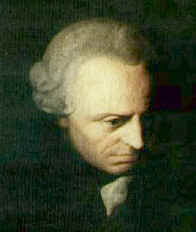 It is sometimes supposed that the legal institutions of a free society can be imposed without regard to pre-existing cultural norms. Thus Kant insisted that “[t]he problem of organizing a state, however hard it may seem, can be solved even for a race of devils, if only they are intelligent.” In similar vein, today’s neoconservative nation-builders appear to imagine that one can produce a liberal democracy in Iraq simply by giving them a liberal democratic constitution. As Chris Sciabarra has noted, this is a mistake:
For those of us bred on Ayn Rand’s insight that politics is only a consequence of a larger philosophical and cultural cause – that culture, in effect, trumps politics – the idea that it is possible to construct a political solution in a culture that does not value procedural democracy, free institutions, or the notion of individual responsibility is a delusion.But it is also possible to make the opposite mistake, i.e., to conclude that a society’s level of freedom and success is simply determined by psychological and cultural factors in such a way that political institutions make little or no difference at all. Herbert Spencer seems to me to make that mistake in the following passage from Social Statics:
The power of an apparatus primarily depends, not on the ingenuity of its design, but on the strength of its materials. Be his plan never so well devised – his arrangement of struts, and ties, and bolts, never so good – his balance of forces never so perfect – yet if our engineer has not considered whether the respective parts of his structure will bear the strain to be put upon them, we must call him a bungler. Similarly with the institution-maker. If the people with whom he has to deal are not of the requisite quality, no cleverness in his contrivance will avail anything. ...As I said, this strikes me as going too far the other way. A constitution cannot operate in blissful transcendence of the people it constrains, since, as I’ve argued here and here, its very existence and continuation consists in the behaviour of those people.That justice can be well administered only in proportion as men become just, is a fact too generally overlooked. “If they had but trial by jury!” says some one, moralizing on the Russians. But they can’t have it. It could not exist amongst them. Even if established it would not work. They lack that substratum of honesty and truthfulness on which alone it can stand. To be of use, this, like any other institution, must be born of the popular character. It is not trial by jury that produces justice, but it is the sentiment of justice that produces trial by jury, as the organ through which it is to act; and the organ will be inert unless the sentiment is there. ...
It is very certain that government can not alter the total amount of injustice committed. The absurdity is in supposing that it can – in supposing that by some ingenious artifice we may avoid the consequences of our own natures. ... It is impossible for man to create force. He can only alter the mode of its manifestation, its direction, its distribution. The power that propels his steamboats and locomotives is not of his making; it was all lying latent in the coal. ... In no case can he do anything but avail himself of dormant forces. This is as true in ethics as in physics. Moral feeling is a force – a force by which men’s actions are restrained within certain prescribed bounds; and no legislative mechanism can increase its results one iota. By how much this force is deficient, by so much must its work remain undone. In whatever degree we lack the qualities needful for our state, in the same degree must we suffer. Nature will not be cheated. Whoso should think to escape the influence of gravitation by throwing his limbs into some peculiar attitude, would not be more deceived than are those who hope to avoid the weight of their depravity by arranging themselves into this or that form of political organization. Every jot of the evil must in one way or other be borne .... No philosopher’s stone of a constitution can produce golden conduct from leaden instincts.
 Hence no constitutional order is likely to work very well for a Kantian nation of demons. But on the other hand, the very same people will often act differently when confronted with different incentives, and what incentives people are confronted with is heavily influenced by the institutional arrangements they find themselves in. True, no arrangement of feathers, no matter how cleverly contrived, will make a good military fortress; but bricks and mortar may make a good or a bad military fortress, depending on how they are combined. Thus Kant was on the right track when he described the object of constitutional design this way: “Given a multitude of rational beings requiring universal laws for their preservation, but each of whom is secretly inclined to exempt himself from them, to establish a constitution in such a way that, although their private intentions conflict, they check each other, with the result that their public conduct is the same as if they had no such intentions.” Exaggerating Kant’s insight, of course, leads to impracticable utopianism; but underrating it leads to defeatism – as, for example, it led Spencer to suppose that the implementation of anarchism must be postponed until the human race attains moral perfection. The relationship between culture and politics is not unidirectional – in either direction. Both the Kantian error and the Spencerian error are the results of an excessively one-sided, an insufficiently dialectical approach to social theory.
Posted July 14th, 2006
|
Soccer Logic, Time Thieves, and Anarchy
Some miscellaneous musings:
 After “apologising” for, and characterising as “inexcusable,” the head-butt that lost his team their shot at the World Cup, soccer star Zinédine Zidane apparently took it all back by adding, “I can’t say I regret my behaviour, because regretting it would mean that he [Marco Materazzi, the recipient of the head-butt] was right to say what he said.”
1. Materazzi says p.Who knew that the difference between victory and defeat would turn on a player’s not having taken Logic 101?
2. I regret hitting Materazzi.
3. Therefore p.
Skull of cave-man, eons old,
holding legends never told –
the tusk-boar’s squeal, the mammoth’s tread,
all locked within that hoary head.
Fire-hardened spears of bone,
sharp flint axes, knives of stone –
once held in hand of earthen crust,
now forever mingled with the dust.
 (I’m vain enough to note that it won a prize in a statewide poetry competition – but honest enough to add that this was in Idaho, not exactly a poetry-intensive state.)
What cruel, ironic fate here liesAh, pretentious adolescent poesy!
which mutes your tongue and dulls your eyes?
What passions burned within your breast?
What questing dreams disturbed your rest?
What might you know that we know not
who saw young stars and mountains hot?
What bridge across the ages lay
from warrior proud to hand-held clay?
What memories were locked in that frozen brain? What sights had those frozen eyes beheld in the days when the world was young? What loves, what hates had stirred that mighty breast?Clearly the similarity between my poem and this passage from Burroughs’ story is too close to be a coincidence. But although I read a lot of Burroughs in my youth, I’m certain that I never read that story before this year. Indeed, this page gives a list of all the places where “Elmer” was ever published, both in its original form and under its revised title “The Resurrection of Jimber-Jaw,” and I have never come across any of them. My only source of Burroughs’ works back then was the old series of Ace paperbacks with their wonderful Frazetta covers, and “Elmer” never appeared in any of those.
He had lived in the days of the mammoth and the saber-tooth, and he had survived with only a stone spear and a stone knife until the cold of the great glacier had overtaken him.
 The Mises Institute has brought back into print two classics of 20th-century market anarchism: Murray Rothbard’s For A New Liberty (shocking to think it was recently out of print!) and the Tannehills’ The Market For Liberty
Posted July 13th, 2006
|

Subversive Summer Reading
Still too busy to do much more than toss some more links your way:
Posted July 12th, 2006
|

Two From Space
Just now came across this great parable Space Aliens from Luxembourg by Stefan Molyneux, on the Iraq invasion.
NASA’s ongoing inability to solve the space shuttle’s foam problems brings to mind another great space parable, the anonymously authored How the West Wasn’t Won.
Posted July 11th, 2006
|
Betrayal in Portland
[cross-posted at Liberty & Power]
Meeting in Portland over (ironically enough) Independence Day weekend, the Libertarian Party convention ended up gutting the LP Platform, removing nearly all of the more radical planks (including the antiwar one). The new watered-down platform hasn’t been made available online yet, but preliminary details, and some reactions, are available here, here, here, and here.
 The outfit behind this move calls itself the Libertarian Reform Caucus. Their theory is a simple one: most voters are not libertarians, so if the Libertarian Party wants to win elections, it must stop being libertarian.
That’s not quite how the Caucus words it, of course. Instead they accuse the Platform of “sacrificing practicality and political appeal in favor of philosophical consistency”; and they call instead for a Platform that sets out “a realistic vision for the next few years, as opposed to an idealistic vision of a libertarian future.”
To this sort of thing I can make no better reply than Hayek’s in his 1949 essay The Intellectuals and Socialism:
We must make the building of a free society once more an intellectual adventure, a deed of courage. What we lack is a liberal Utopia, a program which seems neither a mere defense of things as they are nor a diluted kind of socialism, but a truly liberal radicalism ... which is not too severely practical, and which does not confine itself to what appears today as politically possible. We need intellectual leaders who are willing to work for an ideal, however small may be the prospects of its early realization. They must be men who are willing to stick to principles and to fight for their full realization, however remote. ... Free trade and freedom of opportunity are ideals which still may arouse the imaginations of large numbers, but a mere “reasonable freedom of trade” or a mere “relaxation of controls” is neither intellectually respectable nor likely to inspire any enthusiasm. The main lesson which the true liberal must learn from the success of the socialists is that it was their courage to be Utopian which gained them the support of the intellectuals and therefore an influence on public opinion which is daily making possible what only recently seemed utterly remote. Those who have concerned themselves exclusively with what seemed practicable in the existing state of opinion have constantly found that even this had rapidly become politically impossible as the result of changes in a public opinion which they have done nothing to guide. Unless we can make the philosophic foundations of a free society once more a living intellectual issue, and its implementation a task which challenges the ingenuity and imagination of our liveliest minds, the prospects of freedom are indeed dark. But if we can regain that belief in the power of ideas which was the mark of liberalism at its best, the battle is not lost.Or in Garrison’s words: “Gradualism in theory is perpetuity in practice.” (See also Rothbard here and Anthony Gregory here.)
Posted July 7th, 2006
|
A Thought for the Fourth
[cross-posted at Liberty & Power]
(I’m going to be away from my computer on the Fourth, so I’m posting my Independence Day observations a day early.)
 How should we think about the American Revolution? I suggest we should think of it as an uncompleted project. The Revolution, after all, wasn’t just about separation from Britain; it was about the right of the people to “alter or abolish” any political arrangements destructive of the “inalienable rights” of “life, liberty, and the pursuit of happiness” or not resting on the “consent of the governed.”
Those were the principles on which the Revolution was based. But the political system the founders established never fully embodied those principles in practice; and its present-day successor no longer respects them even in theory. (Slogans, need I add? are not theory.)
Over the years since 1776, the fortunes of American liberty, and indeed of liberty worldwide, have risen and fallen; most often some aspects have risen while others have fallen. But every increase in liberty has involved the logical carrying-out of the principles of ’76, while every decrease has involved their de facto repudiation. (And if the average American is on balance more free than his or her 18th-century counterpart, this is small reason for complacency when one views the matter counterfactually. To paraphrase my comments in an L&P discussion last year: “For me the point of comparison is not USA 2006 vs. USA 1776, but USA 2006 vs. the USA 2006 we would have had if the USA had stuck consistently to those principles.)
From an establishment perspective, the Fourth of July is a day to celebrate the existing American system. But that approach to the Fourth is, I suggest, profoundly counter-revolutionary. Far better to regard Independence Day as a day to rededicate ourselves to forwarding the ongoing Revolution whose true completion, as Voltairine de Cleyre and Rose Wilder Lane argued here and here, will be libertarian anarchy.
Posted July 3rd, 2006
|

Aristotle, Anarchy, Action!
[cross-posted at Liberty & Power]
I’m back from San Diego, but once again I’m too busy to blog about it. (My backlog of things I want to blog about – my b(ack!)log? – has grown to monstrous dimensions.) But I’m not too busy to engage in a bit of shameless self-promotion:
Tomorrow I start my philosophy seminar on the praxeological foundations of libertarian ethics. To quote the prospectus:
On the one hand, the subjective-value approach to economics characteristic of the Austrian school might seem inhospitable to objective theories of ethical value. Yet on the other hand, philosophers like Socrates, Aristotle, and Aquinas based their objective conceptions of ethics on something rather like a praxeological analysis of subjective valuation; indeed, subjectivist economics and natural law ethics both originated from this common tradition. Can an objective ethics in a broadly Aristotelean tradition be grounded in praxeological considerations? And if so, what shape might a radical libertarian political theory take if built on such foundations?A live webcast of the seminar will be available here, presumably followed eventually by archived recordings here.
The first half of the seminar will deal with the praxeological foundations of ethics. Topics include: do human beings have an ultimate end? can we knowingly choose the bad? how are morality and self-interest related? why should we care about other people’s interests? ...
The second half of the seminar will explore the implications of praxeological, Aristotelean ethics for such issues as property rights, contracts, land ownership, punishment and restitution, military policy, stateless legal systems, utilitarian vs. rights-based considerations, and the cultural preconditions of liberty.
Posted June 25th, 2006
|

Before the Law Stands a Doorkeeper
[cross-posted at Liberty & Power]
The more “moderate” opponents of immigration are often heard saying, “fine, let people immigrate by all means, but they should do it the legal way.”
A fair response to this bromide would be: “What legal way?” As this article shows, for most low-skilled Mexican workers there is no legal way to enter the United States. The U.S. has a quota of 5,000 green cards for low-skilled workers; that’s just one percent of the number seeking to come in. For the rest, the alternative is a temporary work permit, but getting one of those “often requires the worker to ... pay off someone in Mexico.”
In short, there are Mexicans who want to work, and there are Americans who want to employ them, but the U.S. and (despite popular impressions) the Mexican governments have conspired to prevent, at gunpoint, these peaceful and mutually beneficial transactions.
In other news, I’m off to a joint Liberty Fund / Social Philosophy and Policy Center conference (topic: ancient political thought) in San Diego / La Jolla; back next week. I lived in San Diego in the early 70s, but haven’t seen it since 1977; it’ll be nice to see it again.
Posted June 13th, 2006
|

Stromberg on Land Theft: Now Online
[cross-posted at Liberty & Power]
I’m back from Scotland! But more about that later.
Joseph Stromberg’s excellent 1995 article “English Enclosures and Soviet Collectivization: Two Instances of an Anti-Peasant Mode of Development,” which appeared in the first (and alas only) issue of Sam Konkin’s journal The Agorist Quarterly, has been getting some attention in the left-libertarian blogosphere lately (see, e.g., here and here). Stromberg explores the illuminating parallels between what are often thought of as very disparate events (since one is supposed to be a black mark for “capitalism” and the other for “socialism,” whatever exactly those terms mean).
I thought the article deserved a wider audience, particularly in light of the ongoing debate among libertarians concerning land reform and the “subsidy of history.” So with Stromberg’s kind permission, I’ve placed it online on the Molinari Institute site. Check it out here.
The other articles in that issue are worth reading also, so I’m going to try to get permission from the various authors to post the whole issue. Thus far I’ve gotten approval from E. Scott Royce and Jared C. Lobdell (for their articles “The Black Market Response to Rationing During World War II” and “Old Rightists and Old Writers,” respectively); waiting to hear from the others. Watch this space ....
Posted June 8th, 2006
|

Forth to the Firth!
[cross-posted at Liberty & Power]
I’ve been planning for ages to write about my Vegas and Prague trips/conferences, as well as to add some further thoughts on the French rioters (remember them?). I’ve even got a catchy title for the post: APEE, PCPE, and CPE.
Well, I’ve been way too busy to get to it, and on Thursday I leave for Edinburgh (ah, Scotland! land of Adam Smith, David Hume, Thomas Reid, Duns Scotus, and most importantly Bran Mak Morn!) so it’ll have to wait a little bit longer. Back in a week!
Posted May 23rd, 2006
|

Subjective Value, Objective Good
[cross-posted at Liberty & Power]
A text version of my August 2005 talk “Economics and Its Ethical Assumptions” is now online. (Thanks to B. K. Marcus for editing it to make it a bit less transcript-y.)
In it I talk about the relation between subjectivism about economic value and objectivism about ethical value, and do my usual song-and-dance about fusing the Austrian and Athenian traditions.
The talk also serves as a useful preview of the sort of thing I’ll be talking about in my upcoming week-long Mises Institute seminar.
Posted May 19th, 2006
|

Oh Say Can You See
I’ve previously described how to find the graves of Gustave de Molinari and Benjamin Constant in Paris’s Père Lachaise cemetery; see the map below on the left. I noted at that time that although I knew the grave of another great libertarian thinker, Jean-Baptiste Say, was nearby, I was unable to locate it on my last trip to Paris.
Now, between advice from Hervé de Quengo and coming across a more complete map, I can describe the location of Say’s grave more precisely. On the map below on the right, the lower green rectangle marks Constant’s grave; the upper green rectangle marks Say’s.


Well, go to the Constant/Molinari tombs. You then have to continue along the Chemin Masséna towards Chemin Suchet. You will find en passant the French tomb of the Maréchal Ney .... You will find yourself at a crossroads: Chemin Suchet, Chemin Jordan and Chemin Masséna.I hope to find it next time I’m in Paris.
Take the Chemin Masséna [judging from the map I think he means Chemin Suchet – RTL] and look at your left. You will first find the tomb of the Prince Murat. At 25 paces from the crossroads, you will see the huge Sépulture de Mme. D’Aumont, Duchesse de Mazarin. J.-B. Say is just behind: currently, you can see his name from the road.
Posted May 19th, 2006
|
Name the Mystery Feminist
[cross-posted at Liberty & Power]
Who wrote the following passages?
1. If he loves you in the right way he’ll not stop you. You were just made for the stage, Anne, and if anyone interferes with your career now you’d never forgive him in after years – you’d always be thinking of what you might have achieved. ... Suppose you didn’t like the motion picture business and made him give up his theaters? He’d always brood about that and be unhappy. You’ll be unhappy if you can’t go ahead with your work, that you love.Read the answer.In either event an unhappy home will result, but if he keeps his beloved picture houses and you stay on the stage you’re both happy in your work, and that’s a longer stride toward mutual happiness than starting out on your married life with one of you harboring a regret that may easily grow into a chronic condition of discontent and unhappiness.
2. That is a question that should never arise between two people unselfishly in love with one another. The man would never make it necessary for her to choose – he would encourage her. ... After all, happiness is all that counts in life. There isn’t so much of it running around loose in the world that a man can afford to deny his wife the right to win it in any clean and decent way that she sees fit.
3. If you mean [I should stay] in the kitchen, then I can tell you that [no] woman with a nervous organization higher than a cow’s, is ever satisfied with that. Lots of us have to do it, but that does not mean that we like it and I’ll be darned if I’m going to peel potatoes and swat flies all the rest of my life when I have the brains and the chance to do something else .... I want to think for myself and use the brains the Lord gave me ... I want to rise above the mediocrity of a household drudge ....
4. You say that you love us. You say that you want homes and wives. All you love is your own selfish comforts and desires. ... Your idea of home is a breeding plant. ... Your ideas of marital happiness start and end with yourselves – and having babies. If you have what you want – everything your own way – why, then, marriage is a blessing. You want us to sit at home without an interest in the world that we can call our very own – and raise children. ... I intend to have children; but I do not intend to devote my body and soul and mind exclusively to the business of breeding.
Posted May 19th, 2006
|

The Net of Time
[cross-posted at Liberty & Power]
In the latest (June ’06) issue of Liberty, in a review of Stephen Cox’s excellent Isabel Paterson biography, Bruce Ramsey writes:
Though Paterson penned novels, some of which Cox says are good, all have been out of print for more than half a century.I’ve read all eight of her published novels, and greatly enjoyed them. My copy of The Singing Season is autographed by Paterson herself:
To John FarrarBut it’s not quite true to say that her novels are all long out of print. As I’ve blogged previously, Paterson’s Never Ask the End was recently reissued by Kessinger Publishing. (Some of Kessinger’s reprints are shoddy disasters – see my Amazon review of their messed-up edition of Lysander Spooner’s Vices Are Not Crimes, for example – but this Paterson one is just fine.)
With the sincere regards
of a contributor to an
editor and the indescribable
sentiments of an author toward
a possible critic
From Isabel Paterson
 Is it any good? Judge for yourself. Here’s an in my opinion beautiful excerpt in which the protagonist is contemplating the statues in the garden of my beloved Musée Cluny in Paris. (The garden, while still lovely, nowadays no longer contains these statues, but you can see photos here of how they once looked.)
Sitting on the steps of the side entrance, with her chin on her hand, she discovered why she had stopped here. In the long grass of the garden, fragments of medieval sculpture reposed tranquilly. Their granite features were blunted, all but effaced. It gave them a ghostly aspect, an infinite calm. It is the material substance that is ghostly, she thought. It wears thin, dissolving with time. Something more powerful and enduring wears it out ... The soul, having stooped to embrace mortality, is caught in the net of time. It strives to break through by the keen devices of the intellect, by the intensity of passion, the persuasion of tenderness, even the violence of anger; and falls back on silence at the last. But at parting it cries out, wait, one moment more and I could have told you ... oh, wait! What we desire is communication. ... Perhaps, some other where, we achieve it, by a persistence to which even granite must yield.
Posted May 18th, 2006
|
Francis Tandy Rides Again
[cross-posted at Liberty & Power]
Francis Tandy’s 1896 book Voluntary Socialism is one of the classics of market anarchism. (Don’t be misled by the title; Tandy, a disciple of Benjamin Tucker, uses the term “socialism” in the sense employed by “free-market socialists” like Tucker, Stephen Pearl Andrews, and, today, Kevin Carson.) A good many political philosophers have probably seen Tandy’s name at some point, since Robert Nozick cites him early on in Anarchy, State, and Utopia, in a list of proponents of competing protection agencies; the others listed are Spooner, Tucker, Rothbard, Friedman, and the Tannehills. (Nozick appears unaware of the battlin’ Belgians Molinari and de Puydt.) Nevertheless, Tandy is far and away the most obscure name on the list, and his book is damnably hard to find; and apparently the Denver Public Library (where Tandy, a Denver resident, once worked) possesses one of the few existing copies but refuses to allow it be photocopied.
 Happily, I managed to get my hands on the elusive 1979 Revisionist Press reprint version a couple of years ago, and I’ve just now posted the first five chapters on the Molinari site. (I had already posted the preface and introduction back in March ’04.)
The first four of these chapters set out the psychological, sociological, and ethical foundations of Tandy’s libertarianism. This section is rather a mixed bag from my point of view; Tandy’s theory of human action combines praxeological insight with psychologistic confusion, and his blend of Stirner and Spencer manages at times to look more like stereotypical “Social Darwinism” than does either Stirner or Spencer singly. Still, there’s plenty of good stuff here.
But what the book is best known for (well, to the extent that it’s known at all!) is its fifth chapter, which is devoted to an explanation and defense of the concept of competing protection agencies – in its day, one of the fullest discussions of the idea post-Molinari. It’s fascinating to see how many of the standard moves in market anarchist theory today are already in evidence in Tandy.
More chapters to follow! In the meantime, enjoy.
Posted May 16th, 2006
|
One More Atlas Post
Here are Pitt and Jolie looking their most Randian:

Posted April 29th, 2006
|
Who Is Brad Pitt?
 Follow-up to yesterday’s post: On second look at the TOC report, I notice it says: “The film will be based on a script of the first part of the novel .... It is anticipated ‘Atlas’ will be a multi-part film.”
That’s good news too – it would be nice to see Atlas get the Lord of the Rings treatment. But it does raise a question about Pitt’s alleged casting as Galt in this first film. Galt doesn’t appear in person until the final third of the book; so if Pitt is in the first film, either he’s playing someone other than Galt (Rearden, perhaps?), or else, more likely, they’re changing the story. Oh well.
Posted April 29th, 2006
|
Dagny Taggart, Tomb Raider; or, Tyler Durden Shrugged
 [cross-posted at Liberty & Power]
The Atlas Shrugged film project, which has been languishing in development hell for, like, ever, seems to be making progress toward actuality once again, this time under the auspices of Lionsgate. Moreover, the Objectivist Center reports that Angelina Jolie and Brad Pitt are “interested in parts in the film.” Contact Music insists, less cautiously, that the movie will star Jolie and Pitt as Dagny Taggart and John Galt respectively.
I’m inclined to trust the more cautious over the less cautious report, but this casting would certainly be very good news. Not because Jolie and Pitt are ideal to play the roles – they’re not (though on the other hand I can certainly envision Hollywood making much worse choices) – but because their names attached to the picture would bring investor dollars now and viewers later. Keeping my fingers crossed ....
Posted April 28th, 2006
|
Anarchy in Prague
[cross-posted at Liberty & Power]
 Tomorrow I leave for the Prague Conference on Political Economy. This won’t be the farthest east I’ve gone in Europe, since Vietri sul Mare, on the west coast of Italy just south of Naples, is actually further east. (One of those things you don’t believe until you look at a map – like the fact that Reno, Nevada, is west of Los Angeles.) But it’ll be the farthest inland I’ve been in Europe, as well as my first visit to a former communist country.
The topic of my presentation is “Rule-following, Praxeology, and Anarchy.” Here’s an abstract:
The aim of Ludwig Wittgenstein’s “rule-following paradox” is to diagnose a seductive error that Wittgenstein sees as underlying a variety of different philosophical mistakes: the implicit assumption of the need for and/or possibility of a self-applying rule. A further implication of Wittgenstein’s diagnosis is that human action is not reducible either to purely mentalistic or to purely behavioural phenomena.Adios till next week!
If, as I shall argue, Wittgenstein’s analysis is correct, then, I shall further argue, the rule-following paradox has important implications for two aspects of Austrian theory.
First, Wittgenstein’s argument sheds light on the relation between economic theory and economic history – i.e., between the aprioristic method of praxeology and the interpretive method of thymology, as Ludwig von Mises uses those terms in Theory and History. In particular, it shows that, just as thymological interpretation involves praxeological categories, so the possession of praxeological categories involves thymological experience – thus enabling a reconciliation of the superficially opposed insights of Mises’ Kantian approach, Murray Rothbard’s Aristotelean approach, and Don Lavoie’s hermeneutical approach to Austrian methodology.
Second, Wittgenstein’s argument provides a way of defending the stateless legal order advocated by Rothbard, Lavoie, and others. Critics of free-market anarchism often charge that a stateless society lacks, yet needs, a “final arbiter” or “ultimate authority” to resolve conflicts; but what such critics mean by a “final arbiter” turns out to be yet another version of the “self-applying rule” that Wittgenstein has shown is neither needed nor possible.
Posted April 18th, 2006
|
George Mason’s Feet of Clay
 [cross-posted at Liberty & Power]
We should never let our admiration for a thinker’s virtues blind us to his flaws (or, of course, vice versa). Commenting on past U.S presidents, I recently wrote:
[I]t often seems like the better they are, the worse they are; i.e., when you look at the Presidents who did the most libertarian things, they always seem to be trying their damnedest to cancel out the merits of their pro-liberty achievements by turning around and doing the most horrifically anti-liberty things they can think of. (Jefferson, Jackson, and Lincoln all come to mind.)Today’s Mises Daily Article by Norman Van Cott makes a similar point about another founding father with some libertarian credentials, George Mason. When he was good, he was very good; but when he was bad he really wallowed in despicable hypocrisy.
Posted April 17th, 2006
|

The Red Flag of Rothbard
[cross-posted at Liberty & Power]
My Rothbard Memorial Lecture is now available in text, audio, and video formats. In it I try to delineate Rothbard’s legacy for the libertarian left, including a discussion of the relation between free-market anarchism and participatory democracy.
I should add a thank you to Wally Conger, Brad Spangler, and Sheldon Richman for their very generous comments (which I am too vain not to link to).
Posted April 7th, 2006
|
JLS 20.1: What Lies Within?
Mutualist Admiration Society, or Mutualist Assured Destruction?
[cross-posted at Liberty & Power]
I’m back from Vegas, but a bit under the weather; I’ll blog about the conference and other matters later. But while I was away, the latest issue (20.1) of the Journal of Libertarian Studies came out, and as is my wont I’m writing a brief plug.
 Kevin Carson (check out his website and blog) is one of the most interesting thinkers on the contemporary libertarian left, and his book Studies in Mutualist Political Economy is a fascinating read. While I’m not convinced by two of Carson’s major theses – the impermissibility of absentee landownership and the superiority of (a subjectivised version of) the labour theory of value – his case for them is subtle and sophisticated, and deserves grappling with. Moreover, the book is filled with extremely valuable material – including a trenchant analysis of what Carson calls “vulgar libertarianism,” meaning the error of sliding from a defense of genuine free markets to a defense of present-day neomercantilist corporatism – that one can largely appreciate whether or not one buys into the two aforementioned theses.
Anyway, I figure Carson’s claims deserve a hearing to whatever extent they are right, and deserve a rebuttal to whatever extent they are wrong; accordingly, this symposium issue of the JLS is devoted to examining Carson’s work from an Austrian perspective (or, as it turns out, several Austrian perspectives); it includes critiques by Bob Murphy, Walter Block, George Reisman, and myself, and a reply by Carson. You can read my summary of the contents here; and the articles themselves are already online here.
For some of the discussion this issue is already generating, see here, here, here, here, here, here, and here.
Read summaries of previous issues under my editorship here.
Read back issues online here.
Subscribe here.
Posted April 6th, 2006
|

Happiness in Las Vegas
[cross-posted at Liberty & Power]
Tomorrow I’m off to Las Vegas for the (unluckily monikered) APEE, where I’ll be contributing to a panel on “Happiness: Philosophical and Economic Perspectives.” (Essentially I’ll be trying to defend an Aristotelean conception of happiness on praxeological grounds.) Take a look at the participant list and you’ll see why it would be a bad thing for the libertarian movement if Vegas got nuked over the weekend.
I have more to say about the French situation, but it’ll have to wait until I get back.
In the meantime, check out Charles’ recent rebuttal of a frequent argument against worker-run industry, as well as an interesting discussion of urban vs. agrarian virtues in the comments section of his recent post on immigration.
Posted March 31st, 2006
|
Subversion from the Sea
I’m continuing to work my way through some of the lesser-known works of Jules Verne and H. G. Wells, and thought I would comment on the two latest:
 Verne’s decision to place his fictional ship in the hands of characters from ordinarily marginalised categories is an interesting one, as is the result: the new crew quickly masters its shipboard tasks, learning intelligently and cooperating easily. All would be well in this seaborne utopia of diversity were it not for the aforementioned villain, who uses trickery to divert the ship to slaver territory – and much of the ensuing action doubles as an angry indictment of the slave trade, of which Verne writes:
The “slave-trade” is an expression that ought never to have found its way into any human language. After being long practiced at a large profit by such European nations as had possessions beyond the seas, this abominable traffic has now for many years been ostensibly forbidden; yet even in the enlightenment of this nineteenth century, it is still carried on, especially in Central Africa, inasmuch as there are several states, professedly Christian, whose signatures have never been affixed to the deed of abolition.Nor is this one of those anti-slavery novels where all the heroics and initiative are reserved for the white characters. I suspect that this book influenced Hergé’s Tintin stories; but as much as I love those stories, I have to say that if this were a Tintin adventure, the plucky white teenager would be ingeniously fighting the slavers while the black slaves themselves, good-hearted but simple-minded, remained locked up in the hold, passively awaiting rescue at the hands of the kindly massa. Not so here.
“But you are so limited, so tied! The little time you have, you use so poorly! You begin and you end and all the time between it is as if you were enchanted, you are afraid to do this that would be delightful to do, you must do that though you know all the time it is stupid and disagreeable. Just think of all the things – even the little things – you mustn’t do. Up there on the Leas in this hot weather all the people are sitting in stuffy ugly clothes – ever so much too much clothes – hot tight boots, you know, when they have the most lovely pink feet ... and they are all with little to talk about and nothing to look at, and bound not to do all sorts of natural things, and bound to do all sorts of preposterous things. Why are they bound? Why are they letting life slip by them? Just as though they wouldn’t all of them presently be dead! Suppose you were to go up there in a bathing-dress and a white cotton hat –”What, though, is the nature of this “escape” that the mermaid offers? Wells calls it “Something we never find in life. ... Something we are always seeking. ... something that tears at the very fabric of human life.” But is such escape a real option for finite beings like us? Is it a genuinely freer existence – or only death: “No adventure, no incident, but a going out from all that this life has to offer”?“It wouldn’t be proper!” cried Melville. …
“But anyone may see you like that on the beach!”
“That’s different.”
“It isn’t different. You dream it’s different. And in just the same way you dream all the other things are proper or improper or good or bad to do. ... Your life, I tell you, is a dream – a dream, and you can’t wake out of it –”
“And if so, why do you tell me?” ...
He heard the rustle of her movement as she bent towards him.
She came warmly close to him. She spoke in gently confidential undertones, as one who imparts a secret that is not to be too lightly given. “Because,” she said, “there are better dreams.”
For a moment it seemed to Melville that he had been addressed by something quite other than the pleasant lady in the bath-chair before him. ...
“What dreams?” rebelled Melville. “What do you mean? What are you? What do you mean by coming into this life – you who pretend to be a woman – and whispering, whispering ... to us who are in it, to us who have no escape?”
“But there is an escape,” said the Sea Lady.
Wells could easily have portrayed his mermaid either as clearly a liberating force, shattering stale conventionality, or else as clearly a seductively demonic force, subverting and corrupting with malicious intent. But he doesn’t take either of those easy ways out. Perhaps echoing Freudians’ ambivalence about the benefits and hazards of repression, Wells offers some evidence for each interpretation and leaves the final verdict ambiguous – and the reader vaguely longing.Why should it be finer to see beauty where it is fatal to us to see it? Why? Unless we are to believe there is no reason in things, why should this – impossibility be beautiful to anyone, anyhow? ... This dream has taken me wonderfully. And I must renounce it. After all, it is not so much – to renounce a dream. It’s no more than deciding to live. There are big things in the world for men to do. ... I’ve no doubt about my choice. I’m going to fall in – with the species; I’m going to take my place in the ranks in that battle for the future which is the meaning of life. ... This lax dalliance with dreams and desires must end. I will make a time-table for my hours and a rule for my life, I will entangle my honour in controversies, I will give myself to Service, as a man should do. Clean-handed work, struggle and performance. ... I am a man and must go a man’s way. There is Desire, the light and guide of the world, a beacon on a headland blazing out. Let it burn! ... I’ve got to live a man and die a man and carry the burthen of my class and time. ... Here, with the flame burning I renounce it. ... That is life for all of us. We have desires, only to deny them, senses that we all must starve. We can live only as a part of ourselves. Why should I be exempt?
Posted March 26th, 2006
|
Another Loony Left-Libertarian Screed from Roderick
[cross-posted at Liberty & Power]
What the current protests in France are about, at least inter alia, is the French government’s proposal to allow employers to fire their workers – a right they’re currently not allowed.
 It might seem clear which side a libertarian has to be on in this dispute: of course libertarians favour freedom of association, which includes the freedom of either party to exit an employment contract. Thus the new proposal apparently represents a move in the direction of a free market: the government is right, and the protestors are wrong.
But things aren’t quite so simple.
Of course in a free market there would be no legal restrictions (except those contractually agreed to) on an employer’s right to fire an employee. But from the fact that there would be no X in a free society, it doesn’t follow that absolutely any situation will be moved in the direction of freedom simply by removing X. (Compare: from the fact that a healthy person wouldn’t have a pacemaker, it doesn’t follow that the health of anyone who has a pacemaker would be improved by its removal.)
As I recently wrote elsewhere:
Whether something counts as a reduction of restrictions on liberty depends on the context. Remember when Reagan “deregulated” the Savings & Loans – such deregulation could be a good thing under many circumstances, but given that he didn’t remove federal deposit insurance, “deregulation” amounted in that context to an increase of aggression against the taxpayers, licensing the S&Ls to takes greater risks with taxpayers’ money.Just as deregulating the S&Ls doesn’t count as a move toward liberty if it isn’t accompanied by an end to tax-funded deposit insurance, so in general a removal of restrictions on an entity doesn’t count as a move toward liberty if the entity is still a substantial recipient of government privilege or subsidy. For the more that an entity benefits from government intervention, the closer it comes to being an arm of the State – in which case lifting restrictions on it is, to that extent, lifting restrictions on the State.
So in this case: when government passes laws giving group A unjust privileges over group B, and then passes another law giving B some protection against A, then repealing the second law without repealing the first amounts to increasing A’s unjust privilege over B. Of course a free society would have neither the first nor the second law, but repealing them in the wrong order can actually decrease rather than increase liberty.
[S]ince the state’s intervention, directly or indirectly, has been in the interests of the plutocracy, it matters a great deal which functions of the state should be axed first. The first to go should be those forms of intervention in the market that subsidize economic centralization and the concentration of wealth, reduce the bargaining power of labor, and ensure monopoly returns to the owners of land and capital. The last to go should be those government functions that make the system of class exploitation marginally bearable for labor. In the words of Thomas Knapp of the Democratic Freedom Caucus, that means cutting welfare from the top down, and taxes from the bottom up.While I don’t agree with Kevin as to what in every case counts as “monopoly returns to the owners of land and capital” (he thinks absentee land ownership is unjust, I don’t – see our exchange on Lockean vs. Tuckerite theories of property rights in the forthcoming issue of JLS), I certainly agree with the general sentiment.
Posted March 25th, 2006
|
How Victor Yarros Learned to Stop Worrying and Love the State
[cross-posted at Liberty & Power]
 I’ve just posted, on the Molinari site, three articles in which Yarros discusses individualist anarchism and explains the origins of his increasing dissatisfaction with it. In Benjamin R. Tucker and Philosophical Anarchism, Yarros gives a somewhat sympathetic account of the position he no longer holds, but in Adventures in the Realm of Ideas he is rather more hostile to Tucker’s ideas, and in The Persistence of Utopian Thinking he extends the same critique inter alia to Albert J. Nock.
Of all the possible and impossible Utopias, that of the Philosophical Anarchists is, of course, the most preposterous one. How many persons of the world today can even imagine a society without the State? The first thing people do under pioneering conditions is to organize a government. The first thing people in distress do at any time is to appeal to the State for aid.Now if all that Yarros means is that most people nowadays are not anarchists, and that converting them to anarchism will likely be a long and difficult process, that’s not news to the anarchists; and merely embracing a long-term program can’t be sufficient to earn one the title of utopian. Nor, despite occasional gestures in this direction, can Yarros really mean that anarchism’s focus on a long-term ideal prevents them from supporting any short-term reformist measures; for he himself notes that the Tuckerites “knew very well that progress toward their goal would be slow,” and “rejoiced in small steps toward their goal” so long as none of these intermediate measures “in any degree extended the sphere of government or compulsion.” And if Yarros means that getting people to accept a stateless social order is not just a long-term but an impossible goal, we may simply point to the evidence collected by libertarian historians (see, e.g., Tom Bell’s bibliographical essay) to demonstrate that such stateless orders have in fact developed frequently through history, including “under pioneering conditions.”
Great part of that order which reigns among mankind is not the effect of government. It has its origin in the principles of society and the natural constitution of man. It existed prior to government, and would exist if the formality of government was abolished. The mutual dependence and reciprocal interest which man has upon man, and all the parts of civilised community upon each other, create that great chain of connection which holds it together. ... In fine, society performs for itself almost everything which is ascribed to government.Or, as Rothbard observed in “The Spooner-Tucker Doctrine: An Economist’s View” (which is scheduled be reprinted in the next issue of JLS), the market anarchists of the 19th century not only “advanced libertarian individualism from a protest against existing evils to pointing the way to an ideal society toward which we can move,” but “correctly located that ideal in the free market which already partially existed and was providing vast economic and social benefits”; in this respect, Rothbard argues, the anarchists “greatly surpassed previous ‘utopians’ in locating [their] goal in already-existing institutions rather than in a coercive or impossible vision of a transformed mankind.”
 Yarros’s real objection to anarchism, it transpires, is not that it rejects all intermediate measures simpliciter, but rather that it rejects all intermediate measures that increase State power. By opposing the growth of the State, Yarros charges, the anarchists have “played into the hands of the Bourbons and Tories” and given “aid and comfort to plutocracy,” since “the defenders of plutocracy and monopoly have talked and written exactly as the Anarchists have.”
The American farmers do not regard the State as their enemy. They are grateful to it for small favors; and organized labor is equally grateful for like favors. If the State is the enemy, what is Plutocracy, and what is predatory big business? ...Yarros concludes that state power is now a viable tool in the struggle against plutocracy: “Where democracy is strong and mature, the State serves the interests of the masses, not of the classes.” Here, once again, Yarros’s theories run up against historical facts. As libertarian and New Left historians have exhaustively demonstrated (see, for example, Gabriel Kolko’s The Triumph of Conservatism: A Reinterpretation of American History, 1900-1916, Butler Shaffer’s In Restraint of Trade: The Business Campaign Against Competition, 1918-1938, and other sources cited here), big business interests were the chief beneficiaries of Wilson’s and Roosevelt’s economic programs, whose cartelising measures functioned to insulate the corporate elite from upstart competition. By supporting such measures, it was Yarros, not Tucker or Nock, who was playing into the hands of the plutocracy.
[W]hatever the origin of the State, it was absurd to assert that it was always and inevitably the instrument of privilege and monopoly, and must remain such under all conditions. The evidence glaringly contradicted that conception. The democratic governments have increasingly yielded to the pressure of farmers, wage workers, and middle-class reformers.
The hatred of our plutocrats and reactionaries for the New Deal is alone sufficient to dispose of the charge that the State is simply the tool of the economic oligarchy. In the past, the same interests bitterly fought Woodrow Wilson’s reform program, and fought in vain.
We might compare the alliance between government and big business to the alliance between church and state in the Middle Ages. Of course it’s in the interest of both parties to maintain the alliance – but all the same, each side would like to be the dominant partner, so it’s no surprise that the history of such alliances will often look like a history of conflict and antipathy, as each side struggles to get the upper hand. But this struggle must be read against a common background framework of cooperation to maintain the system of control.Yarros allowed himself to be taken in by the populist veneer of the New Deal, but in fact the struggle between FDR and the business lobby was merely (with a few honourable exceptions) a squabble between two different flavours of fascism – with each faction far preferring the victory of its rival to any genuine liberalisation. And as for the gratitude of “organized labor” for governmental “favors,” the true legacy of New Deal labour legislation was to defang the labour movement by co-opting it into the corporate establishment.
Posted March 25th, 2006
|
This Is a Stick-Up
So, here’s a bumper sticker I’d like to see:

Posted March 23rd, 2006
|
This Week in Review
[cross-posted at Liberty & Power]
A rundown of my adventures for this past week or so:
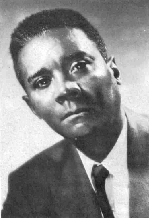 On Thursday the 9th my friend Matthew Quest, history professor at Lewis University, gave a talk to Auburn’s history department on “C. L. R. James, the C. I. O., and American Civilization.” Matthew argued that James, although technically a Marxist, was “the most libertarian revolutionary intellectual of both the Pan-African and international labor movements.”
This past Thursday through Saturday I attended the Austrian Scholars Conference, where I presented the aforementioned Rothbard Memorial Lecture, titled “Rothbard’s ‘Left and Right’: Forty Years Later.” (“Forty-One Years Later” would actually be more accurate – but less euphonious.) In my lecture I defended, at least in broad terms, the left-libertarian outlook set forth in Murray Rothbard’s 1965 articles “Left and Right: The Prospects for Liberty” and “Liberty and the New Left.” Reactions ranged from enthusiastic agreement to dismayed perplexity. (I’ll post a link to my talk as soon as it’s online.)
On Thursday the 9th my friend Matthew Quest, history professor at Lewis University, gave a talk to Auburn’s history department on “C. L. R. James, the C. I. O., and American Civilization.” Matthew argued that James, although technically a Marxist, was “the most libertarian revolutionary intellectual of both the Pan-African and international labor movements.”
This past Thursday through Saturday I attended the Austrian Scholars Conference, where I presented the aforementioned Rothbard Memorial Lecture, titled “Rothbard’s ‘Left and Right’: Forty Years Later.” (“Forty-One Years Later” would actually be more accurate – but less euphonious.) In my lecture I defended, at least in broad terms, the left-libertarian outlook set forth in Murray Rothbard’s 1965 articles “Left and Right: The Prospects for Liberty” and “Liberty and the New Left.” Reactions ranged from enthusiastic agreement to dismayed perplexity. (I’ll post a link to my talk as soon as it’s online.)
 On Friday night I went with some of the Misesvolk to see V for Vendetta, which I highly recommend. Although it falls short of the original in some respects (for one thing, it’s much less explicitly anarchistic), it’s still a great libertarian ride and captures much of the eerie quality of the book – especially that haunting mask with Hugo Weaving’s marvelous voice coming out of it. (This film also settles, at least for me, the question whether Natalie Portman’s relatively poor acting in the Star Wars prequels was her fault or Lucas’s. Like Lauren Bacall – compare To Have and Have Not with Key Largo, or compare the first and second versions of The Big Sleep – Portman needs an actor’s director to bring out her talent, and an actor’s director Lucas is not.)
 Speaking of V for Vendetta there’s been a lot of discussion of the film on LRC blog, including this piece where Stephen Carson draws a connection between my aforementioned Rothbard Memorial Lecture and some of Alan Moore’s comments about the film. But I have to take issue with the following judgment expressed by J. H. Huebert:
I found the film’s homosexual propaganda gratuitous (the idea that homosexual conduct is somehow threatened by the present political situation is preposterous – indeed, one suspects sodomy will be one of the few rights left before the Supreme Court is done with us) ....Given today’s high rate of violence against gays, and given that Roy Moore – then an Alabama state judge, and still today one of the most popular political figures in Alabama – wrote a judicial opinion urging the use of “the power of the sword,” up to and including “confinement and even execution,” against gays, the notion that gays face no threat in the current political climate strikes me as bizarre.
Now the references to heaven and possessions are indeed a rejection of religion and private property; no debate there. But Lennon’s endorsement of “living for today” is not an endorsement of high time-preference; in context he clearly means embracing life in this world as opposed to waiting for an afterlife (which Lennon ex hypothesi regards as nonexistent; this is a corollary of “no heaven”). It’s not high time-preference to prefer present satisfactions regarded as real over future satisfactions regarded as imaginary. Likewise, “nothing to kill or die for” has nothing to do with nihilism; what it means is not “nothing worth killing or dying for” but rather “nothing you have to kill or die for” – i.e., peace. Plus, Gil leaves out the most magnificent line of all: “Imagine there’s no countries.”When I taught economics to homeschoolers, we analysed “Imagine”:
Imagine there’s no heaven = atheism
Imagine all the people living for today = high time preference
Nothing to kill or die for = nihilism
Imagine no possessions = no private property
etc.
Posted March 20th, 2006
|
Traduttore Traditore
 To a reader just starting Jules Verne’s 1877 novel Hector Servadac, it wouldn’t be obvious that this was to be one of Verne’s science fiction novels. On the contrary, the opening chapters – featuring a French military officer in North Africa, preparing to fight a duel with a romantic rival – might lead the reader to expect a straight, non-science-fictional adventure story (of which Verne wrote many).
It is not until the fourth chapter that it becomes evident that some sort of astronomical catastrophe has struck: suddenly gravity and air pressure are lower, the celestial bodies are all askew, etc. The characters begin to speculate that perhaps the Earth has been knocked off its axis; but it does not initially occur to them that they are no longer on the Earth. When eventually this thought does occur, the characters assume that they are at least on some large chunk of the Earth that has somehow gotten dislodged. It is not until the 26th chapter, over halfway through the book, that the characters discover that they are actually traveling on a comet which has barely grazed the Earth, carrying off some soil and water and a few unwilling passengers.
Presumably this is supposed to come as a surprise to the reader too. Maybe not quite as much of a surprise; Verne has been dropping clues all along, so the reader has a fair chance of figuring things out before the characters do. But even so, Verne plainly intends the reader to have to figure it out, rather than simply being told up front.
After all, many of Verne’s novels announce in their very titles what sort of adventure the reader is in for: Around the World in Eighty Days, 20,000 Leagues Under the Sea, Journey to the Centre of the Earth, From the Earth to the Moon, and so on. The fact that Verne by contrast gave this novel the non-committal title Hector Servadac suggests that he wanted to maintain some suspense as to what is really going on.
So what title did Verne’s English translators give to Hector Servadac? Why, Off On a Comet, of course! Thanks a lot, guys.
Posted March 12th, 2006
|

A Late Delivery from Babylon
The last of the unreleased Babylon 5 shows is now finally being released on dvd, as a feature-length film titled Legend of the Rangers. This was originally To Live and Die in Starlight, the pilot for an unrealised Babylon 5 spinoff series to be titled Legend of the Rangers.
This disc now joins the original Babylon 5 pilot, seasons 1, 2, 3, 4, and 5, the tv-movies, and the other spinoff series Crusade.
I can’t say that this is Babylon 5 at its best; indeed I have the same gripe about Legend that I had about Thirdspace, namely that each of them introduces a new long-lost alien race that is supposed to be “even more terrifying than the Shadows.” The original series spent many, many episodes gradually building up the menace of the Shadows; there’s no way some Cthulhu-come-latelies can just waltz in after a few minutes’ exposition and expect to earn the same kind of audience reaction.
But it’s still a fun ride; and it features what now, sadly, turns out to be G’kar’s final appearance.
Posted March 10th, 2006
|
Wooly Bully; or, Mammoths Live!
They say that mammoths are extinct – but are they? Take a good look at this aerial photo:

Posted March 10th, 2006
|

I’ve Been Memed!*** – Part Deux
I notice that some versions of the “Meme*** of Fours” include the category “Four albums I can’t live without.” So here are mine:
1. Leonard Cohen – The Essential Leonard Cohen
2. Lucinda Williams – Essence
3. Yeni Türkü – Külhani Şarkılar
4. Antonio Vivaldi – The Four Seasons
Posted March 8th, 2006
|
I’ve Been Memed!*
 Wally Conger has tagged me with the dreaded “Meme* of Fours.” I hereby discharge it.
Four jobs I’ve had
1. House painterFour movies I can watch over and over
2. Amusement park ride operator
3. Grocery bagger
4. Academic summer program director
1. His Girl FridayFour places I’ve lived
2. Ninotchka
3. To Have and Have Not
4. The Third Man
1. Colorado Springs, ColoradoFour TV shows I love
2. San Diego, California
3. Hanover, New Hampshire
4. Chapel Hill, North Carolina
1. The Twilight Zone (the original)Four highly regarded and recommended TV shows I haven’t seen (much of)
2. Secret Agent / Danger Man
3. Babylon 5
4. Firefly
1. LostFour places I’ve vacationed
2. Alias
3. 24
4. Deadwood
1. London, EnglandFour of my favorite dishes
2. Paris, France
3. The Amalfi Coast, Italy
4. Yellowstone National Park, Wyoming
1. Ahi tunaFour sites I visit daily
2. Tortellini
3. Spanakopita
4. Lechon asado (the way they make it at Alma de Cuba)
1. RadGeekFour places I’d rather be right now
2. Brad Spangler
3. Kevin Carson
4. Ludwig von Mises Institute
See my answers to Four places I’ve vacationed, above.Four new bloggers I’m tagging
Ah well, when Alexander the Great** was on his deathbed, he was asked to whom he wished to bequeath his empire. “To the strongest,” he is said to have replied. Same deal here: this meme* belongs to whoever can seize it.
Posted March 6th, 2006
|
Melancholy Miscellany
 I was very sorry to hear that Harry Browne has died. I had the honour of meeting him twice – once at the nominating convention in 1996, and again last year at the Advocates Anniversary. Browne was one of the Party’s most articulate and credible spokesmen; he looked presidential. And he stood firmly against war paranoia in the wake of 9/11, speaking out immediately in the days following the attacks. He will be missed.
Posted March 3rd, 2006
|
From Russia With Love
[cross-posted at Liberty & Power]
Guess the mystery philosopher:
I was a Russian Jew by birth, but an American and an atheist by choice. In early adulthood I fled Russian tyranny to come to America, where I became involved in the fledgling libertarian movement. One of the chief libertarian newspaper writers of that era was my friend and intellectual mentor, though we later had a somewhat acrimonious break. I never held an official academic post, but I wrote widely on philosophical and political questions, favouring secularist rationalism, ethical individualism, and extreme economic and political laissez-faire. After an early flirtation with a somewhat Nietzschean version of egoism, I developed more of a natural-rights approach, drawing on the classical liberal tradition. Later in life, I annoyed many of my former associates by sharply condemning libertarianism – especially in its anarchistic form. My spouse pre-deceased me by several years.
Who am I?
Posted March 1st, 2006
|
Moments of Transition
Andreas Katsulas, who played G’kar so unforgettably on Babylon 5, has died.

Posted February 28th, 2006
|
Andrews and Walker: Anarchist Classics Online
[cross-posted at Mises Blog and Liberty & Power]
Two more additions to the Molinari Online Library:
 Stephen Pearl Andrews – disciple of Josiah Warren, sometime speechwriter for Victoria Woodhull, and an important influence on Benjamin Tucker – was an abolitionist, feminist, labour activist, individualist anarchist, and a leading proponent of “free love” – a term which in Andrews’ day denoted not promiscuity but simply the banishment of all compulsion, governmental or otherwise, from sexual and/or marital relations. Hence Andrews opposed the legal subordination of wives to husbands, as well as legal restrictions on divorce, birth control, consensual sex, and sex-related publications – the complete separation of sex and state.
Posted February 28th, 2006
|
Wieser and Smart: Austrian Classics Online
[cross-posted at Mises Blog and Liberty & Power]

The latest additions to the Molinari Online Library are two early classics of the Austrian School:
Posted February 24th, 2006
|
Exit to Grow in Wisdom
Lawrence Summers, Harvard’s anti-feminist, pro-militarist, pro-corporatist president, is resigning under pressure from a fed-up faculty. Seems like the best resolution to me. If Summers wants to air his views as a faculty member, that’s certainly within the bounds of academic freedom; but someone who aggressively promotes genetic fantasies about women’s innate inaptitude for science is simply the wrong person to be running an educational institution – or at least one with female faculty and students. By analogy, if you want to be a Jehovah’s Witness, go for it, but you shouldn’t expect to be put in charge of the bloodmobile. The job of a university president should be to facilitate the work of the university community, not to undermine it. (Actually I’m not even convinced that there should be university presidents – the University of Bologna got along fine without any “administration” at all – but that’s another story.)
Posted February 21st, 2006
|
Spooner on Rent
[cross-posted at Liberty & Power]
Benjamin Tucker famously held that property in real estate depends on continued personal occupancy, so that when a landlord undertakes to rent out a plot of land or a building to a tenant, the “landlord” actually surrenders ownership to the “tenant,” who – despite whatever contract she may have signed – has no obligation, enforceable or otherwise, either to keep paying rent or to return the property at the expiration of the lease.
I think Tucker’s view on this subject is mistaken, but debating its merits is not my present concern. (For a defense of Tucker’s position, see Kevin Carson’s critique of absentee landlordism; for the contrary view, see my forthcoming reply to Carson in the next issue, 20.1, of the JLS.) Rather, for purposes of this post I want to ask a historical question: what was Lysander Spooner’s position on this issue?
It’s often assumed that it must have been similar to Tucker’s; in Egalitarianism as a Revolt Against Nature, for example, Rothbard treats the abolition of rent as part of the “Spooner-Tucker doctrine.” But while Spooner and Tucker were certainly aligned on many issues, they had some important disagreements as well – most notably on intellectual property (Spooner was pro, Tucker con) and on the ethical foundations of libertarianism (Spooner favoured natural law while Tucker favoured Stirnerite egoism). So it’s by no means a foregone conclusion that Spooner and Tucker must have agreed about rent.
 Perhaps it’s assumed that Spooner and Tucker were both anti-rent because they both supported the Irish movement to resist paying rent to landlords. But in Spooner’s 1880 Revolution: The Only Remedy for the Oppressed Classes of Ireland, the only reason Spooner gives for impugning the property title of landlords in Ireland is not that the landlords have failed to maintain personal occupancy, but rather that their holdings “were originally taken by the sword” from the native cultivators – an argument perfectly consistent with Lockean/Rothbardian views on rent.
I can’t claim to have scoured every inch of Spooner’s texts for remarks on this issue, but what I have found convinces me that Spooner’s position on rent was in fact the Lockean/Rothbardian one and not the Tuckerite one at all.
There is no limit, fixed by the law of nature, to the amount of property one may acquire by simply taking possession of natural wealth, not already possessed .... [H]e holds the land in order to hold the labor which he has put into it, or upon it. And the land is his, so long as the labor he has expended upon it remains in a condition to be valuable for the uses for which it was expended; because it is not to be supposed that a man has abandoned the fruits of his labor so long as they remain in a state to be practically useful to him. ...I think this is as clear a statement as one could ask for that in Spooner’s eyes ownership, while initially acquired by labour and occupancy, does not depend for its continuation on the continuation of such labour and occupancy, but may legitimately be rented out with no loss of the original owner’s just title. Perhaps it was not solely for its defense of copyrights and patents, then, that Tucker described Spooner’s Law of Intellectual Property as “the only positively silly work which ever came from Mr. Spooner’s pen.”
The principle of property is, that the owner of a thing has absolute dominion over it, whether he have it in actual possession or not, and whether he himself wish to use it or not; that no one has a right to take possession of it, or use it, without his consent; and that he has a perfect right to withhold both the possession and use of it from others, from no other motive than to induce them, or make it necessary for them, to buy it, or rent it, and pay him an equivalent for it, or for its use. ... The right of property, therefore, is a right of absolute dominion over a commodity, whether the owner wish to retain it in his own actual possession and use, or not. It is a right to forbid others to use it, without his consent. If it were not so, men could never sell, rent, or give away those commodities, which they do not themselves wish to keep or use – but would lose their right of property in them – that is, their right of dominion over them – the moment they suspended their personal possession and use of them.
It is because a man has this right of absolute dominion over the fruits of his labor, and can forbid other men to use them without his consent, whether he himself retain his actual possession and use of them or not, that nearly all men are engaged in the production of commodities, which they themselves have no use for, and cannot retain any actual possession of, and which they produce solely for purposes of sale, or rent. In fact, there is no article of corporeal property whatever, exterior to one's person, which owners are in the habit of keeping in such actual and constant possession or use, as would be necessary in order to secure it to themselves, if the right of property, originally derived from labor, did not remain in the absence of possession.
Posted February 21st, 2006
|
San Franarchy
I’m back! The conference was great – with some interesting connections made between the attempts by our authors to tame the political power of religious extremism in the 17th century, and the need to deal with militant Christian and Muslim extremism today.
 I also had a marvelous time in San Francisco – wandering around Chinatown, North Beach, Fisherman’s Wharf, the Embarcadero, and the Mission District; riding the Powell Street cable car; enjoying delicious dinners (for free!) at Ponzu, The Slanted Door, and Il Fornaio; and buying obscure anarchist tomes at City Lights Bookstore (of Kerouac and Ginsberg fame) and Bolerium Books (of imperial road kill fame).
Alas, things took a less enjoyable turn on the way home, when my twice-delayed flight, which should have gotten me back to Atlanta at 7:30 last night, didn’t get me in till 6:30 this morning, leaving me in a somewhat zombified state all day today. (Happily I only had to give midterms today rather than lecture; and I’m just now somewhat refreshed from a brief nap.) But at least my twelve hours in the San Francisco airport gave me plenty of time to read some of my new books! Here’s what I’ve been reading:
In order to trace the historical development of the ideas elaborated by Proudhon, and to locate these ideas in their sociological context, library materials will be used. The examination of primary source materials in French will be supplemented by secondary sources on Proudhon and his age in French and English, and also by additional general sociological works relating to theory and method. Since we shall to a large extent be dealing with historical materials, the historians’ criteria for internal and external criticism of documents will constitute the most appropriate tools for the assessment of the reliability and validity of the source materials examined.Und so weiter (and pointlessly, since no such promised assessment actually occurs in the book). But it’s a useful and interesting source nonetheless.
Every concept-determining study faces the problem of comprehending conceptually an object that was first comprehended non-conceptually, and therefore of putting a concept in the place of non-conceptual notions of an object. This problem finds a specially clear expression in the concept-determining judgment (the definition), which puts in immediate juxtaposition, in its subject some non-conceptual notion of an object, and in its predicate a conceptual notion of the same object.But Eltzbacher makes a good case for dehomogenising the various strands of anarchism and rejecting formulae of the “all anarchists must believe X” variety; and his opening discussion of the definitions of law, property, and state is fascinating. (I may post it at some point.) Incidentally, the translator, Steven Byington, was one of Benjamin Tucker’s associates (as would anyway be evident from the tone of his clarificatory notes) and translator of Stirner.
Posted February 20th, 2006
|

From Wilderland to Western Shore
I’m off to San Francisco for a Liberty Fund conference. Topic: the oft-skipped biblical-interpretation passages in Hobbes, Spinoza, and Locke.
Back next week!
Posted February 15th, 2006
|

Bang Bang He Shot Me Down
[cross-posted at Liberty & Power]
I’m sure the running dogs of statism will be rushing to use His Excellency’s recent misadventure as another argument for increased gun control.
If so, the case will be a poor one. In the world the gun controllers are building, people like Cheney will always have access to firearms.
Posted February 12th, 2006
|

Moon Man
For fans of Jules Verne (about whom I’ve blogged a fair bit lately), check out Ken Gregg’s interesting post.
Posted February 12th, 2006
|
Who’s on First?
I’m sometimes asked why I label (or likewise why Rothbard labeled) Gustave de Molinari the “first market anarchist” or the “founder of market anarchism.” Weren’t there anarchists before Molinari who were pro-market?
Certainly there were; the clearest cases are William Godwin in England, Josiah Warren in America, and Pierre-Joseph Proudhon in France. Some would deny that these thinkers count as pro-market, since they were “socialists”; but we shouldn’t let ourselves be confused by terminology. While these thinkers’ views on property may fall short of Rothbardian purity – or, heck, even Tuckerite purity (Proudhon and Tucker definitely need some dehomogenising) – they all clearly favoured some form of private ownership and free market exchange.
 So if they were anarchists who liked the market, why am I reluctant to call them market anarchists? Well, it seems to me that what Molinari pioneered, in 1849, was an explanation of how market mechanisms could replace the traditional “governmental” function of the State – protection against aggressors. If one looks to Godwin and Warren for an analogous discussion, there’s precious little on this topic at all; their solution to the problem of aggression seems to consist primarily of converting potential aggressors to anarchism. As for Proudhon, whenever he starts talking about administrative arrangements under anarchism he ends up describing centralised institutions whose difference from the monopoly State is difficult to discern.
Thus I don’t see anything properly describable as market-based anarchism (as opposed to merely market-friendly anarchism) prior to Molinari.
 What’s not clear to me is how much influence Molinari exerted on the subsequent market anarchist tradition. (He certainly influenced de Puydt and possibly influenced Bellegarrigue, but de Puydt’s competing jurisdictions operate within the framework of a monopoly state, while Bellegarrigue is vague about administrative details, at least in the writings I’ve seen.) Benjamin Tucker and his associates certainly defended market anarchism in terms reminiscent of Molinari’s arguments; but while they were unquestionably familiar with and indebted to Godwin, Proudhon, and Warren, Liberty’s review of a work from Molinari’s later semi-anarchist period apparently shows no awareness of his early fully anarchist writings. So they may well have developed the same ideas independently.
Posted February 11th, 2006
|
Wear the Future
Posted February 7th, 2006
|
Randians on the Warpath
[cross-posted at Liberty & Power]
Two recent Randian skirmishes:
 What earned me this last was my supposedly amazing characterisation of his position as “malevolent tribalism.” But if this jingoistic don’t-you-dare-criticise-the-troops brand of patriotism doesn’t count as tribalism, what does? Tribalism also seems a fair description of Bidinotto’s dismissal of all criticism of America as criticism of America’s founding ideals of individualism and freedom; by thus identifying these ideals with a particular nation, Mr. Bidinotto evidently blinds himself to the possibility that the nation might not be living up to those ideals – and the result is that allegiance to the ideals get shifted instead to allegiance to the nation, even when this means discarding the ideals and attacking those who are actually defending them. (As for “malevolent,” the tone in which he talks about collateral damage speaks for itself.)
If we go to war with Russia, I hope the ‘innocent’ are destroyed with the guilty. ... Nobody has to put up with aggression, and surrender his right of self-defense, for fear of hurting somebody else, guilty or innocent. When someone comes at you with a gun, if you have an ounce of self-esteem, you answer with force, never mind who he is or who’s standing behind him. (p. 95)
Whatever rights the Palestinians may have had – I don’t know the history of the Middle East well enough to know what started the trouble – they have lost all rights to anything: not only to land, but to human intercourse. If they lost land, and in response resorted to terrorism – to the slaughter of innocent citizens – they deserve whatever any commandos anywhere can do to them, and I hope the commandos succeed. (p. 97)
Even as a writer, I can barely project a situation in which a man must kill an innocent person to defend his own life. ... But suppose someone lives in a dictatorship, and needs a disguise to escape. ... So he must kill an innocent bystander to get a coat. In such a case, morality cannot say what to do. ... Personally, I would say the man is immoral if he takes an innocent life. But formally, as a moral philosopher, I’d say that in such emergency situations, no one could prescribe what action is appropriate. ... Whatever a man chooses in such cases is right – subjectively. (p. 114)Diana Hsieh responds in Ayn Rand on Total War (conical hat tip to Chris Sciabarra). Here are her main points, interspersed with my responses:
In the first [quotation], Ayn Rand is speaking of war of self-defense with Russia. The “innocent” in question were the passive supporters of the Soviet Union, i.e. the vast majority of Russians who accepted the horrors of the communist government without significant protest. Those people were morally responsible for their decision not to fight the communists, for their willingness to live as slaves to the Bolsheviks. Without them, the Bolsheviks never could have retained their iron grip on power. Such people were not innocent, but guilty – albeit perhaps less so than active supporters of the communists. Given their choice to live without any rights whatsoever under the Soviets, they have no grounds on which to protest their death by an American bomb rather than a KGB interrogator. The genuine innocents in Soviet Russia were the opponents of the regime – and those people would have welcomed an invasion from the US, despite the risk of being caught in the crossfire.So according to Ms. Hsieh (or Rand, or both), anyone who lived under the Soviet regime “without significant protest” was effectively a supporter of the regime, and so not innocent, and so fair game for killing. As Chris Sciabarra has pointed out, this claim bears an uncomfortable resemblance to Ward Churchuill’s suggestion that the office workers in the World Trade Center were “little Eichmanns” who had it coming because of their participation in neofascist corporatism.
 Anyway, the notion that one should be happy to be blown to bits by an invading army so long as one’s country is liberated is a rather odd notion – frankly, a Soviet-sounding notion – for an egoist to uphold. And even if we grant it, the fact that someone should consent to being killed does not make it okay to kill her if she has not actually consented. As Rothbard points out, “anyone who wishes is entitled to make the personal decision of ‘better dead than Red’ or ‘give me liberty or give me death,” but “he is not entitled to ... make these decisions for others, as the prowar policy of conservatism would do. What conservatives are really saying is: ‘Better them dead than Red,’ and ‘give me liberty or give them death’ – which are the battle cries not of noble heroes but of mass murderers.”
In contrast, the second quote concerns actual innocents, namely the ordinary Israelis conducting their daily, peaceful business within a fundamentally lawful, civilized society who are suddenly blown to bits by Palestinian terrorists. If the Palestinians had legitimate complaints against the Israelis, they ought to have settled them in a peaceful manner consistent with some measure of respect for law. They were not fighting a dictatorship – and so had no grounds upon which to inflict such senseless death and destruction.I certainly agree that Palestinians ought not to be killing innocent people; but I have a hard time seeing how this case differs from the first one. Can anyone claim with a straight face that Israel has really been a “fundamentally lawful, civilized society” for its Palestinian citizens (the fact that it’s not so bad for non-Palestinian Israelis hardly seems relevant), or that the Israeli legal system has been even remotely hospitable to Palestinian grievances (until so compelled by the intifada)?
The context of the third quote is substantially different from that of the first two, in that it concerns an ordinary person attempting to escape dictatorship, not a political conflict of any kind. It might be psychologically difficult for an ordinary person to kill under those circumstances, but that has nothing to do with the propriety of killing innocents (whether genuine or supposed) in war.This strikes me as another irrelevant distinction. What’s the deep moral difference between a so-called “ordinary person” trying to escape from a tyranny, and a so-called “political” agent trying to overthrow a tyranny? Don’t they both count as self-defense? If so, how can killing innocents be clearly permissible in one case but not clearly permissible in the other?
The same assessment applies to the rationalistic libertarians claiming that the non-initiation of force principle prohibits self-defensive action against anyone other than a voluntary agent of a force-initiating regime. On that view, if Hitler ever invaded the US, US soldiers would be forbidden from defending the borders, since at least some of the enemy soldiers were unwillingly drafted.Here Ms. Hsieh has simply misunderstood the position she is criticising. That “rationalistic” (i.e., principled) position states that force is justified against aggressors. A soldier invading the US is an aggressor, whether or not she has been drafted, and so force is certainly a legitimate means of repelling the invader. The objection to killing innocent civilians is that they are (ordinarily) not aggressors. (To be precise, I think killing nonaggressors can be justified, but only under certain fairly rare circumstances; for elaboration, see here and here.) So the analogy with an invasion by Hitler doesn’t hold.
Similarly, the US military couldn’t bomb Hitler’s concentration camps – and thus save millions of genuinely innocent lives by destroying the machinery of the Holocaust – because we might kill or maim some of those innocents.This is a trickier case than the first one, but it’s still not analogous to the cases Ms. Hsieh is using it to defend, because the people in the concentration camps are presumably going to be killed anyway, so saving some of them by killing the others seems less clearly indefensible. I’m not saying that it is the right thing to do – that’s a famously difficult moral question – but it doesn’t involve the objectionable feature of sacrificing some noninvasive lives – lives that would otherwise not have been lost – in order to save someone else. It’s the latter case that seems most blatantly to violate Rand’s prohibition on treating human beings as sacrificial animals.
The pacifist libertarians fail to appreciate the philosophical context of the non-initiation of force principle, particularly the fact that its purpose is to protect human life by making peaceful co-existence in society possible.As an Aristotelean, I must of course reject the utilitarian idea that the sole “purpose” of the ban on initiatory force is “to protect human life by making peaceful co-existence in society possible.” Justice is part of the good life, not just a strategy for promoting it. (For the unresolved tension in Rand’s own thought between utilitarian and Aristotelean conceptions of virtue, see Neera Badhwar’s Is Virtue Only A Means To Happiness? and my own Reason and Value: Aristotle versus Rand. For the superiority of the Aristotelean approach, see both of the above plus my discussions here, here, here, and here.)
Posted February 6th, 2006
|
The Empire Victorious
 The blog contest at Liberty & Power is over, and I’m pleased to announce that Austro-Athenian Empire was declared the winner in the category of “individual libertarian/classical liberal academic blog.”
To everyone who voted for me – thank you!
To everyone who voted against me – you have been declared enemies of the Empire, and my agents will be hunting you down without mercy.
Posted February 6th, 2006
|
Farewell and Thank You

Posted February 5th, 2006
|
Tarzan’s Burden
 I was around age 11 when I first discovered Edgar Rice Burroughs. (See his two entertaining autobiographical sketches, one true and one invented – I’ll let you decide which is which.) I believe I started off with the second and fourth Venus novels – a rather disorganised way to begin. I started writing comic books about Barsoom, Amtor, and Pellucidar, and was especially fascinated by the concept of a hollow earth (as my comments on Wally Conger’s blog show).
Unfortunately, most people know Burroughs’ work – including his most famous creation, Tarzan – only through the movie versions, and Burroughs has not been well-served by Hollywood (though hopefully the upcoming John Carter flick will be an exception); indeed, I’ve never seen any screen depiction of Tarzan, even in some of the better films, that bore any similarity to Burroughs’ character. (Who would guess from the movies, for example, that Tarzan’s dominant characteristic is intelligence – or that his first spoken human language was French?)
All this is by way of introduction to an interesting article I just came across, by F. X. Blisard, about race relations in the Tarzan novels and in Burroughs’ work generally – fairly enlightened for Burroughs’ era, it turns out, and far superior to Hollywood’s treatment. Read it here: part 1, part 2, part 3, part 4.
Posted February 3rd, 2006
|
Ayn Rand’s Left-Libertarian Legacy
[cross-posted at Liberty & Power]
Today is Ayn Rand’s birthday.
Last year, for her centenary, I wrote about Rand’s legacy for libertarians generally. This year I want to write about her legacy for left-libertarians in particular.
 Rand’s legacy? For left-libertarians? Such a proposal might well engender skepticism. Sure, Rand’s critical attitude toward religion, tradition, and “family values” has sometimes led paleolibertarians to view her as a lefty; but on a broad range of other issues she is easily viewed as decidedly right-leaning. Consider:
Rand understood and emphasised the interlocking, systemic connections between governmental and cultural factors (see Chris’s book on this), recognising, as left-libertarians traditionally have, that activism directed toward changing government is futile without a more broadly based cultural transformation; and her analysis of tribalism and the anti-conceptual mentality is invaluable in understanding how racism, sexism, and nationalism operate.
Posted February 2nd, 2006
|
The Rainbow and the Bridges of the Olbermann
On Wednesday I sent the following email to Keith Olbermann’s show Countdown:
On last night’s show while discussing the Katrina snafu you said that you hoped someone would think up a way for providers of governmental services to compete against each other. Actually this idea has been around for a long time and there is a whole movement of people (including your humble correspondent) advocating it; it’s called “polycentric law” and you can read about it here:http://osf1.gmu.edu/~ihs/w91issues.html
Posted January 28th, 2006
|
Amica Libertas Sed Magis Amica Veritas
Once when I was 12 or so I went up to the checkout with six comic books I’d picked out, only to realise I had just enough money to buy four. So the clerk at the cash register started to pick two at random to put back, as though I would have no preference as to which four of the six to keep. I was amazed.
When I was in high school I intended to become a novelist. One of the counselors thought this was a great idea, and advised me, “take a look at which novels are the best sellers, and try to write novels like that” – as though I might want to be a novelist without having a preference for writing any particular sort of novels. Once again I was amazed.
 I’m likewise amazed whenever I see the argument that “if you want to be successful in promoting libertarianism, you need to give up on feature X or feature Y” – as though someone might want to promote libertarianism without caring about promoting any particular version of libertarianism. (I’m talking about cases where feature X or feature Y is part of one’s view rather than, say, a dispensable rhetorical emphasis involved in promoting the view.)
Now perhaps I’m being uncharitable. Those who offer this argument might reply: “Look, of course we know that you prefer your version of libertarianism to other versions. But any version of libertarianism is preferable to non-libertarianism; so adopting a more marketable version of libertarianism than the one you favour will increase the odds of getting libertarian views to displace non-libertarian ones.”
But first, it’s by no means obvious that every version of libertarianism is preferable to every version of non-libertarianism. (Is Leonard Peikoff’s pro-mass-murder version of libertarianism, for example, really preferable to, say, Jon-Stewart-style liberalism?) And second, even if it were so, asking libertarians to argue for (not just vote for, but argue for) a version of libertarianism they disbelieve is asking them to engage in deception.
All of which brings me to a recent exchange between Carl Milsted and Stephan Kinsella. Milsted advises anarchist libertarians to give up their opposition to taxation and the state, on the grounds that refusing to do so “subjects us to ridicule” since “99+% of the people consider anarchy to be too risky to be attempted.” Kinsella responds by accusing Milsted of caring more about “what will sell” than about “what is true.”
Now Kinsella’s charge might seem unfair. After all, Milsted’s argument doesn’t take the form “anarchism makes libertarianism hard to sell, so let’s abandon anarchism.” Instead it takes the form “anarchism makes libertarianism hard to sell, so let’s look very closely to see whether we can find a justification for abandoning anarchism, and sure enough, I’ve found one.” The justification he finds is the principle – mistakenly attributed to Rothbard – that, allegedly, “theft is morally acceptable if all victims are paid back double.”
(Kinsella mentions this principle’s similarity to Epstein’s views; I would add that it also bears some resemblance to Nozick’s compensation principle, which was thoroughly, and to my mind decisively, critiqued in the very first issue of JLS.) So isn’t it this principle, rather than the pragmatic consequences of advocating or not advocating anarchism, that is grounding Milsted’s argument?
Well, maybe. But the principle is so implausible – and, as Kinsella points out, has implications so grotesque that hardly anybody, libertarian or non, would endorse them – that it’s hard to imagine purely libertarian reasoning leading one to this principle without background pragmatic considerations offering assistance across the inferential gaps.
Posted January 26th, 2006
|
How the Randians Learned to Stop Worrying and Love Statist Collectivism and Mass Death
I wish I could say it’s only the Peikoffian branch of the Randian movement that engages in this kind of malevolent tribalism, but alas.
Posted January 25th, 2006
|
New Anti-IP Resource
[cross-posted at Liberty & Power]
A draft of Michele Boldrin and David K. Levine’s book Against Intellectual Monopoly is available online. It offers, inter alia, an interesting critique of the innovation-requires-intellectual-property argument.
Conical hat tip to Alex Singleton via Kevin Carson.
Posted January 24th, 2006
|
The Problem of Pain
I can be mistaken about whether you’re in pain, but I can’t be mistaken about whether I’m in pain.
 But what sort of fact is that? One natural answer – we might call it the Cartesian answer – is that it’s just a basic albeit somewhat mysterious property of self-awareness that it has a kind of luminous infallibility that other forms of awareness don’t.
Wittgenstein famously criticises the Cartesian answer. I think the Wittgensteinian criticism is correct – but I also think it’s also easily misunderstood.
Let me start by setting out what I think is the wrong way to describe the Wittgensteinian critique, because getting the wrong interpretation out on the table will ultimately be helpful in explaining the right interpretation. I’ll call the proponent of the wrong version the “pseudo-Wittgensteinian.”
So the pseudo-Wittgensteinian says: Look, if you buy the Cartesian answer then you think it’s some sort of discovery we made that we can be wrong about other people’s pain but not about our own. But there’s no fact to be discovered here, apart from our linguistic conventions. The meaning of terms and phrases like “my pain,” “your pain,” “mistaken,” and so on is determined by our rules – conventional rules – for using them. And it’s just a fact about our linguistic rules that sentences like “she’s in pain” may be answered with “how do you know?” while sentences like “I’m in pain” may not. Just as the rules of chess determine that moving a bishop diagonally is a permissible move but moving a rook diagonally is not, so the rules of our language game determine that challenging your knowledge of another’s pain is a meaningful move while challenging your knowledge of your own pain is not. So the alleged infallibility of self-awareness isn’t some deep fact about our minds; it’s just an artifact of our linguistic conventions. And so there’s no necessity to it; just as we could change the rules of chess to allow a rook to move diagonally, so we could change the rules of our language game to make epistemic access to our own pain fallible, or epistemic access to others’ pain infallible, or both.
As I say, I don’t think this answer is Wittgenstein’s answer. But Wittgenstein’s answer sounds a lot like this answer; so it’s easy to read him as saying that the infallibility of self-awareness is a fact about our linguistic conventions rather than about our mental states. But here’s where I think the difference lies. Consider: is it really true that “we could change the rules of chess to allow a rook to move diagonally”? Well, it depends what you mean by “rook.” If you mean the little wooden or plastic thingy that looks like a tower, then sure, we can make any rules we want about how that is to move. We can play checkers instead of chess with it; we can even toss the rook, in that sense of “rook,” back and forth across a net, or whack it with a stick, if we’re so inclined. But if by “rook,” you instead mean something defined in terms of the (current) rules of chess, then nothing counts as a rook except insofar as it is moved in accordance with those rules.
Analogously: we can of course mean anything we want by words like “pain” and “mine” – i.e., by those audible sounds or those visible marks. We could use “pain” to mean “chocolate cake” or “the British are coming!” In that sense, words are like chess pieces understood as little wooden or plastic thingies. But of course if we did that we would be changing what the words mean, and it’s no surprise that our linguistic conventions determine what our words mean.
Now when the pseudo-Wittgensteinian says that it’s a matter of linguistic convention whether our access to pain is infallible, she surely isn’t meaning to make merely the utterly boring observation that it’s a matter of linguistic convention whether the word “pain” – the sound or mark – refers to something to which we have infallible epistemic access, i.e., that it’s a matter of linguistic convention what “pain” means. For the Cartesian never dreamed of denying something so obvious. What the pseudo-Wittgensteinian must mean is that the word “pain,” meaning what it means, is only conventionally associated with certainty – so that a change in our linguistic conventions could make it the case that our epistemic access to our own pain is no longer infallible, without changing the meaning of the word “pain” (or the word “infallible,” or any other of the words involved).
 The real Wittgenstein’s approach, as I read it, has in common with the pseudo-Wittgensteinian approach an emphasis on the fact that our linguistic rules simply don’t allow anything to count as a meaningful challenge to our awareness of our own pain. But the upshot convicts both the Cartesian and the pseudo-Wittgensteinian of the same mistake: both are implicitly assuming that such a challenge could make sense. The Cartesian treats our infallible access to our own pain as an amazing discovery about our minds, as though we might instead have discovered the opposite; the pseudo-Wittgensteinian treats such access as something rendered true by our linguistic conventions, as though our conventions might have rendered it false. And so both the Cartesian and the pseudo-Wittgensteinian see the incorrigibility of pain as grounded in something (whether in our language games or in the metaphysical nature of pain itself) that explains it and secures it – some x such that, but for that x, pain would not be incorrigible. But Wittgenstein’s point is that since – given what “pain” means in our language – no sense has been assigned to expressions like “I’m not sure whether I’m in pain,” it follows that no such x is either needed or possible; the incorrigibility of pain requires no explanation or grounding. (Those who’ve read my anti-psychologism paper will recognise that I’m offering another “rail-less” account here.)
Someone might object: “look, we know what ‘I’m in pain’ means, and we know what ‘I don’t know whether ...’ means, so how could the combined expression ‘I don’t know whether I’m in pain’ fail to have a meaning?” The answer here is that Wittgenstein accepts Frege’s Context Principle: what a word means depends on the meaning of the sentence in which it appears. Just because “angry” has a meaning in the sentence “Listening to President Bush makes me angry,” it doesn’t follow that it has a meaning in “Let’s angry some parsnips.” Likewise, just because the words “know” and “pain” make sense in a sentence like “I don’t know whether Eric is really in pain or only faking,” it doesn’t follow that they still make sense in a sentence like “I don’t know whether I’m in pain.”
(I should also note that although Wittgenstein thinks we can be mistaken about whether another person is in pain, he thinks it doesn’t make sense to suppose that we’re consistently mistaken about others’ pain. Analogously, although we can accidentally make illegal chess moves, it doesn’t make sense to suppose that all or most of the chess moves ever made have accidentally been illegal – because the practice of chess defines what’s legal. But that’s a different story we needn’t get into right now.)
I think all this is relevant to ethics. How so? Well, we only apply the term “good” to things we approve of or endorse. This might mean, as Plato perhaps thought, that goodness is a property with a mysterious hold over our will, such that we can’t recognise that something is good without thereby being moved to endorse it. (J. L. Mackie, in his book Ethics: Inventing Right and Wrong, even uses this idea as an argument for moral skepticism: if moral properties existed they’d have to be mighty weird, but we have no reason to believe in such mighty weirdness, so we have no reason to believe there are any moral properties.) Or one might resist this view by insisting that the alleged magnetic attractiveness of goodness is simply reducible to the conventional rule of language that we don’t call something good unless we endorse it.
Well, it’s true that it’s a matter of linguistic convention that the word “good” refers to something endorsed; after all, it’s a matter of linguistic convention that the word “good” means anything at all. But given what the word means, it’s not a matter of convention that to see the good is to endorse the good. And that’s the grain of truth in the Platonic view; but Plato’s mistake lies in thinking of the attractiveness of goodness as grounded in the metaphysical nature of goodness, when it’s not grounded in anything at all. (Of course if you want to call this ungroundedness “the metaphysical nature of goodness,” feel free, but be careful not to confuse this sort of metaphysics with the other.)
Does this dispose of moral skepticism? Not necessarily. But I think it does show that it’s not an option for the moral skeptic to suggest that all our moral judgments are or might be false; instead the skeptic has to shoulder the burden of arguing that our moral concepts don’t, or might not, make sense. (Ditto for pain; indeed, I think the best way to understand, e.g., the Christian Scientist’s rejection of the reality of pain is to take her as claiming not that our self-ascriptions of pain are false but rather that they can’t be made coherent sense of and so don’t even rise to the level of being true or false.) But I have yet to see a persuasive argument from the moral skeptic to that effect. And if our moral concepts do make sense, there can’t be any further question about whether they apply to reality. The rules that give moral terms their sense just are the rules for applying them to reality.
Posted January 23rd, 2006
|
See the Violence Inherent in the System!
Check out Norm Singleton’s latest post on the left-libertarian thread at LRC Blog. Toward the end Norm says:
I am not sure what a non-violent form of oppression is, or even if there is such a thing. Which is not to say I don’t think Roderick is right to suggest libertarians should engage these issues, merely that it confuses the issues to refer to non-state, non-violent oppression. Also, maybe some of what the left complains about as oppression is totally justified, such as an employer imposing a dress code on employees.
 Well, if there can be such things as systematically stifling power relations not primarily based on violence (governmental or otherwise), I see no reason not to call these forms of oppression. Most libertarians may balk at the notion of “systematically stifling power relations not primarily based on violence” but they generally don’t have a problem with the concept when it’s dramatised in works like The Fountainhead. As Charles Johnson and I have written elsewhere:
Although its political implications are fairly clear, The Fountainhead pays relatively little attention to governmental oppression per se; its main focus is on social pressures that encourage conformity and penalize independence. Rand traces how such pressures operate through predominantly non-governmental and (in the libertarian sense) non-coercive means, in the business world, the media, and society generally. Some of the novel’s characters give in, swiftly or slowly, and sell their souls for social advancement; others resist but end up marginalized, impoverished, and psychologically debilitated as a result. Only the novel’s hero succeeds, eventually, in achieving worldly success without sacrificing his integrity – but only after a painful and superhuman struggle.Why isn’t “oppression” a perfectly good term for what Rand is describing?
Posted January 21st, 2006
|
The Greatest Love of All
[cross-posted at Liberty & Power]
 More shameless self-promotion: further details about my summer seminar on the praxeological foundations of libertarian ethics have been posted here. Ah, the wonder of me.
Posted January 19th, 2006
|
These Acronyms Were Brought to You By the Letter W
WWWD = What Would Dubya Do?
WWIWWD = What Would the Wobblies Do?
WWWWWD = What Would the World Wide Web Do?
Posted January 19th, 2006
|
News from the Rebellion

Posted January 17th, 2006
|

The Wisdom of Al Gore
Flipping channels tonight I was amazed to hear Al Gore, of all people, explaining:
Whenever power is unchecked and unaccountable it almost inevitably leads to mistakes and abuses. In the absence of rigorous accountability, incompetence flourishes. Dishonesty is encouraged and rewarded. ... It is often the case that an Executive Branch beguiled by the pursuit of unchecked power responds to its own mistakes by reflexively proposing that it be given still more power. Often, the request itself it used to mask accountability for mistakes in the use of power it already has.Yes, Al, absolutely. But would you still believe this if you were President?
Posted January 16th, 2006
|
Why Do They Hate Us?
 Hey, beginning logic students! Confused about the difference between “and” and “or”? Allow me to explicate:
The U.S. foreign policy promise, Iraqi version: Cooperate with us or we’ll bomb your civilian population.Still confused? Yeah, me too.
The U.S. foreign policy promise, Pakistani version: Cooperate with us and we’ll bomb your civilian population.
Posted January 16th, 2006
|

End of an Era
Oh no!
I just found out that Loompanics Unlimited is going out of business. (Conical hat tip to Wally Conger.)
For the past thirty years Loompanics has been the indispensable source of libertarian, anarchist, and counter-economic books that could find no other publisher or distributor. Sure, there was always a fair share of puerile, misogynistic, or crackpot offerings, but there was also much priceless treasure. And the book catalogues were fascinating magazines in their own right, filled with original articles.
I’m very sad to see it go.
Two slightly cheery notes to relieve the gloom: first, Loompanics is having a big 50% off sale, so at least we can load up on loot before the final eclipse. (If the links don’t work too well on that page, try this one.)
Second, in this age of on-demand publishing and online marketing, it will be easier for Loompanics-type material to get into print than it was when Loompanics was first launched. (Indeed, the Molinari Institute plans to start a book publishing program eventually, which reminds me that you should donate vast quantities of money to the Institute to speed the advent of this and other programs.)
Posted January 16th, 2006
|
Reunification
Brad Spangler writes: “It’s time for libertarians to stop fighting the left and take up the challenge of leading the left.” (Read the whole thing.)
 Social Memory Complex says amen, but adds the caveat that we need to work on redefining the term “left” to free it of its association with state socialism.
I too say amen to Brad’s comment, but with a caveat from the other direction, as it were: we shouldn’t let talk of “leading the left” give the impression that libertarians have everything to teach, and nothing to learn from, the left.
Ever since libertarians and leftists went their separate ways, libertarians have specialised in understanding
a) governmental forms and mechanisms of oppression, and
b) the benefits of competitive, for-profit forms of voluntary association;
while leftists have specialised in understanding
c) non-governmental forms and mechanisms of oppression, and
d) the benefits of cooperative, not-for-profit forms of voluntary association.
Libertarians have a great deal to teach leftists about (a) and (b), but leftists likewise have a lot to teach libertarians about (c) and (d).
Thus I would say that the proper aim of the left-libertarian movement is both to lead the left back to its libertarian roots, and to lead libertarians back to their leftist roots. We might call this “left-libertarian reunification.”
Brad makes another valuable point: “Radicals define the moderate position,” because “as the radicals go, so do the moderates grudgingly follow in small steps.”
Posted January 16th, 2006
|
Happy Actual Birthday

 An unjust law is a code that is out of harmony with the moral law. ... Any law that uplifts human personality is just. Any law that degrades human personality is unjust. ... One has not only a legal but a moral responsibility to obey just laws. Conversely, one has a moral responsibility to disobey unjust laws. I would agree with St. Augustine that “an unjust law is no law at all.”
Posted January 15th, 2006
|
Write a Letter to Cory Maye
[cross-posted at Liberty & Power]
 How can you help Cory Maye – who from the facts I’ve seen shouldn’t even be in prison, let alone facing execution?
Charles Johnson offers some suggestions: write letters (to the governor, to the newspapers), use your blogs (write posts, display banners), contribute to the defense fund.
In a recent email Lawrence Krubner suggests you might also want to write a letter to Maye himself, to boost his morale; info here.
Posted January 14th, 2006
|

Postcards from Cimmeria
A number of Robert E. Howard’s classic heroic-fantasy works are being reissued in new editions, including Bran Mak Morn, Solomon Kane, and all the original Conan stories in three volumes titled The Coming of Conan, The Bloody Crown of Conan, and The Conquering Sword of Conan.
The chief advantage of these new editions is the wealth of stunningly beautiful illustrations; the books are worth getting just for the pretty pictures alone! (Thank you, Del Rey.)
If the only image you associate with this material is that of Arnold Schwarzenegger, do yourself a kindness and check these out; the Morn, Kane, and
Crown titles let you browse some of the pics online at Amazon.
Posted January 14th, 2006
|
A Lefter Shade of Thick
The discussion of my recent posts Left Behind, Ties that Bind, and Alienation, Assassination, and Inflation continues on LRC blog. Here are some excerpts, with comments from your humble correspondent.
Of course, tax cuts are not a bad thing just because they are advocated by drug warriors, any more than opposition to war is a bad thing just because communists organize anti-war rallies. The question of opposition to patriarchy is a little different since, in the modern political context, leftist talk of opposing patriarchy it is not a case of a statist advocating a libertarian position but a statist using what may have once been libertarian concerns to expand state power. This is not to suggest that there cannot be a libertarian version of opposition to patriarchy, although I don’t see patriarchy as one of the leading threats to our freedom today. Of course, I welcome further comment on this issue from Roderick and other interested parties.
 It’s certainly true that many leftists who talk about patriarchy (etc.) are using the issue to promote an expansion of state power. But it’s a mistake to think that that’s all that leftists are doing with it; a lot of leftist “political” activity is aimed at consciousness-raising, voluntary organising, and other non-governmental objectives. The fact that they often pursue statist projects too doesn’t mean that the statist elements are the whole deal. As for why libertarians should be concerned about patriarchy today, I’ll point once again in this direction.
Those who think of a free society in terms of leading to a given set of practices would do well to examine the dreary history of the 19th century American communes, whose stultifying uniformities of behavior no doubt helps to explain their virtual extinction. On the other hand, having embraced a way of living that respects the inviolability of oneself and others, the interesting libertarians are those who eagerly celebrate the diversity of lifestyle interests that liberty offers.I certainly agree that libertarians shouldn’t aim to promote a specific set of values. But there are limits to diversity; there is a broad array of values to which libertarians need have no objection, but outside that broad array there are some sets of values that will be problematic – either because they tend to undermine a society’s commitment to liberty, or because they are wrong for the same reasons that rights-violations are wrong, or else because they are just wrong, period. Hence libertarians have good reason to combat such values – not by force, obviously, but through various voluntary means. Hence I advocate what I’ve previously called “generic universalism and specific pluralism.” Butler objects to “Libertarians condemning other libertarians regarding their subjective lifestyle preferences” – but of course not all “lifestyle preferences” are subjective in the moral sense.
I suspect the reason the residue of cultural Leftism resonates as that there are a whole lot of people, many of whom live in Blue-state urban areas, who find “social power” as oppressive as any state power they could face. I am one of them.To this Stephan Kinsella responds:
I’m not sure what you mean by “social power” or “oppressive,” but if by social power you mean some kind of influence that is not based on aggression; and if by oppressive you mean “violation of rights” (since you use it in comparison with state power, which is oppressive in a violent, aggressive way), then your statement does not seem consistent with libertarianism.To which Featherstone replies:
I did not want to suggest I endorsed the actual use of state power for anything. ... But I do believe that social power is a lot more subtle, and tends to work fairly closely with both real and implied state power, especially at local levels.Yes indeed, and here is where I see many leftists and many libertarians committing opposite sides of the same mistake. Many leftists seem to be relying implicitly on something like the following argument:
1. Nonviolent forms of influence are sometimes oppressive.On the other side, many libertarians appear to be tacitly assuming that argument’s mirror image:
2. All forms of oppression are rights-violations and so may legitimately be combated by force.
3. Therefore: nonviolent forms of influence are sometimes rights-violations and so may legitimately be combated by force.
1. Nonviolent forms of influence are never rights-violations and so may not legitimately be combated by force.But to my mind both these arguments are making the same mistake, because premise 2 is false in both cases: there can be, and are, forms of oppression that are not violations of rights – and so are appropriately addressed by means other than force. Treating injustice as the only serious social evil unduly flattens the moral landscape. Nonviolent forms of oppression are evil partly because they tend to reinforce violent ones, and partly because they’re just bad in their own right. On all this, see once again Charles Johnson’s discussion of thick and thin libertarianism and his and my essay on libertarian feminism.
2. All forms of oppression are rights-violations and so may legitimately be combated by force.
3. Therefore: nonviolent forms of influence are never oppressive.
Posted January 14th, 2006
|
A Night in Old Vienna
I first read the libretto of Die Fledermaus when I was about ten or so.
Why? I believe it was because I’d encountered a bat-like creature called a “flittermouse” in the book Merry-Go-Round in Oz – written, as it happens, by a woman whose grandson would years later become a friend of mine in grad school – and so the word “Fledermaus” caught my eye. (I recall that I picked up Die Fledermaus along with the libretto of a rather less celebrated operetta titled Help, Help, the Globolinks! – an alien-invasion comedy for kids.)
 I must be one of the few people to have first encountered Die Fledermaus through the libretto rather than the music – though I must share that distinction with Johann Strauss at least. I was rather charmed by the libretto (I especially liked the exchange between the two characters each pretending to be French), but it wasn’t until I caught a performance on tv a few years later that I first discovered the music and became truly entranced. (I never did hear the music for Globolinks, though it’s probably available.)
For years afterward, tv performances of Die Fledermaus were a standard New Year’s ritual for me. But in recent years it hasn’t been on at New Year’s; I don’t know whether it’s gotten generally less popular or whether it’s just that Alabama has more meager PBS offerings than other places I’ve lived.
But now I’ve finally gotten my Fledermaus fix for this season; I saw it in live performance last night at the Opelika Civic Center, performed by the Russian troupe Helikon. Although I have to say that I wasn’t crazy about this particular staging (neither the acting nor the set was particularly impressive; the non-singing portions of the story were streamlined to the point of plot-unintelligibility; the commedia dell’ arte clowns, while delightful, were distracting and out of place; and the pacing was broken by placing the intermission in the middle of Act 2), seeing it live was a delight nonetheless. And oh, that music!
Posted January 13th, 2006
|
Alienation, Assassination, and Inflation
A couple of comments I’ve received on my post Ties That Bind:
Max Schwing (of Karlesruhe, Germany) writes:
I usually agree with your essays and get a bunch of new ideas or approaches to known subjects. However, I must disagree with your assessment in the post “Ties that Bind.” Perhaps it is that way in the US, but in Germany and France, where socialism prevails in disguise of “social democracy,” you can’t separate the leftist agenda of “anti-market-ism” and “anti-war” and on other issues it gets even worse. The problem is that they can identify problems, but they always seek the state as a solution (even those that call themselves “Anarchists,” although they have different names for it). They truly are afraid of free markets and especially laissez-faire capitalism. And it even gets worse on issues like sexism/racism. I won’t say that the conservatives are any better (again rallying for nationalism in Germany). It is hard to convince die-hard socialists or Marxists that free markets are a solution. They often don’t think of people as capable of living their lives without help from a 3rd institution. At least, this is the impression I got during talks with many local socialists or Greens. And while the Social Democrats are at least accepting the idea that marketplaces exist for their own benefit, many individuals leaning even more to the left have even stronger feelings against anything economically, that is not supervised by an almighty and good institution.
I don’t know whether the US has a different kind of socialists, who accept the idea of market economy and only think the state is rudimentarily necessary (and I don’t want to use the term capitalism here). In Germany and old Europe in general, as they call it nowadays, economics is a field of study that is not deeply respected and often seen as dubious and of no practical relevance. Perhaps it is this deep hatred against something which is believed to be imported from the English, that disallows leftists to regard the market as an option.
 Well, what does it mean to say that one “can’t separate” these issues? If it means that leftists generally don’t separate them, that’s regrettably true, but I don’t see how it’s an objection to what I said, because on the contrary it is what I said. The distinction I drew between two different senses of “tied” is precisely the distinction I would now draw between the analogous two senses of “can’t separate.”
One quick point I want to make with regards to your recent debate over knee-jerk anti-leftism:I would add only that (“even”!) Rand was much more sympathetically interested in the topic of alienation than the dismissive discussion in Capitalism: The Unknown Ideal might imply. What are The Fountainhead and Ideal if not extended meditations on the forces of alienation in modern society and how to overcome them?
It should be pointed out that the concept of alienation in particular, while nowadays usually associated with Marxism, is no more Marxist than, say, anti-imperialism is.There’s a good discussion of this in Erich Fromm’s The Sane Society, where he refers to examples of people dealing with the problem of alienation from across the gamut of the political spectrum – even staunch conservatives. In particular, during the nineteenth century, “The prognosis of the decay and barbarism into which the twentieth century will sink was made by people of the most varied philosophical views. The Swiss conservative, Burckhardt; the Russian religious radical, Tolstoy; the French anarchist, Proudhon, as well as his conservative compatriot, Baudelaire; the American anarchist, Thoreau, and later his more politically minded compatriot, Jack London; the German revolutionary, Karl Marx – they all agreed in the most severe criticism of the modern culture and most of them visualized the possibility of the advent of an age of barbarism.’ Fromm specifically refers to the individualist analyses of alienation by Thoreau and Proudhon, quoting the latter’s description of a free market between laborers: “reciprocity, where all workers instead of working for an entrepreneur who pays them and keeps the products, work for one another and thus collaborate in the making of a common product whose profits they share amongst themselves. ” – and goes on to note that it is “essential for him that these associations are free and spontaneous, and not state imposed, like the state-financed social workshops demanded by Louis Blanc.” Incidentally, in the book he also quotes (and italicizes for emphasis) Aldous Huxley’s statement in an introduction to Brave New World that “Only a large-scale popular movement toward decentralization and self-help can arrest the present tendency toward statism.” (and who indeed saw the increase of statism as tending to a totalitarian direction – one of my favorite left-wing anti-statist quotes).
There’s also Chris Sciabarra’s book list <http://www.nyu.edu/projects/sciabarra/notablog/archives/000487.html> that includes Bertell Ollman’s Alienation: Marx’s Conception of Man in Capitalist Society along with many libertarian books, including Ayn Rand’s Capitalism: The Unknown Ideal (probably one of the few such lists that includes both books!)
Posted January 11th, 2006
|

SUBMIT to The Industrial Radical
[cross-posted at Liberty & Power and the Molinari News Page]
The Molinari Institute is pleased to announce that later this year we will begin publishing a magazine of radical libertarian political and social analysis titled The Industrial Radical. (“Industrial” in Herbert Spencer’s sense, “Radical” in Chris Sciabarra’s sense.) We hereby invite submissions. (See our submissions guidelines and copyright policy. Also note that The Industrial Radical is a popular magazine, not an academic journal; formal, scholarly articles might be more appropriately submitted to, oh, um, say, the Journal of Libertarian Studies.)
Submissions may be of any length, from a brief paragraph to a lengthy essay; we also welcome a diversity of perspectives, whether you dance to the music of F. A. Hayek, Murray Rothbard, Benjamin Tucker, Henry George, or Emma Goldman. Previously published pieces are fine so long as they meet our copyright requirements. We plan to publish themed issues (see theme topics and submission deadlines here), but please don’t refrain from sending us an article just because it doesn’t fit an upcoming theme; the themes are designed to inspire submissions, not discourage them.
Please pass the word, by blogpost or email, to anyone you think might be interested in contributing. (Advance subscriptions are available too.)
Posted January 10th, 2006 |
Ties That Bind
 My friend Norm Singleton (who happens to be Ron Paul’s legislative assistant) has a post on LRC blog today commenting on a post of mine last month on what I called “knee-jerk anti-leftism” in some libertarian circles.
Norm says he largely agrees with me, but does note one point of disagreement:
I think Roderick underestimates (to say the least) the extent to which rhetoric about “patriarchy, white supremacy, and alienation” is tied to attacks on capitalism and western civilization, not just the warfare state, and thus should be rejected by libertarians.Well, what does it mean to say that such rhetoric is “tied” to an anti-market (I find the term less misleading than “anti-capitalist”) agenda? If it means that many of those who use such rhetoric are anti-market, and regard market society as a major cause of such problems as “patriarchy, white supremacy, and alienation,” that’s certainly true. It’s equally true, of course, that many leftists regard market society as a major cause of militarism and imperialism. Does that mean that leftist antiwar rhetoric is “tied” to an anti-market agenda and so should be condemned by libertarians? Presumably Norm would agree with me that the answer is no in the war case; so why not equally so in the former case?
Posted January 10th, 2006 |
Platonic Bailments
Would fractional-reserve banking be objectionable in a genuine market context?
I don’t think so. If all participants are fully informed, it’s not fraudulent; and in the absence of central banking and legal tender laws, competition among banks should keep inflationary expansion in check.
But many libertarians (see, e.g., this article) argue that fractional-reserve banking is still problematic because it requires (or its legitimacy would require) more than one person having title to the same piece of property. Imagine a streamlined case of a 50% reserve bank with two customers, Emma and Voltairine. Each deposits one florin. The bank keeps one of the florins in its vault and invests the other. Who owns the florin in the bank’s vault? By calling the florin a “deposit” and assuring each customer that she may withdraw her deposit at will, the bank is attempting to treat both Emma and Voltairine as each having full title to the single florin – which is impossible. All that Emma and Voltairine have really done is to lend some money to the bank; neither one has any money in the bank.
 So runs the argument; and fractional-reserve “deposits” are accordingly contrasted with bailments, in which an item of property is deposited with a warehouse for safekeeping, and the warehouse is not permitted to lend the item out. If I place a florin in the warehouse, then I can truly say I have a florin in the warehouse. Fractional-reserve banking, its libertarian critics argue, is a confused attempt to combine incompatible categories, a bailment and a loan, into a single concept.
In my view, the argument I’ve just cited depends on an excessively sharp line between loans and bailments – in brief, that its conception of a bailment is excessively “Platonic” – in the same way that the neoclassical conception of perfect competition, the Objectivist conception of legal finality, and the marginal-productivity argument against feminist labour activism are “Platonic.”
The difference between the florin I lend and the florin I deposit as a bailment is, supposedly, that I retain full right of use and disposal over the bailment. But in what sense is that really true? Let’s say that I place my florin with Acme Warehouse for safekeeping. Does that mean I can reclaim my florin whenever I want? Suppose Acme Warehouse’s business hours are 9 to 5; can I reclaim my florin at midnight? Clearly not; I must wait till the next morning.
Do I now have full title to the florin, or not? Well, you can say, if you like, that I have full title but that it’s temporarily encumbered in certain respects; or you can say that title is now shared between me and the warehouse – that title has been decomposed into a bundle of rights, some going to Acme and others being retained by me. I don’t much care which verbal formula we choose so long as we keep track of who’s got rights to do what, how and when, with what.
Now complicate the story still further: my contract with Acme stipulates that they’re not liable for loss of my property due to theft, fire, or flood. So now they not only have no legal obligation to return my florin immediately, but there are also circumstances in which they have no legal obligation to return my florin, or even its equivalent, at all – though so long as the florin is not stolen or destroyed they still have to return it.
At this point the distinction between a bailment and a loan has gotten a good deal less sharp. My contract with my bank may specify circumstances under which they don’t have to give me my deposit immediately, and further circumstances under which they don’t have to give it to me at all. The difference is mainly a matter of degree. (There’s a further complication here, which is that in the case of a bank deposit it’s not the actual physical coin but any coin of the same quantity that they owe me; but if I place a living organism as bailment it’ll be composed of different particles when I get it back too.) It’s only the idealised, unrealistic, Platonic conception of a bailment as something you have total right to get back whenever you want it, a condition that rarely applies to real-world bailments, that gives the distinction an illusion of purchase.
The question is sometimes raised whether it’s fraudulent to count fractional-reserve deposits among one’s assets. Well, I don’t know. Those who think it isn’t seem to regard it as okay to count bailments as assets. But which has more claim to be one of my assets – a fractional-reserve deposit at a bank with a 5% chance of going bankrupt, or a bailment at a no-responsibility-for-loss warehouse in a high-crime district where the chance of loss due to theft is 10%?
In other news: Not only am I geekier than Tom Woods and Stephan Kinsella, but I’m also 1.2 times as geeky as Aeon Skoble (who scored 29.98028%) and 1.15 times as geeky as Anthony Gregory (who score 31.46%). Pretty scary.
Posted January 9th, 2006 |
Booted and Spurred
I used to be a libertarian, and an anarchist.
As recently as yesterday, in fact.
 But I’ve had a revelation concerning the traditional roles of king and subject, lord and serf, master and slave.
After all, civilised man spent millennia developing these roles. Whether you view the roles as having resulted from aeons of evolution or through an act of God, it remains that our biological makeup makes traditional hierarchical roles work. In general, the servile class are happiest toiling in the fields or hauling enormous blocks to build monuments, while rulers are happiest luxuriating in wealth, putting on enormous pageants, pontificating about social order, or waging war against neighbouring districts.
Our biology supports this further by the fact that children respond best – are happiest and healthiest – in the stable presence of such roles during their growing years. After all, our little future serfs need to have patterns of deference and hard work inculcated early on, while our little future rulers need role models from whom to emulate the wrinkled lip and sneer of cold command.
None of this is to say that serfs can’t occasionally be employed in a supervisory capacity – or that rulers can’t get an occasional kick out of dressing up like peasants and miming a bit of labour, like the Hungarian courtiers hoing in the vineyard, or Marie Antoinette disporting herself as a shepherdess at the Petit Trianon, or our own Prince President rolling up his sleeves and playing ranch. (After all, as Queen Victoria is reputed to have said, “It must be fun to work, because it’s so much fun to watch other people work.”) But in moderation, by all means.
The source of my newfound enlightenment? This piece by Brad Edmonds.
Posted January 9th, 2006 |
Mayeday
Hey bloggers – don’t let the Cory Maye story slide into your archives; add a banner or button to your blog to keep the story (and thus hopefully Maye) alive. I made my own, but Laura Denyes over at What Is Liberalism? has a whole page full.
Posted January 8th, 2006 |
Geekier than Thou
More miscellaneous materials:
Posted January 7th, 2006 |
Support Libertarian Forum
The Mises Institute is considering publishing a high-quality 1300-page print copy of Murray Rothbard’s 1969-1984 periodical Libertarian Forum in a limited run, and is soliciting charitable donations to lower the volume’s selling price. If you’re interested in contributing, you can do so here.
If you’re wondering whether you should be interested in contributing, here’s what fellow left-libertarian blogospheroid Wally Conger has to say about Libertarian Forum:
Murray’s Forum reported in “real time” the libertarian break with the conservative Young Americans for Freedom (YAF) in 1969. It presented month-by-month Murray’s flirtation with the New Left and his efforts (and eventual failure), between 1969 and 1971, to build a Left-Right anti-state/anti-war coalition. Shortly after his break with Goldwater Republicans and his union with the New Left, the great Karl Hess wrote some wonderful and highly radical columns for LF in its first two years of publication; Karl’s gradual split with Murray over style and strategy is quietly documented in these early issues. Many philosophical and tactical arguments were fought and documented in the pages of The Libertarian Forum. For example, early battles about launching a “Libertarian Party” vs. non-political libertarian action took place in the Forum. Besides Rothbard and Hess, other celebrated contributors to LF included Leonard Liggio, Jerome Tuccille, Roy Childs, Butler Shaffer, and Walter Block. ...Check out the online version for yourself, here.
A longtime dream has become reality. Tons of long-out-of-print Rothbard writings are now available for us to pursue. The entire glorious goddamn history of This Movement of Ours is now at our fingertips! This latest gift from the Mises Institute to radical Rothbardians may be the most valuable treasure we’ll see in another decade or more.
Posted January 6th, 2006 |
Miscellaneous Roundup
Various stuff:
I have participated in a forthcoming Journal of Libertarian Studies symposium on a book that deplores capitalism. Let me admit upfront that the journal editor selected participants whom he knew would criticize the book; the purpose of the symposium was not to really consider the possibility that our worldviews were totally wrong, but rather to demonstrate to the faithful how right we are by gang-criticizing this particular book.Bob’s referring to the forthcoming JLS symposium on Kevin Carson’s Studies in Mutualist Political Economy, about which I’ve blogged before. One point of amendment: my aim in organising the symposium was not to show either the Austrians or the mutualists as totally right or totally wrong, but to explore the possibility that each side has something to learn from the other.
Posted January 6th, 2006 |

Raising Cain
 Just a reminder: the best science-fiction series currently on tv returns from hiatus tomorrow night, as Ron Moore’s Pegasus (or savage-commentary-on-Abu-Ghraib) arc continues.
George Bush won’t be watching. Will you?
Posted January 5th, 2006 |

Vote for Mises!
[cross-posted at Mises Blog]
The first round of voting in the libertarian academic blog contest at Liberty & Power is over; Mises Blog won a plurality, but not yet an absolute majority, in the best group blog category (and your, ahem, humble correspondent likewise won a plurality, but not yet an absolute majority, in the individual blog category). So now run-off voting is starting.
If you want to push Mises Blog (and, er, anyone else) to victory, vote here.
Remember, if you don’t vote, the terrorists win!
Posted January 5th, 2006 |
JLS 19.4: What Lies Within?
[cross-posted at Liberty & Power]
The latest issue (19.4) of the Journal of Libertarian Studies is out this week, with lots of cool new stuff: Alexander Groth critiques the Bush administration’s democracy-building policy in Iraq; William Anderson and Candice Jackson argue that the Wall Street prosecutions of the late 1980s contributed to the recession of the early 90s, as well as promoting the interests of the corporate elite; Piet-Hein van Eeghen offers a rebuttal to Robert Hessen’s defense of the corporation; Joseph Becker reproduces the Amicus Curiae brief he submitted in the Kelo eminent domain case; Randy Barnett and J. H. Huebert debate the concept of governmental legitimacy; Stephen Cox reviews Robert Mayhew’s book on Ayn Rand’s HUAC testimony; and Tom Woods reviews Alejandro Chafuen’s book on Scholastic economics.
Read a fuller summary of 19.4’s contents here.
Read summaries of previous issues under my editorship here.
Read back issues online here.
Subscribe here.
High time-preference? No problem – in a dandy new feature, if you subscribe now you’ll receive a PDF copy of the latest issue immediately. (The Quarterly Journal of Austrian Economics offers this feature also.)
Posted January 5th, 2006 |
Shadow Boxing
As I write this, several different major news channels are covering the recent Sago mining disaster and asking loudly “what went wrong?”
But it turns out that by “what went wrong?” they mean not “what caused the explosion?” but “how did the miners’ families get misinformed about who had survived?”
Now don’t get me wrong – the misinformation snafu is unspeakably gut-wrenching. And if, as some reports suggest, the mining company knowingly let families go on for three hours celebrating the alleged survival of people the company knew were dead, that’s truly unconscionable. (According to this story, “families were not told of the mistake until three hours later ... because officials wanted to make sure all of their information was right”; according to this one, company officials “didn’t want to put the families through another rollercoaster.” What cowardly, paternalistic bullshit.)
But all the same, isn’t the story of what caused the explosion – and whether, for instance, the company bears any responsibility – even more important than the story of why the families were falsely told that their loved ones had survived? In the final analysis, the primary horror is the actual deaths of those twelve people, and the three hours of false hope for their families, while horrific, are a secondary horror. Yet nearly all the investigation I’ve seen so far focuses – loudly, intensively, hysterically – on the secondary horror and pays virtually no attention to the primary.
Our news media appear more interested in analysing perceptions of reality than they are in analysing reality itself. Is that’s because they’re corporate-controlled, and so seek to downplay serious criticisms of management in favour of more superficial criticisms? Or is it just a more general superficiality endemic to contemporary culture as a whole? I don’t know, but either way it’s dysfunctional journalism.
[Of course there’s an occasional exception here and there, though predictably offering statist rather than labortarian solutions.]
Posted January 4th, 2006 |
How I Found Threedom in an Unthree World
As a complement to recent posts by fellow left-libertarian blogospheroids Brad Spangler and Black Guile on the possible structures of legal/defensive and other associations under market anarchism, I’d like to recommend a 1995 piece by my friend Phil Jacobson, Three Voluntary Economies. Tolle, lege.
Posted January 4th, 2006 |
Anarchist in the Chimney
I know this is a week late – or 51 weeks early – but I can’t resist posting this great pic that B. K. Marcus created:

Posted January 2nd, 2006 |
Anarchy in New York
Happy new year to all!
 I’m back from NYC, where our department interviewed thirteen candidates, all quite good philosophers; it looks like we’ve got a strong prospect of adding a top-notch colleague this year.
The Molinari Society also held its second annual symposium there. I thought it was a very successful (and well-attended) meeting; check out Charles’ excellent commentary on the papers by Narveson and Ross. (I also enjoyed getting a chance to meet with some of my fellow left-libertarian blogospheroids.)
Between my departmental and Molinarian duties I didn’t get much chance to get out into the city except for meals, but I can recommend lunch at Dean & DeLuca, dinner (albeit molto costoso) at Gramercy Tavern, and dreamy hot chocolate at La Maison du Chocolat.
Last night I watched the Lincoln Center New Year’s concert, with Angela Gheorghiu (see pic on right) singing selections from Italian opera – including my favourite aria, Puccini’s Un bel di, which represents, for me, the highest musical expression of ecstatic, unbearable longing that the human spirit has yet produced. I’m also looking forward to watching the annual New Year’s Johann Strauss concert from Vienna later tonight. Radetzky March!
Watch this space for some exciting announcements, in the next week or two, about the Molinari Institute’s projects for the coming year.
Posted January 1st, 2006 |
| Blogosphere of the Libertarian Left Ring Owner: Thomas Knapp Site: Blogosphere of the Libertarian Left |
||||
 |
 |
 |
 |
 |
 |
||||
Check out earlier posts:
Austro-Athenian Imperial Archives.
Back to Praxeology.net.
Back to Molinari Institute.
Sick of this website? Try someone else’s.


